Support our educational content for free when you purchase through links on our site. Learn more
How Gamification Makes Math & Science Fun and Easy (2026) 🎮

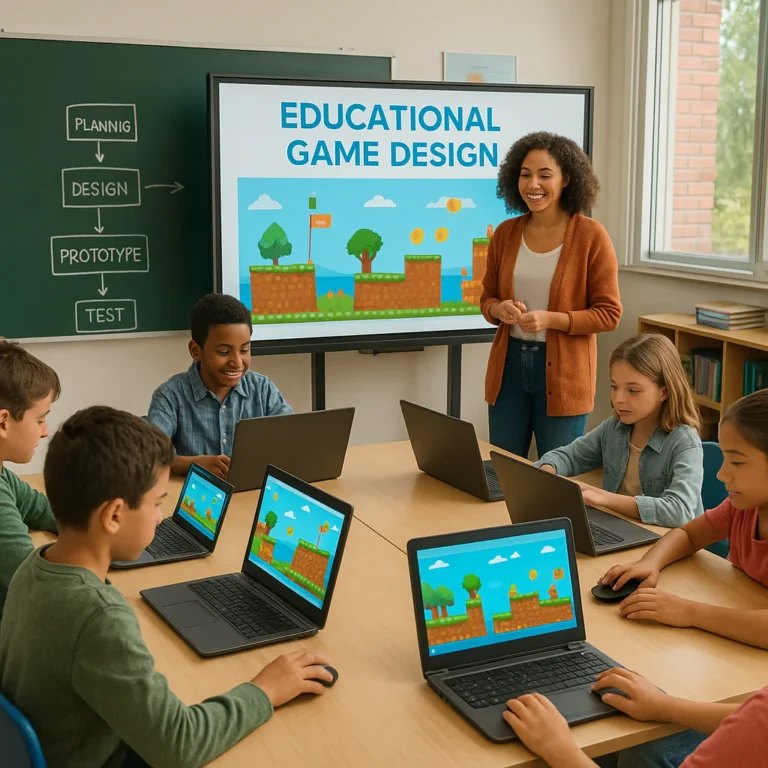
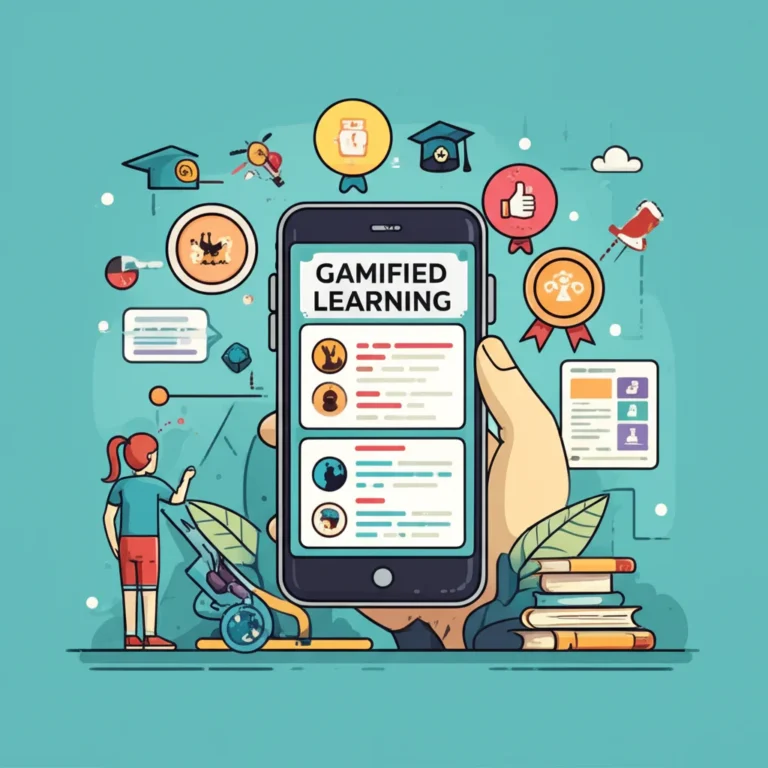
Struggling to teach complex subjects like math and science? You’re not alone! These subjects often intimidate students with abstract formulas and dense theories. But what if learning could feel more like playing your favorite game than sitting through a boring lecture? That’s where gamification comes in — a powerful approach that uses game mechanics to transform tough STEM topics into engaging, interactive adventures.
At Gamification Hub™, we’ve seen classrooms light up when students dive into math quests, virtual science labs, and puzzle challenges that make learning addictive. Curious how points, badges, and storytelling can boost motivation and understanding? Or how cutting-edge tools like Prodigy and Minecraft: Education Edition are reshaping education worldwide? Stick around — we’ll break down the top gamification techniques, real success stories, and expert tips to help you level up STEM teaching in 2026 and beyond!
Key Takeaways
- Gamification boosts engagement and motivation by turning abstract math and science concepts into interactive challenges.
- Different game mechanics like points, badges, narratives, and simulations cater to diverse learning styles and skill levels.
- Real-world success stories from platforms like Prodigy and Labster prove gamification improves learning outcomes.
- Effective integration requires aligning games with curriculum goals, scaffolding difficulty, and balancing competition with collaboration.
- The future is bright with AI, VR, and adaptive learning set to make gamified STEM education even more immersive and personalized.
Ready to transform your STEM classroom into a game-changing learning environment? Let’s dive in!
Table of Contents
- ⚡️ Quick Tips and Facts About Gamification in Math and Science Education
- 🎲 The Evolution of Gamification: How Game Mechanics Transformed STEM Learning
- 🧠 Understanding the Power of Game-Based Learning in Complex STEM Subjects
- 🎮 Types of Gamification Techniques for Teaching Math and Science
- 1. Point Systems, Badges, and Leaderboards: Motivating Through Competition
- 2. Storytelling and Narrative-Driven Learning: Making Abstract Concepts Tangible
- 3. Simulation Games and Virtual Labs: Hands-On Science and Math Exploration
- 4. Puzzle and Problem-Solving Games: Sharpening Critical Thinking Skills
- 🏫 Integrating Gamification into Classroom and Remote Learning Environments
- 🧩 Customizing Gamified Learning Experiences for Different Age Groups and Skill Levels
- 🚀 Boosting Student Engagement and Motivation Through Gamified STEM Curriculum
- 📊 Measuring the Impact: Assessing Learning Outcomes with Gamification Analytics
- 🤝 Gamification and Tutoring: Personalized STEM Support with Game Elements
- 🌍 Real-World Success Stories: Brands and Schools Winning with Gamified Math and Science
- 💡 Overcoming Challenges and Misconceptions About Gamification in Education
- 🔮 The Future of Gamification in STEM Education: Trends and Innovations to Watch
- ✅ Conclusion: Why Gamification is a Game-Changer for Teaching Complex STEM Subjects
- 🔗 Recommended Links for Gamification Resources and Tools
- ❓ Frequently Asked Questions About Gamification in Math and Science Education
- 📚 Reference Links and Further Reading
⚡️ Quick Tips and Facts About Gamification in Math and Science Education
Welcome to the thrilling world where math equations meet game quests and science formulas unlock virtual adventures! At Gamification Hub™, we’ve seen firsthand how gamification transforms the dread of complex STEM subjects into an engaging, motivating journey. Here are some quick nuggets to get you started:
- ✅ Gamification boosts engagement by tapping into the brain’s reward system, increasing dopamine and motivation.
- ✅ Immediate feedback in games accelerates learning and retention (supported by Nature studies on feedback effectiveness).
- ✅ Different game mechanics (points, badges, leaderboards, narratives) cater to diverse learning styles: visual, auditory, kinesthetic.
- ✅ Popular platforms like Prodigy Math Game and Minecraft: Education Edition have millions of users worldwide.
- ✅ Research shows gamified learning improves problem-solving skills, critical thinking, and collaboration.
Did you know? The global video game industry is worth over $150 billion, and educational games are a fast-growing slice of that pie (source: Newzoo). This means gamification isn’t just a fad — it’s a powerful educational revolution!
Want to dive deeper? Check out our related article on Gamification in Education Examples to see how games are already reshaping classrooms worldwide.
🎲 The Evolution of Gamification: How Game Mechanics Transformed STEM Learning
Gamification isn’t just about slapping points on quizzes and calling it a day. It’s a carefully crafted evolution of educational methods inspired by decades of game design and psychology. Let’s rewind the tape:
- Early roots: In the 1980s and 90s, educational software like Oregon Trail and Carmen Sandiego introduced storytelling and problem-solving in learning.
- 2000s: The rise of online platforms brought badges and leaderboards into classrooms, sparking friendly competition.
- Today: Sophisticated simulations, VR labs, and adaptive learning games tailor experiences to individual learners’ needs.
The key? Gamification leverages intrinsic motivation — the desire to learn for the joy of mastery — rather than just extrinsic rewards. This aligns with psychological theories like Self-Determination Theory and Flow Theory, which explain why games captivate us so deeply (source: Deci & Ryan, 2000).
Our team’s favorite example? Minecraft: Education Edition — a sandbox where students build ecosystems, explore physics, and solve math puzzles in a fully immersive world. It’s proof that gamification can make even the most abstract STEM concepts tangible and fun.
🧠 Understanding the Power of Game-Based Learning in Complex STEM Subjects
Why does gamification work so well for subjects like math and science, which often intimidate students? Here’s the secret sauce:
Cognitive Benefits
- Active learning: Games require students to apply concepts, not just memorize them.
- Repetition without boredom: Levels and challenges encourage repeated practice disguised as fun.
- Immediate feedback: Students know right away if they’re on track, enabling quick course correction.
- Problem-solving: Complex puzzles develop critical thinking and logical reasoning.
Emotional and Social Benefits
- Reduced anxiety: Games create a low-stakes environment where failure is part of learning.
- Increased motivation: Rewards and progress tracking keep students hooked.
- Collaboration: Multiplayer and team-based games foster communication and teamwork skills.
Real-World Application
Gamification bridges the gap between theory and practice. For example, virtual labs in chemistry let students safely experiment with reactions, while math games visualize abstract algebraic concepts through interactive puzzles.
Want to geek out on the science behind this? Check out our deep dive into Behavior Science for more on motivation and learning psychology.
🎮 Types of Gamification Techniques for Teaching Math and Science
Gamification isn’t one-size-fits-all. Different game mechanics serve different educational goals. Let’s break down the most effective types for complex STEM subjects:
1. Point Systems, Badges, and Leaderboards: Motivating Through Competition
- Points: Reward incremental progress, e.g., solving a math problem or completing a science quiz.
- Badges: Mark mastery of larger milestones like finishing a unit or mastering a concept.
- Leaderboards: Foster friendly competition but must be used carefully to avoid discouraging slower learners.
Example: Renaissance Learning’s Accelerated Reader uses points and badges to motivate reading comprehension, a model adaptable to STEM (source).
Pros:
- Clear goals and instant feedback
- Easy to implement digitally or physically
Cons:
- Can demotivate if competition feels too intense
- Risk of focusing on rewards over learning
2. Storytelling and Narrative-Driven Learning: Making Abstract Concepts Tangible
Narratives turn dry formulas into epic quests. Imagine learning physics by helping a spaceship navigate gravitational fields or mastering chemistry by brewing magical potions.
Benefits:
- Enhances emotional connection and memory retention
- Provides context for abstract concepts
Example: DragonBox Algebra gamifies algebra learning through a fantasy story, making equations feel like puzzles to unlock (DragonBox on Amazon).
3. Simulation Games and Virtual Labs: Hands-On Science and Math Exploration
Simulations replicate real-world experiments safely and affordably. Students can manipulate variables, observe outcomes, and test hypotheses.
Popular platforms:
- PhET Interactive Simulations by University of Colorado Boulder (PhET)
- Labster virtual labs for biology and chemistry (Labster Official)
Advantages:
- Encourages inquiry-based learning
- Accessible anytime, anywhere
4. Puzzle and Problem-Solving Games: Sharpening Critical Thinking Skills
Puzzles challenge students to apply logic and math skills creatively. They promote perseverance and strategic thinking.
Examples:
- Prodigy Math Game combines RPG elements with math challenges (Prodigy on Amazon)
- Portal 2 physics puzzles teach spatial reasoning and problem-solving (Portal 2 on Amazon)
🏫 Integrating Gamification into Classroom and Remote Learning Environments
Whether you’re teaching in a bustling classroom or through a pixelated Zoom grid, gamification can be a game-changer. Here’s how to integrate it effectively:
Step 1: Align Games with Learning Objectives
- Choose games that reinforce curriculum goals.
- Avoid games that are fun but irrelevant to the subject matter.
Step 2: Blend Traditional and Digital Methods
- Use board games or card games for face-to-face interaction.
- Incorporate digital platforms for instant feedback and progress tracking.
Step 3: Scaffold Difficulty
- Start with simple challenges and gradually increase complexity.
- Use levels or badges to mark progression.
Step 4: Foster Collaboration and Competition
- Mix individual and team-based activities.
- Use leaderboards thoughtfully to motivate without discouraging.
Step 5: Collect Feedback and Iterate
- Observe student engagement and learning outcomes.
- Adjust games and mechanics based on what works best.
Pro tip: Platforms like ClassDojo and Kahoot! are excellent for quick gamified quizzes and engagement (ClassDojo, Kahoot!).
🧩 Customizing Gamified Learning Experiences for Different Age Groups and Skill Levels
One size never fits all, especially in education. Here’s how to tailor gamification:
| Age Group | Suitable Game Types | Key Considerations |
|---|---|---|
| Elementary | Simple puzzles, story-driven games | Bright visuals, short sessions, rewards |
| Middle School | Strategy games, simulations | Balance challenge and guidance |
| High School | Complex problem-solving, virtual labs | Deeper narratives, self-paced learning |
| Adult Learners | Real-world simulations, adaptive challenges | Focus on relevance and autonomy |
Example: Younger kids love colorful, narrative games like DragonBox, while high schoolers benefit from Labster’s immersive virtual labs.
🚀 Boosting Student Engagement and Motivation Through Gamified STEM Curriculum
Engagement is the holy grail of education. Gamification taps into this by:
- Creating clear goals and rewarding progress.
- Offering choice and autonomy through branching storylines or customizable avatars.
- Providing social interaction via multiplayer modes or team challenges.
- Encouraging mastery and growth mindset by rewarding effort, not just results.
At Gamification Hub™, we’ve seen classrooms transform when students start competing for badges instead of dreading tests. One teacher shared:
“My students went from groaning at algebra to begging for extra challenges after we introduced Prodigy Math.”
📊 Measuring the Impact: Assessing Learning Outcomes with Gamification Analytics
How do you know gamification is actually working? Data, baby! Modern gamified platforms come with built-in analytics to track:
- Completion rates
- Time spent on tasks
- Accuracy and improvement over time
- Engagement metrics (e.g., login frequency, challenge attempts)
Example: Prodigy and Classcraft provide dashboards for teachers to monitor student progress and tailor interventions (Prodigy Teacher Dashboard).
Tips for effective assessment:
- Use analytics to identify struggling students early.
- Combine quantitative data with qualitative feedback.
- Adjust game difficulty based on performance trends.
🤝 Gamification and Tutoring: Personalized STEM Support with Game Elements
Tutoring meets gamification in a powerful synergy. Personalized instruction enhanced with game mechanics can:
- Adapt challenges to individual skill levels.
- Provide instant feedback and encouragement.
- Use rewards to motivate consistent practice.
Platforms like Khan Academy and IXL incorporate gamified elements while offering personalized tutoring paths (Khan Academy, IXL Learning).
Our engineers recommend tutors familiarize themselves with gamification tools to boost student motivation and retention. After all, learning is a journey — why not make it an epic quest?
🌍 Real-World Success Stories: Brands and Schools Winning with Gamified Math and Science
Nothing beats real-world proof. Here are some inspiring examples:
| Institution/Brand | Gamification Approach | Outcome |
|---|---|---|
| Prodigy Math Game | RPG-style math challenges | Millions of students engaged worldwide |
| Minecraft: Education Edition | Sandbox exploration and problem-solving | Increased creativity and STEM interest |
| Renaissance Learning (Accelerated Reader) | Points, badges, quizzes | Improved reading and comprehension scores |
| Labster Virtual Labs | Immersive science simulations | Higher retention and lab skills in students |
| ClassDojo | Behavior tracking with rewards | Enhanced classroom engagement and behavior |
One standout story: A middle school in Texas reported a 30% increase in math test scores after integrating Prodigy and related gamified activities into their curriculum (source).
💡 Overcoming Challenges and Misconceptions About Gamification in Education
Gamification isn’t a silver bullet. Here’s what educators and parents often worry about — and how to address it:
| Concern | Reality & Expert Advice |
|---|---|
| “Games are just distractions.” | ✅ When aligned with learning goals, games enhance focus and retention. |
| “Competition can discourage some students.” | ✅ Use cooperative games and personalized goals to include all learners. |
| “Technology access is unequal.” | ✅ Blend digital and analog gamification to ensure inclusivity. |
| “It’s too time-consuming to implement.” | ✅ Start small with simple mechanics like points and badges; scale gradually. |
| “Gamification is just a fad.” | ✅ Supported by decades of research and growing adoption worldwide. |
Our advice? Approach gamification thoughtfully, with clear objectives and flexibility. The payoff? Students who are excited to learn and confident to tackle tough STEM challenges.
🔮 The Future of Gamification in STEM Education: Trends and Innovations to Watch
What’s next on the gamification horizon? Here’s what our engineers are buzzing about:
- AI-driven adaptive learning: Games that tailor challenges in real-time based on student performance.
- Augmented and Virtual Reality: Immersive experiences that bring abstract STEM concepts to life.
- Blockchain and digital badges: Verifiable credentials that students can showcase beyond the classroom.
- Cross-platform ecosystems: Seamless learning across devices and environments.
- Social and collaborative gaming: Emphasizing teamwork and communication skills alongside STEM mastery.
Imagine a future where your child explores the solar system in VR, solves physics puzzles with friends worldwide, and earns badges that count toward college applications! The gamified classroom of tomorrow is closer than you think.
✅ Conclusion: Why Gamification is a Game-Changer for Teaching Complex STEM Subjects
So, what’s the final verdict from your gamification engineers at Gamification Hub™? Gamification is not just a flashy add-on — it’s a transformative approach that makes complex math and science subjects accessible, engaging, and even downright fun. By blending proven psychological principles with immersive game mechanics, it tackles the age-old problem of student disengagement head-on.
From points and badges that reward progress, to story-driven quests that contextualize abstract concepts, and virtual labs that simulate real-world experiments, gamification offers a rich toolkit for educators and tutors alike. It empowers students to learn actively, think critically, and collaborate effectively — all while reducing anxiety and boosting confidence.
We also addressed common concerns: gamification isn’t a distraction or a one-size-fits-all fix. When thoughtfully implemented, it complements traditional teaching methods and adapts to diverse learners’ needs. Plus, the future is bright with AI, VR, and blockchain poised to make gamified STEM education even more personalized and immersive.
If you’re wondering whether to jump on the gamification bandwagon, our answer is a resounding YES. Start small, experiment, and watch your students transform from reluctant learners into STEM adventurers.
Ready to level up your teaching? Dive into the recommended tools and resources below to get started!
🔗 Recommended Links for Gamification Resources and Tools
-
Prodigy Math Game:
Amazon | Prodigy Official Website -
Minecraft: Education Edition:
Microsoft Store | Amazon -
DragonBox Algebra:
Amazon | DragonBox Official Website -
PhET Interactive Simulations:
PhET Official Website -
Labster Virtual Labs:
Labster Official Website -
ClassDojo:
ClassDojo Official Website -
Khan Academy:
Khan Academy Official Website -
IXL Learning:
IXL Official Website
Recommended Books on Gamification and STEM Education:
- “The Gamification of Learning and Instruction” by Karl M. Kapp — Amazon
- “Reality Is Broken: Why Games Make Us Better and How They Can Change the World” by Jane McGonigal — Amazon
- “Game On! Gamification, Gameful Design, and the Rise of the Gamer Educator” by Kevin Bell — Amazon
❓ Frequently Asked Questions About Gamification in Math and Science Education
What are examples of successful gamified lessons in math and science?
Successful gamified lessons often combine storytelling, challenges, and immediate feedback. For example, Prodigy Math Game uses RPG elements to teach arithmetic and algebra, engaging millions of students globally. In science, Labster virtual labs allow students to conduct experiments in a risk-free environment, improving understanding of biology and chemistry concepts. These platforms have demonstrated measurable improvements in student motivation and test scores (Prodigy Impact Study).
Can gamified learning tools help simplify difficult STEM topics?
Absolutely! Gamified tools break down complex subjects into manageable chunks through levels, quests, and puzzles. By contextualizing abstract concepts within narratives or simulations, they make learning intuitive. For instance, DragonBox Algebra transforms algebraic expressions into visual puzzles, helping students grasp difficult concepts without feeling overwhelmed.
How does gamification improve student engagement in science education?
Gamification taps into intrinsic motivation by making learning interactive and rewarding. Science topics become adventures where students experiment, hypothesize, and solve problems in virtual labs or games. This active participation reduces anxiety and boredom, leading to higher engagement and better retention. Platforms like PhET provide interactive simulations that cater to diverse learning styles, enhancing comprehension.
What are the best gamification strategies for teaching advanced math concepts?
For advanced math, strategies like progressive challenges, adaptive difficulty, and problem-solving quests work best. Breaking down complex problems into smaller puzzles with instant feedback helps maintain motivation. Incorporating leaderboards and badges can encourage mastery, but it’s essential to balance competition with collaboration to support all learners.
What are the best gamification strategies for teaching math concepts?
For foundational math, storytelling, visual puzzles, and reward systems are effective. Games that use colorful graphics and relatable narratives (like DragonBox) help younger students connect with numbers and operations. Immediate feedback and incremental rewards keep learners motivated and confident.
Can gamified learning tools help students understand difficult math problems?
Yes, by providing interactive problem-solving environments where students can experiment with different approaches without fear of failure. Games encourage trial and error, reinforcing learning through practice. Tools like Prodigy and Khan Academy offer gamified exercises that adapt to student performance, ensuring personalized learning paths.
What are some examples of gamified science lessons that enhance comprehension?
Examples include virtual dissections in Labster, physics puzzles in Portal 2, and ecosystem building in Minecraft: Education Edition. These lessons immerse students in hands-on activities, making abstract scientific principles concrete and memorable.
📚 Reference Links and Further Reading
- Self-Determination Theory — Deci & Ryan
- Newzoo Global Games Market Report
- Prodigy Math Game Impact Study
- PhET Interactive Simulations
- Labster Virtual Labs
- ClassDojo Official Website
- Khan Academy Official Website
- IXL Learning Official Website
- Top 25 Most Effective Teaching Strategies of 2024 — Schools That Lead
- Gamification Hub™ Educational Gamification Category
- Gamification Hub™ Game-Based Learning Category
- Gamification Hub™ Game Mechanics Category
- Gamification Hub™ Behavior Science Category
- Gamification Hub™ Gamification Case Studies Category
Ready to transform your STEM teaching with gamification? Explore these tools and strategies, and watch your students level up their learning like never before! 🚀