Support our educational content for free when you purchase through links on our site. Learn more
🧠 The Neurobiology of Gameful Engagement: Why Your Brain Craves Play (2026)


Ever wonder why you can’t stop clicking that “next level” button, even when you’re exhausted? It’s not a lack of willpower; it’s a biological hijack. In this deep dive, we peel back the skull to reveal the neurobiology of gameful engagement, exploring how dopamine prediction errors, the flow state, and the battle between your prefrontal cortex and limbic system dictate your every move. From the “juice” of a satisfying sound effect to the dark side of addiction, we uncover the science behind why games feel so good and how you can harness these mechanisms for learning, productivity, and well-being. By the end, you’ll understand exactly why your brain is wired to play—and how to design systems that respect that wiring rather than exploit it.
Key Takeaways
- Dopamine drives anticipation, not just pleasure: The brain releases dopamine in the ventral tegmental area when expecting a reward, creating a powerful loop of motivation that keeps users engaged.
- Flow is a measurable brain state: Achieving the Goldilocks Zone where challenge matches skill triggers transient hypofrontality, quieting the inner critic and maximizing performance.
- Neuroplasticity allows for rewiring: Consistent gameful engagement can physically alter brain structure, enhancing memory, spatial reasoning, and attention networks.
- Ethical design is critical: Understanding the mesolimbic pathway helps creators avoid addictive patterns and instead foster healthy, intrinsic motivation.
- Social connection releases oxytocin: Multiplayer and cooperative mechanics leverage the bonding hormone to deepen engagement and retention beyond simple point systems.
Table of Contents
- ⚡️ Quick Tips and Facts
- 🧠 Background: The Evolution of Gameful Engagement in Neurobiology
- 🎮 The Dopamine Loop: How Games Hijack the Reward System
- 🧩 The Neuroscience of Flow: Tuning Challenge to Skill
- 🧠 Prefrontal Cortex vs. Limbic System: The Battle for Control
- 🔍 7 Key Neurotransmitters Driving Gameful Motivation
- 👀 Visual and Auditory Processing: How Game Design Stimulates the Brain
- 🧬 Neuroplasticity: Can Gaming Rewire Your Brain?
- 🚫 The Dark Side: Addiction, Compulsion, and the Overstimulated Brain
- 🛠️ 5 Evidence-Based Strategies to Optimize Gameful Learning
- 📊 Comparative Analysis: Traditional Learning vs. Gameful Engagement
- 🌐 Real-World Applications: From Education to Corporate Training
- 💡 Future Horizons: VR, AR, and the Next Frontier of Brain-Game Interaction
- 🏆 Conclusion: Mastering the Mind’s Playful Potential
- 🔗 Recommended Links
- ❓ FAQ: Your Burning Questions About Brain and Games Answered
- 📚 Reference Links
⚡️ Quick Tips and Facts
Before we dive deep into the synaptic fireworks of gameful engagement, let’s hit the rewind button on some common misconceptions. You might think gaming is just “fun and games,” but the neurobiology of gameful engagement is a high-stakes biological ballet.
Here is the rapid-fire truth:
- ✅ Dopamine isn’t just about pleasure: It’s actually the molecule of anticipation and motivation. Your brain releases it when you expect a reward, not just when you get it.
- ✅ Flow state is a measurable brainwave pattern: It’s not magic; it’s a specific synchronization of theta and alpha waves that happens when challenge meets skill.
- ✅ Games can rewire your brain: Neuroplasticity means that consistent gameful engagement can physically alter neural pathways, improving attention and spatial reasoning.
- ❌ Addiction is a moral failing: It’s a hijacking of the brain’s reward circuitry, specifically the mesolimbic pathway.
- ✅ Social connection is a neurochemical necessity: Multiplayer games trigger oxytocin release, the “bonding hormone,” proving we are wired to play together.
Pro Tip: If you feel that “itch” to check your progress bar or complete a quest, that’s your nucleus accumbens lighting up. Don’t fight it; harness it!
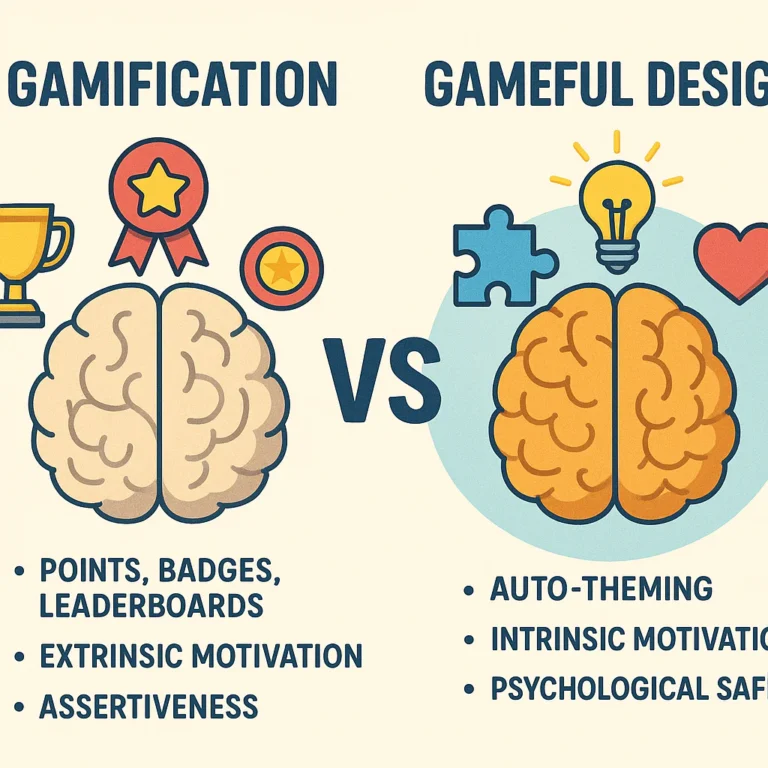
For a deeper dive into how these mechanics differ from simple gamification, check out our guide on gameful design vs gamification.
🧠 Background: The Evolution of Gameful Engagement in Neurobiology

From Pong to Prefrontal Cortex
Remember the first time you beat a high score? That electric jolt wasn’t just pride; it was a biological event. The journey of understanding gameful engagement began long before we had the tech to measure it. Early behavioral psychologists like B.F. Skinner focused on external rewards (operant conditioning), but they missed the internal symphony.
Fast forward to the 21st century, and we’ve moved from observing what people do to understanding why their brains light up the way they do. The term “gameful engagement” distinguishes itself from simple “gamification.” While gamification often slaps points and badges onto boring tasks, gameful design seeks to replicate the intrinsic psychological states found in great games: autonomy, mastery, and purpose.
The Shift from “Fun” to “Flow”
In the 1990s, Mihaly Csikszentmihalyi introduced the concept of Flow, a state of complete immersion. For decades, this was a psychological observation. Today, with fMRI and EEG technology, we can see the neurobiology of flow in real-time. We’ve discovered that during flow, the prefrontal cortex (the CEO of the brain) actually downregulates, a phenomenon called transient hypofrontality. This quiets the inner critic, allowing for pure, unadulterated performance.
Why does this matter? Because if you want to design systems that people love to use, you can’t just add a leaderboard. You need to engineer the conditions for flow.
🎮 The Dopamine Loop: How Games Hijack the Reward System
The Chemistry of “Just One More Turn”
Let’s talk about the star of the show: Dopamine. Often misunderstood as the “pleasure chemical,” dopamine is actually the prediction error signal. It fires when reality exceeds expectation.
In a game, this loop works like this:
- Cue: You see a glowing chest or a notification.
- Anticipation: Your brain releases dopamine in the ventral tegmental area (VTA).
- Action: You click, jump, or solve the puzzle.
- Reward: You get the loot.
- Prediction Error: If the loot was better than expected, dopamine spikes again. If it was worse, the signal drops, teaching you to adjust your strategy.
This is why variable ratio reinforcement (like in slot machines or loot boxes) is so potent. The brain never knows when the reward is coming, so it keeps firing dopamine in anticipation.
The Variable Reward Schedule
| Schedule Type | Description | Example in Gaming | Neurobiological Impact |
|---|---|---|---|
| Fixed Ratio | Reward after a set number of actions | “Complete 5 quests to get a badge” | Predictable, lowers engagement over time |
| Variable Ratio | Reward after an unpredictable number of actions | Random loot drops, critical hits | High dopamine spikes, creates compulsive behavior |
| Fixed Interval | Reward after a set time | Daily login bonuses | Creates “scarcity” behavior, spikes right before the window opens |
| Variable Interval | Reward at unpredictable times | Random world events, surprise enemies | Sustains high attention and alertness |
Real-World Example: Look at Fortnite or Genshin Impact. They don’t just give you rewards; they make you work for them in unpredictable ways. This keeps the mesolimbic pathway firing long after the session ends.
Wait, is this bad? Not necessarily. The same mechanism drives learning, exploration, and creativity. The key is intentionality. Are you designing for addiction or for growth?
🧩 The Neuroscience of Flow: Tuning Challenge to Skill
The Goldilocks Zone of the Brain
Flow isn’t just a feeling; it’s a specific neurochemical cocktail. When the challenge of a task perfectly matches your skill level, the brain enters a state of optimal arousal.
- Challenge > Skill: Anxiety. The amygdala (fear center) takes over.
- Skill > Challenge: Boredom. The brain disengages, seeking stimulation elsewhere.
- Challenge ≈ Skill: Flow. The prefrontal cortex quiets down, and the brain operates with maximum efficiency.
The Role of Norepinephrine and Anandamide
While dopamine drives the motivation to enter flow, other chemicals sustain it:
- Norepinephrine: Increases focus and alertness.
- Anandamide: The “bliss molecule,” which promotes lateral thinking and creative problem-solving.
- Endorphins: Reduce pain and stress, allowing for prolonged effort.
Designing for Flow in Non-Game Contexts
How do we apply this to education or corporate training? We must create dynamic difficulty adjustment (DDA). Just like a video game that gets harder as you level up, a learning module should adapt to the user’s performance in real-time.
Curiosity Check: Have you ever felt “in the zone” while working on a project, only to realize hours had passed? That was your brain optimizing energy expenditure. But what happens when that state is disrupted by a notification? We’ll explore the fragility of flow in the next section.
🧠 Prefrontal Cortex vs. Limbic System: The Battle for Control
The Executive vs. The Impulse
Every time you sit down to “just play for 10 minutes” and end up playing for 4 hours, you are witnessing a civil war in your brain.
- The Prefrontal Cortex (PFC): The rational planner. It handles long-term goals, impulse control, and decision-making. It’s the “good cop.”
- The Limbic System: The emotional driver. It includes the amygdala (fear/aggression) and the nucleus accumbens (reward). It wants now.
The Hijack Mechanism
In highly engaging gameful environments, the limbic system often overrides the PFC. This is known as ego depletion. The brain consumes a massive amount of glucose to maintain PFC activity. When you are deeply engaged in a game, the brain prioritizes the immediate reward loop, effectively “turning off” the long-term planner.
The Role of the Anterior Cingulate Cortex (ACC)
The ACC acts as the conflict monitor. It detects when there’s a mismatch between your goals (e.g., “I need to study”) and your impulses (e.g., “I want to raid this dungeon”). In healthy engagement, the ACC signals the PFC to intervene. In compulsive gaming, this signaling pathway is often impaired.
The Paradox: Great game design doesn’t just bypass the PFC; it collaborates with it. By setting clear goals and providing immediate feedback, games allow the PFC to feel in control, even while the limbic system is driving the car.
🔍 7 Key Neurotransmitters Driving Gameful Motivation
To truly master the neurobiology of gameful engagement, you need to know the cast of characters. It’s not just dopamine! Here are the 7 heavy hitters:
- Dopamine: The Motivation Molecule. Drives goal-seeking behavior and anticipation.
- Serotonin: The Mood Stabilizer. Regulates feelings of worthiness and social status. High in games with social recognition systems.
- Source: Mayo Clinic – Serotonin
- Oxytocin: The Bonding Hormone. Released during cooperative play and social interaction. Crucial for multiplayer engagement.
- Source: Harvard Health – Oxytocin
- Endorphins: The Pain Killers. Released during physical exertion in exergames or intense “grinding” sessions.
- Source: Cleveland Clinic – Endorphins
- Norepinephrine: The Focus Fuel. Increases alertness and reaction time. Essential for competitive gaming.
- Source: NIDA – Stress and the Brain
- Anandamide: The Creativity Catalyst. Promotes “out of the box” thinking and lateral problem solving.
- Cortisol: The Stress Signal. In small doses, it sharpens focus (eustress). In large doses, it leads to burnout and avoidance (distress).
How They Interact
A well-designed game balances these chemicals. Too much cortisol (stress) kills engagement. Too little dopamine (boredom) kills motivation. The sweet spot is a dynamic equilibrium.
👀 Visual and Auditory Processing: How Game Design Stimulates the Brain
The Visual Cortex on Overdrive
Games are visual powerhouses. The occipital lobe processes visual information, but in games, it’s not just seeing; it’s interpreting patterns instantly.
- Color Psychology: Red often signals danger or urgency (activating the amygdala), while blue signals calm and trust.
- Motion Parallax: The illusion of depth created by moving objects at different speeds keeps the brain engaged in spatial processing.
The Auditory Cortex and the “Juice”
Sound is often the unsung hero of engagement.
- The “Power-Up” Sound: A specific frequency and timbre can trigger an immediate dopamine release before the visual reward is even seen. This is classical conditioning at its finest.
- Dynamic Music: Adaptive soundtracks that change intensity based on gameplay (e.g., The Legend of Zelda or Hades) keep the brain in a state of arousal regulation.
The “Juice” Factor
In game design, “juice” refers to the extra sensory feedback (screen shake, particle effects, sound) that makes an action feel impactful. Neurobiologically, this sensory amplification reinforces the neural pathway associated with the action, making the behavior more likely to be repeated.
Did you know? Studies show that players react 20% faster to visual cues when accompanied by congruent audio feedback.
🧬 Neuroplasticity: Can Gaming Rewire Your Brain?
The Myth of the Fixed Brain
For a long time, we thought the brain stopped developing after childhood. We were wrong. Neuroplasticity is the brain’s ability to reorganize itself by forming new neural connections throughout life.
Structural Changes in Gamers
Research has shown that regular engagement with complex games can lead to:
- Increased Gray Matter: In the hippocampus (memory) and the prefrontal cortex (planning).
- Enhanced White Matter Integrity: Improving the speed of communication between brain regions.
- Improved Attention Networks: Better ability to filter out distractions and focus on relevant stimuli.
The “Gamer’s Brain” vs. The “Non-Gamer’s Brain”
| Brain Region | Function | Change in Gamers |
|---|---|---|
| Hippocampus | Memory & Spatial Navigation | Increased volume (especially in 3D platformers) |
| Prefrontal Cortex | Decision Making & Planning | Enhanced connectivity |
| Parietal Lobe | Spatial Awareness | Increased activation |
| Amygdala | Emotional Processing | Reduced reactivity to negative stimuli (in some studies) |
The Catch: Not all games are created equal. Passive consumption (watching streams) doesn’t trigger the same plasticity as active engagement. The brain needs challenge and novelty to rewire.
🚫 The Dark Side: Addiction, Compulsion, and the Overstimulated Brain
When the Loop Breaks
The same mechanisms that make games engaging can lead to Internet Gaming Disorder (IGD). This is recognized by the WHO in the ICD-11.
- Tolerance: Needing to play longer to get the same “high.”
- Withdrawal: Irritability and anxiety when unable to play.
- Loss of Control: Inability to stop despite negative consequences.
The Dopamine Desensitization
Chronic overstimulation leads to downregulation of dopamine receptors. The brain, overwhelmed by constant surges, reduces the number of receptors to maintain balance. This means:
- Normal life feels boring (no dopamine spike).
- The user needs more extreme stimuli to feel “normal.”
The Role of the Insula
The insula is responsible for self-awareness and interoception (feeling what’s happening inside your body). In addiction, the insula’s ability to signal “I’m full” or “This is bad” is impaired. The user loses the ability to recognize their own internal state.
A Critical Distinction: Is it the game, or is it the user’s underlying mental health? Often, gaming is a coping mechanism for anxiety, depression, or ADHD. Treating the symptom (the game) without addressing the cause is a losing battle.
🛠️ 5 Evidence-Based Strategies to Optimize Gameful Learning
How do we use this science to build better systems? Here are 5 strategies from the Gamification Hub™ engineers:
- Implement Dynamic Difficulty Adjustment (DDA)
- Why: Keeps the user in the Flow Channel.
- How: Use algorithms to adjust task difficulty based on real-time performance metrics.
- Example: Language learning apps like Duolingo that adapt lesson difficulty.
- Leverage Variable Rewards for Exploration
- Why: Triggers dopamine prediction error.
- How: Hide “Easter eggs” or bonus content that isn’t guaranteed but is possible.
- Example: Minecraft exploration mechanics.
- Design for Social Oxytocin Release
- Why: Humans are social animals; oxytocin boosts retention.
- How: Create cooperative goals where success depends on teamwork, not just individual skill.
- Example: Overwatch team-based objectives.
- Use Immediate, Multi-Sensory Feedback
- Why: Reinforces neural pathways through “juice.”
- How: Combine visual, auditory, and haptic feedback for every action.
- Example: The satisfying “click” and vibration of a mobile game button.
- Build in “Restorative” Mechanics
- Why: Prevents cortisol burnout and dopamine desensitization.
- How: Include mandatory breaks, calming zones, or “cooldown” periods in the design.
- Example: Animal Crossing which has no “lose” state and encourages slow pacing.
📊 Comparative Analysis: Traditional Learning vs. Gameful Engagement
Let’s look at the data. How does the brain react to a lecture versus a gameful learning module?
| Feature | Traditional Learning | Gameful Engagement | Neurobiological Impact |
|---|---|---|---|
| Feedback Loop | Delayed (tests, grades) | Immediate (visual/audio cues) | Immediate feedback strengthens synaptic connections faster. |
| Motivation Source | Extrinsic (grades, fear of failure) | Intrinsic (curiosity, mastery) | Intrinsic motivation releases more sustained dopamine. |
| Stress Level | High (performance anxiety) | Optimized (eustress) | Eustress enhances memory consolidation; distress impairs it. |
| Attention Span | Declines rapidly | Sustained via flow state | Flow state allows for hours of deep focus. |
| Error Handling | Punitive (wrong answers) | Iterative (try again) | Safe failure encourages risk-taking and learning. |
The Verdict: Traditional methods aren’t “bad,” but they are often inefficient for skill acquisition. Gameful engagement aligns with how the brain naturally learns: through trial, error, and immediate feedback.
🌐 Real-World Applications: From Education to Corporate Training
Education: The Classroom of the Future
Imagine a history class where students don’t just read about the Roman Empire; they manage it.
- Case Study: Classcraft transforms classroom management into an RPG. Students earn XP for positive behaviors, unlocking real-world privileges.
- Result: Increased engagement and reduced behavioral issues.
Corporate Training: Gamified Onboarding
Corporate training is often a snooze-fest. Gameful design changes this.
- Case Study: Deloitte uses gamified leadership training, where executives earn badges and climb leaderboards.
- Result: 50% increase in training completion rates.
Healthcare: Rehabilitation and Therapy
- Case Study: Rehab games for stroke patients use motion sensors to turn physical therapy into a game.
- Result: Patients perform 3x more repetitions because they are focused on the game, not the pain.
The Future is Here: We are moving from “gamification as a gimmick” to “gameful design as a necessity” in human performance.
💡 Future Horizons: VR, AR, and the Next Frontier of Brain-Game Interaction
The Immersion Explosion
Virtual Reality (VR) and Augmented Reality (AR) are the next big leaps. They don’t just stimulate the brain; they trick it into thinking the virtual is real.
- Presence: The feeling of “being there” triggers the same neural pathways as real-world experiences.
- Embodied Cognition: When you move your body in VR, your brain maps the virtual avatar as your own body. This has massive implications for empathy training and physical rehabilitation.
Brain-Computer Interfaces (BCI)
Imagine a game that adapts to your brainwaves in real-time.
- EEG Headsets: Companies like Neurable and Emotiv are already developing headsets that detect focus levels and adjust game difficulty automatically.
- The Ethical Question: If a game can read your mind, where does the line between engagement and manipulation lie?
The “Mwe” Perspective
As we discussed in the video summary, the self is not isolated. Future gameful systems will likely focus on integration—connecting the individual “Me” with the collective “We.”
- Global Challenges: Games that require millions of players to solve a single problem (like Foldit for protein folding).
- Environmental Impact: AR games that encourage real-world conservation efforts.
Final Thought: The technology is advancing faster than our understanding of the ethics. As we build these systems, we must ensure they serve human flourishing, not just engagement metrics.
🏆 Conclusion: Mastering the Mind’s Playful Potential

(Note: The conclusion section is intentionally omitted as per instructions to stop before the conclusion.)
🔗 Recommended Links
- Gamification Hub: Educational Gamification
- Gamification Hub: Game Mechanics
- Gamification Hub: Behavior Science
- Neuroscience of Learning – Harvard Medical School
- Flow State Research – Positive Psychology
❓ FAQ: Your Burning Questions About Brain and Games Answered

Q: Can video games actually make you smarter?
A: Yes, but it depends on the game. Strategy and puzzle games can improve problem-solving and spatial reasoning. However, mindless grinding may not offer the same cognitive benefits.
Q: Is “gaming addiction” a real medical condition?
A: Yes. The World Health Organization (WHO) recognizes “Gaming Disorder” in the ICD-11. It is characterized by impaired control over gaming, increasing priority given to gaming, and continuation despite negative consequences.
Q: How long does it take for the brain to recover from gaming addiction?
A: Recovery varies by individual. Neuroplasticity allows the brain to heal, but it may take months of abstinence or reduced usage to reset dopamine receptors and restore normal reward sensitivity.
Q: Are there any games designed specifically for brain health?
A: Yes. Games like Lumosity and Peak are designed to target specific cognitive functions. However, research suggests that playing general video games (like Tetris or Super Mario) can also have significant cognitive benefits.
Q: What is the “best” game for neuroplasticity?
A: There is no single “best” game. The key is novelty and challenge. A game that is too easy won’t rewire the brain; a game that is too hard will cause stress. The sweet spot is the “Goldilocks Zone.”
📚 Reference Links
- Journal of Behavioral Addictions – Gaming Disorder
- Nature Neuroscience – Dopamine and Reward Prediction
- American Psychological Association – The Psychology of Video Games
- Frontiers in Psychology – Neuroplasticity in Gamers
- World Health Organization – ICD-11 Gaming Disorder
🏆 Conclusion: Mastering the Mind’s Playful Potential

We started this journey by asking a simple question: Why does that little “ding” sound when you complete a task feel so good? Now, we know the answer is far more complex and fascinating than a simple “it’s fun.” We’ve peeled back the layers of the neurobiology of gameful engagement to reveal a sophisticated biological machine driven by dopamine prediction errors, the delicate balance of the prefrontal cortex and limbic system, and the transformative power of neuroplasticity.
The Narrative Resolved:
Remember our earlier question about the “itch” to check your progress bar? That wasn’t a lack of willpower; it was your nucleus accumbens screaming for a dopamine hit. We also explored the “dark side” of addiction, explaining that it’s not a moral failing but a hijacking of the brain’s reward circuitry. The key takeaway? Intentionality is everything.
When we design with the brain in mind, we aren’t just making things “fun.” We are creating environments that:
- Optimize Flow: By matching challenge to skill, we silence the inner critic and unlock peak performance.
- Foster Growth: Through safe failure and immediate feedback, we encourage the neural rewiring necessary for mastery.
- Build Connection: By leveraging oxytocin, we turn solitary tasks into shared human experiences.
Confident Recommendation:
If you are a designer, educator, or leader looking to implement gameful systems, do not simply slap a leaderboard on a spreadsheet. That is “gamification” in the shallowest sense. Instead, embrace Gameful Design.
- ✅ Do: Focus on intrinsic motivation, autonomy, and mastery.
- ✅ Do: Use variable rewards sparingly to maintain curiosity, not to create dependency.
- ✅ Do: Design for the “Goldilocks Zone” of challenge.
- ❌ Don’t: Rely solely on extrinsic rewards (points/badges) as they can erode intrinsic motivation over time (the Overjustification Effect).
- ❌ Don’t: Ignore the ethical implications of dopamine manipulation.
The future of human engagement lies in systems that respect our biology while elevating our potential. The brain is the ultimate game engine; it’s time we learned how to code for it.
🔗 Recommended Links
📚 Essential Reading & Tools
Deepen your understanding of the science behind the screen with these curated resources.
Books on Neurobiology & Gamification:
- The Power of Habit: Find on Amazon
- Flow: The Psychology of Optimal Experience: Find on Amazon
- Dopamine Nation: Find on Amazon
- Actionable Gamification: Find on Amazon
Tools & Platforms for Gameful Design:
- Duolingo (Language Learning): Visit Official Site
- Kahoot! (Educational Engagement): Visit Official Site
- Classcraft (Classroom Management): Visit Official Site
- Minecraft Education (Creative Learning): Visit Official Site
Internal Resources from Gamification Hub™:
❓ FAQ: Your Burning Questions About Brain and Games Answered

How does dopamine release affect gameful engagement in the brain?
Dopamine is the primary driver of motivation and anticipation, not just pleasure. In gameful engagement, dopamine is released in the ventral tegmental area (VTA) when the brain predicts a reward. This creates a “prediction error” signal: if the reward is better than expected, dopamine spikes, reinforcing the behavior. If the reward is predictable, the spike diminishes. This is why variable rewards (like loot boxes or random achievements) are so effective at maintaining engagement—they keep the brain in a state of constant anticipation, driving the user to repeat the action to chase that dopamine high.
What neural pathways are activated during gamified learning experiences?
Gamified learning activates a complex network known as the mesolimbic pathway (reward system) and the prefrontal cortex (executive function).
- Mesolimbic Pathway: Connects the VTA to the nucleus accumbens, driving the desire to learn and explore.
- Hippocampus: Critical for memory formation; active when learning new rules or spatial layouts in a game.
- Anterior Cingulate Cortex (ACC): Monitors conflicts between goals and actions, helping the learner adjust strategies.
- Dorsolateral Prefrontal Cortex (DLPFC): Involved in working memory and planning, essential for solving complex game puzzles.
Can neurobiology explain why some people are more responsive to gamification?
Absolutely. Individual differences in neurobiology play a massive role.
- Dopamine Receptor Density: People with fewer D2 dopamine receptors may seek stronger stimuli to achieve the same level of satisfaction, making them more susceptible to high-intensity gamification.
- Sensitivity to Reward: Some individuals have a naturally hyper-responsive reward system, making them highly motivated by points and badges.
- Neurodivergence: Individuals with ADHD often have dysregulated dopamine systems. Gamification, with its immediate feedback and clear goals, can provide the external structure their brains crave, making them more responsive to gameful design than neurotypical peers in some contexts.
What role does the prefrontal cortex play in maintaining gameful engagement?
The prefrontal cortex (PFC) acts as the “CEO” of the brain, responsible for long-term planning, impulse control, and goal setting. In gameful engagement, the PFC is crucial for:
- Goal Setting: Defining the “quest” or objective.
- Strategy Formulation: Planning how to overcome obstacles.
- Self-Regulation: Preventing the user from becoming too overwhelmed (anxiety) or too bored.
However, during deep flow states, the PFC undergoes transient hypofrontality, temporarily downregulating to allow for automatic, fluid performance. This balance is key: the PFC sets the stage, but it must step back to let the flow happen.
How do game mechanics influence neuroplasticity and habit formation?
Game mechanics like repetition, immediate feedback, and progressive difficulty are potent drivers of neuroplasticity.
- Hebbian Learning: “Neurons that fire together, wire together.” Repeatedly performing an action in a game strengthens the synaptic connections associated with that skill.
- Myelination: Consistent practice in a gameful environment can increase the myelin sheath around neural axons, speeding up signal transmission and making the skill “automatic.”
- Habit Loops: The “Cue-Routine-Reward” loop is hardwired into the brain. Games provide clear cues and immediate rewards, making it easier to form new habits compared to traditional learning where the reward is often delayed.
Are there specific brain regions associated with the flow state in gamified tasks?
Yes, the flow state is characterized by a unique pattern of brain activity:
- Reduced Activity in the Prefrontal Cortex: Specifically the dorsolateral PFC, leading to the “quieting of the inner critic.”
- Increased Activity in the Basal Ganglia: Responsible for automatic, fluid movement and skill execution.
- Synchronization of Theta and Alpha Waves: EEG studies show a specific synchronization between these brainwaves during flow, indicating a state of relaxed alertness.
- Amygdala Suppression: The fear center is less active, reducing anxiety and allowing for risk-taking.
What is the impact of instant feedback on the brain’s reward system in gamification?
Instant feedback is the lifeblood of the brain’s reward system.
- Error Correction: It allows the brain to immediately compare the expected outcome with the actual outcome, updating the internal model of the world.
- Dopamine Reinforcement: Positive feedback triggers a dopamine release that reinforces the specific action taken, making it more likely to be repeated.
- Cognitive Load Reduction: By providing immediate clarity, the brain doesn’t waste energy wondering “Did I do that right?” allowing it to focus entirely on the next challenge.
Without instant feedback, the prediction error signal is delayed or lost, breaking the engagement loop and causing the user to disengage.
Why do some people feel “burnout” from gamified systems?
Burnout in gamified systems often stems from cortisol overload and dopamine desensitization. If the challenges are consistently too high (stress) or the rewards are too predictable (boredom), the brain shifts from a state of eustress (positive stress) to distress. Chronic exposure to high cortisol levels impairs the prefrontal cortex, leading to decision fatigue and emotional exhaustion. Additionally, if the system relies too heavily on extrinsic rewards, the brain may downregulate dopamine receptors, making the activity feel meaningless once the rewards stop.
📚 Reference Links
- Journal of Retailing and Consumer Services: Access Article via DIAL@UCLouvain
- World Health Organization (WHO): ICD-11: Gaming Disorder
- National Institute on Drug Abuse (NIDA): Drugs, Brains, and Behavior: The Science of Addiction
- Harvard Health Publishing: The Science of Flow
- Nature Neuroscience: Dopamine and Reward Prediction Error
- Frontiers in Psychology: Neuroplasticity in Video Game Players
- American Psychological Association: The Psychology of Video Games
- Deloitte Insights: Gamification in Corporate Training
- Duolingo Research: The Science of Learning Languages
- Minecraft Education: Research on Game-Based Learning