Support our educational content for free when you purchase through links on our site. Learn more
Ethical Concerns in Gamified Mental Health Apps 🎮

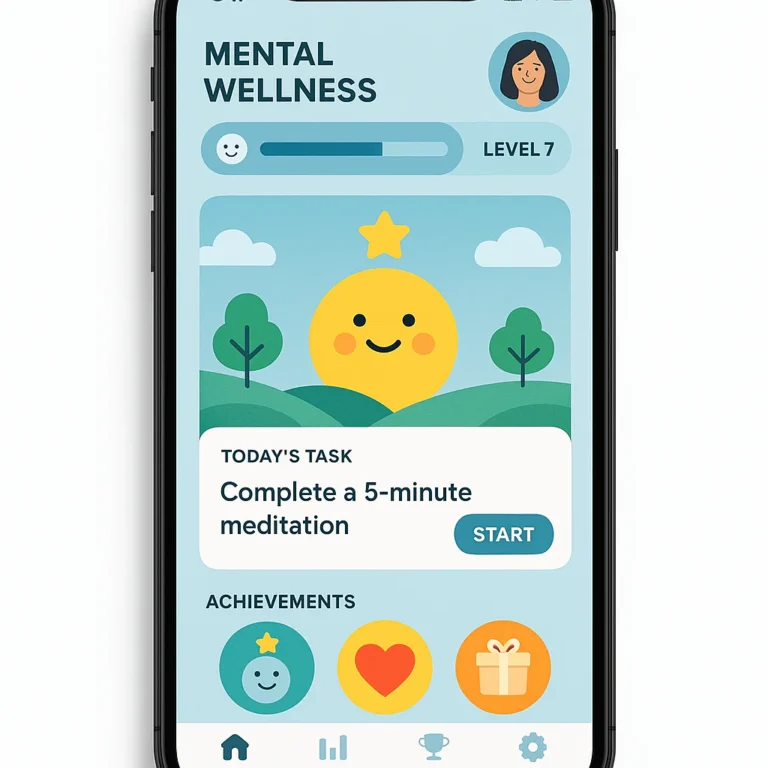
Ethical concerns in gamified mental health apps come down to whether the design supports people without pressuring them, exposing sensitive data, or overstating what the app can do. Look beyond badges and streaks: check privacy, clinical evidence, accessibility, user control, and how the app handles distress.
A streak can make a coping exercise easier to remember. But if missing one brings a guilt-inducing notification, the feature may turn support into pressure. One review of 38 publications about digital mental health interventions for young people found that just 10 discussed research ethics in detail—evidence that ethical design needs attention well beyond launch day.
Key Takeaways
- Engagement isn’t the same as effectiveness. Points and streaks may encourage app use, but they don’t prove improved mental health.
- Treat mental health data as highly sensitive. Check what an app collects, shares, retains, and lets you delete; don’t assume HIPAA covers every consumer app.
- Choose user control over pressure. Flexible goals, optional reminders, and easy pause settings are healthier than shame-based streaks or public comparisons.
- Look for evidence and clear safety boundaries. An app can support self-care, but it should not misrepresent its benefits or replace professional or crisis care.
- Accessibility and inclusion are ethical requirements. Language, disability access, cultural fit, and reliable device or internet access affect who can benefit.
- Ethical design is ongoing. Developers should keep evaluating privacy, safety, fairness, and real-world effects as apps change.
Table of Contents
- ⚡️ Quick Tips and Facts
- 🧭 What Ethical Concerns Mean for Gamified Mental Health Apps
- 📜 How Mental Health Gamification Got Here
- 🎮 How Gamified Mental Health Apps Work
- Common Game Mechanics: Points, Streaks, Rewards, and Leaderboards
- Mental Health Features and Intended Benefits
- ⚖️ The Main Ethical Concerns in Gamified Mental Health Apps
- Privacy, Sensitive Data, and Third-Party Tracking
- Informed Consent and Clear App Disclosures
- Manipulative Design, Dark Patterns, and Compulsive Engagement
- Clinical Evidence, Accuracy, and Misleading Claims
- Safety, Crisis Support, and Risk of Delayed Care
- Autonomy, Streak Pressure, and Shame-Based Feedback
- Bias, Accessibility, and the Digital Divide
- Children, Teens, and Other Vulnerable Users
- AI Chatbots, Personalization, and Automated Decisions
- Commercial Conflicts, Advertising, and Data Monetization
- 🧠 When Gamification Helps—and When It Can Harm
- Motivation, Habit Formation, and User Autonomy
- Reward Design Without Shame or Pressure
- Potential Harms for Anxiety, Depression, and Eating Disorders
- 👥 Ethical Questions for Different Users and Settings
- Apps for Children and Adolescents
- Workplace and School Mental Health Apps
- Therapist-Recommended Apps and Clinical Care
- 🔎 How to Evaluate a Mental Health App Before You Use It
- Privacy Policy and Data-Deletion Checks
- Evidence, Clinician Involvement, and Transparency
- Warning Signs of Unsafe or Exploitative Design
- Questions to Ask Before Sharing Mental Health Data
- 🛠️ Ethical Design Principles for App Developers
- Privacy by Design and Data Minimization
- Accessible, Inclusive, and Culturally Responsive Design
- Transparent Rewards and User-Controled Notifications
- Clinical Oversight, Testing, and Ongoing Safety Reviews
- 🏛️ Regulation, Professional Guidance, and Industry Standards
- Health Data Protection and Consumer Privacy Rules
- Medical Device Oversight and Wellness App Boundaries
- Ethical Guidelines for Digital Mental Health Research
- ❓ Frequently Asked Questions
- Are Gamified Mental Health Apps Safe to Use?
- Can a Mental Health App Sell or Share My Data?
- Do Points and Streaks Improve Mental Health Outcomes?
- Can These Apps Replace Therapy or Crisis Care?
- Conclusion
- Recommended Links
- Reference Links
⚡️ Quick Tips and Facts
Gamified mental health apps can make self-guided exercises feel more inviting. But a streak is not therapy, a score is not a diagnosis, and a cheerful avatar is not a privacy policy. At Gamification Hub™, we look at the whole experience: the game mechanics, the data practices, the evidence, and the real-life care around the app.
Our first practical lesson came from reviewing products such as SuperBetter: judge the health intervention and the game layer separately. A fun experience can support practice, but fun alone does not establish safety or clinical effectiveness.
| Quick fact | What it means for you |
|---|---|
| Gamification can support engagement | Points, stories, and progress cues may encourage practice, but continued use does not automatically mean improved mental health. |
| Mental health data can be unusually sensitive | Check what the app collects, who receives it, how long it is retained, and how to delete it. The FTC’s health-app guidance explains that some health apps may fall under rules beyond HIPAA. |
| Research has identified gaps in ethical reporting | A scoping review of interventions for young people found that only 10 of 38 publications discussed research ethics in detail; the authors argue ethics should be “an ongoing practice.” Read the review. |
| Young users need meaningful control | Adjustable sharing, clear privacy explanations, pause options, and choice over goals can support autonomy. |
| Accessibility is part of ethics | Device access, data costs, literacy, disability, language, and offline availability can determine who benefits and who gets left out. |
| Apps should not replace appropriate care | Look for clear boundaries, crisis guidance, and routes to professional support. The NHS app library and APA app evaluation model offer useful evaluation starting points. |
Our quick-screen checklist: ✅ Clear purpose and evidence; ✅ understandable privacy choices; ✅ flexible goals and reminders; ✅ accessible support; ❌ shame-heavy streaks; ❌ unexplained data sharing; ❌ claims that an app can replace professional treatment.
🧭 What Ethical Concerns Mean for Gamified Mental Health Apps
Ethical concerns arise when an app’s design, data practices, or business model could undermine a user’s privacy, autonomy, safety, dignity, or access to care. Gamification adds a special twist: the same feature that makes a tool motivating can also pressure someone at a vulnerable moment.
A daily check-in, for example, might help you build a reflection habit. But if missing it breaks a streak and triggers guilt-laden notifications, the mechanic has changed from a gentle cue into a source of pressure. Intent matters, but foreseeable impact matters too.
The ethics lens we use
| Question | What a responsible answer should address |
|---|---|
| Does it help? | Evidence for the specific intervention, population, and outcome—not simply downloads or time spent in the app. |
| Does it respect users? | Consent, user control, privacy, accessibility, and nonjudgmental language. |
| Could it cause harm? | Distress, shame, compulsive use, unsafe advice, privacy exposure, or delayed care. |
| Who benefits—and who carries the risk? | Users, families, clinicians, schools, employers, developers, advertisers, and communities. |
| What happens after launch? | Monitoring, updates, incident response, accessible support, and continued ethical review. |
The available literature does not justify labeling every gamified mental health app as manipulative or unsafe. It does justify asking sharper questions. A review of gamified health apps found concerns around privacy, surveillance, motivation, competition, and psychological harms, while cautioning that evidence drawn largely from health and fitness apps may not apply equally to every mental health tool. Explore the review.
📜 How Mental Health Gamification Got Here
Digital mental health tools have grown from websites and computer-based programs into mobile apps, interactive stories, chatbots, and immersive experiences. Gamification adds game-inspired elements—such as progress bars, challenges, characters, feedback, and rewards—to activities that are not games in themselves. Some interventions go further and are designed as games from the start.
That distinction matters. A breathing exercise with a progress badge is not the same thing as a narrative game built to teach emotional skills. Both can be useful, but they need to be assessed for different goals, evidence, risks, and user expectations.
What the young people’s research review found
A scoping review examined 38 publications covering 32 digital mental health interventions for young people aged 10–25, selected from 1,815 search results. Its examples included JoyPop, POD Adventures, Healthy Jeart, LINA, Lumi Nova, Stigma-stop, S.S. GRIN, ScrollQuest, and CatHill. The review did not rank these products or endorse them as best-practice solutions. Read the full review.
The review found a gap between formal research approval and broader ethical reflection:
- 31 of 38 publications (82%) reported ethics-committee approval.
- Only 10 of 38 (26%) discussed research ethics in detail.
- Only 9 of 38 (24%) addressed accessibility.
- Only 4 of 38 (11%) explicitly discussed empowerment or autonomy.
- 23 of 38 (61%) considered social implications.
These figures describe what the publications reported, not a safety score for the apps. They point to a larger lesson: ethics cannot stop at consent forms and launch-day checks. It has to continue through design, testing, deployment, and updates.
Why context changes the answer
An app used privately by an adult for journaling raises different questions from one assigned to a student by a school or recommended to a child by a parent. The young-persons review describes both potential benefits of family involvement and risks that app activities could be misunderstood or used as punishment.
It also highlights unequal access: unreliable internet, limited device storage, literacy barriers, disability, and displacement can all affect who can use an intervention. Most publications in the review came from the Global North; only 6 of 38 concerned Asia, Africa, or South America. That matters because an app tested with one population may not fit another community’s language, culture, or circumstances.
🎮 How Gamified Mental Health Apps Work
Gamified mental health apps typically combine a therapeutic, educational, or self-care activity with game mechanics. The intended effect is to make practice more understandable or engaging. The mechanic should serve the mental health goal—not become the goal itself.
Common Game Mechanics: Points, Streaks, Rewards, and Leaderboards
| Mechanic | Possible benefit | Ethical risk | Safer design direction |
|---|---|---|---|
| Points and badges | Make completed activities visible | Can imply that more activity always means better health | Reward reflection or learning, not just volume |
| Streaks | Encourage a routine | A missed day can create guilt or all-or-nothing thinking | Allow rest days, pauses, and streak recovery |
| Progress bars | Show movement through a program | Can oversimplify a non-linear recovery process | Explain that progress is not a clinical measure |
| Stories and characters | Give skills a memorable context | Can feel infantilizing or culturally mismatched | Offer age-appropriate, representative choices |
| Leaderboards | Create social connection for some users | Invite comparison, stigma, or unwanted disclosure | Make them optional—or leave them out |
| Reminders | Prompt practice | Can feel intrusive, especially during distress | Give users control over timing, frequency, and wording |
| Challenges | Turn a skill into a manageable action | Fixed goals may not fit someone’s circumstances | Support personalized, adjustable goals |
We often tell design teams: reward the skill, not the streak. A user who takes a needed break may be making a wise choice, not “failing” the app.
Mental Health Features and Intended Benefits
Common features include mood check-ins, guided breathing, cognitive behavioral therapy exercises, psychoeducation, journaling, coping-skill practice, social support, and referral pathways. A game layer may make these activities easier to start, but the app should clearly state what it is designed to do—and what it is not designed to do.
The APA’s app evaluation model recommends considering areas such as privacy and security, clinical foundation, usability, and data integration. It is a helpful framework for evaluation, not a guarantee that a particular product is effective.
For designers seeking practical examples of mechanics and user experience, see our guides to Game Mechanics and Gamification and UX Design.
⚖️ The Main Ethical Concerns in Gamified Mental Health Apps
Privacy, Sensitive Data, and Third-Party Tracking
Mental health apps may collect more than the answers you type. Depending on the app, data can include mood logs, symptom responses, device information, usage patterns, approximate location, or interactions with a chatbot. A privacy policy that says “we protect your data” is not a substitute for explaining what actually happens to it.
Check whether the app:
- Collects only information needed for its stated function.
- Explains whether data are shared with analytics providers, advertisers, research partners, or affiliates.
- Offers meaningful controls over collection and sharing.
- Allows account closure and data deletion, and explains what deletion does and does not cover.
- Uses plain language and identifies how long information is retained.
- Gives additional protections when devices are shared or family members can access them.
The FTC’s guidance for mobile health apps explains that privacy and security obligations depend on how an app operates. Do not assume every health app is covered by HIPAA; many consumer apps are not traditional health-care providers or business associates. The HS guidance on health apps and HIPAA helps clarify the distinction.
Informed Consent and Clear App Disclosures
Consent should be understandable, specific, and revisitable. A user should be able to tell what information is collected, why it is used, whether humans review it, and what happens if they stop using the app.
✅ Prefer separate, clear choices for optional data sharing.
❌ Treating a long policy as proof that users understand what they agreed to.
For young people, consent and assent also require care: age, local law, family involvement, and the young person’s privacy expectations can all matter. The review of youth interventions notes that easy-language privacy policies and adjustable sharing settings can help users make informed choices. See the review’s findings.
Manipulative Design, Dark Patterns, and Compulsive Engagement
A reminder can support a habit; a relentless notification loop can pressure someone into returning. A reward can make progress feel tangible; a loss mechanic can make absence feel like punishment. The ethical question is not simply whether a feature increases engagement, but whether it respects the user’s ability to choose when and how to engage.
A review of gamified health apps discusses risks such as surveillance, dependence, social pressure, anxiety, anger, and reduced confidence. It also cautions that these findings draw substantially on health and fitness contexts, so they should inform—not automatically determine—judgments about every mental health app. Read the review.
Red flags include:
- Notifications designed to provoke fear, guilt, or urgency.
- Rewards that encourage users to ignore rest or personal commitments.
- No clear way to pause reminders or leave a challenge.
- Social comparison that exposes sensitive progress.
- Engagement metrics presented as proof of clinical benefit.
Clinical Evidence, Accuracy, and Misleading Claims
Evidence should match the claim. A small usability study can show that people found an app easy to use; it does not by itself establish that the app treats depression or prevents suicide. Ask whether a product has been studied with the population it serves, whether results were published, and whether the measures reflect outcomes users care about.
A study of one version also may not validate a heavily updated app, a different audience, or a new feature. The APA app evaluation model encourages checking the clinical basis and the quality of supporting evidence rather than relying on app-store ratings.
Safety, Crisis Support, and Risk of Delayed Care
An app should state what it can and cannot do in an emergency. If it includes a crisis feature, users need to know what triggers it, whether a person reviews alerts, what information may be shared, and whether the service is available where they live.
Privacy and safety can pull in different directions. The youth intervention review describes one suicide-prevention tool that sent alerts for concerning input, while young users of another tool preferred to retain control over contacting help and avoid identifiable details or emergency notifications. There is no universal setting that resolves this tension for everyone. Clear protocols and user involvement are essential. Read the review.
If you or someone else may be in immediate danger, an app is not a substitute for local emergency services or a qualified professional. In the United States and Canada, call or text 988; elsewhere, use the relevant local crisis or emergency service.
Autonomy, Streak Pressure, and Shame-Based Feedback
Mental health does not move in a neat progress bar. Users may need to pause, change goals, repeat a lesson, or use the app in a way the designers did not predict. A humane design makes those choices easy.
Useful autonomy-supportive features include:
- Adjustable goals and reminders.
- Clear options to skip, pause, or repeat.
- Nonjudgmental feedback after missed activities.
- A way to hide scores or disable social comparison.
- Choice over tracking and data sharing.
The review of young people’s interventions found that user control over settings, story options, tracking, and the ability to pause or repeat levels could support agency. It also notes that directive language or poorly designed content may harm well-being. Explore the findings.
Bias, Accessibility, and the Digital Divide
A tool is not truly accessible if it requires a new phone, constant internet, long written responses, or familiarity with a narrow set of cultural references. Accessibility includes device access, language, disability, literacy, cost of connectivity, and cultural relevance.
Practical design responses include:
- Low-storage and low-bandwidth options.
- Offline access where appropriate.
- Audio, captions, screen-reader compatibility, and clear navigation.
- Alternatives to long text entry, such as multiple-choice responses or emoticons.
- Diverse characters and settings shaped by the communities who will use the app.
- Testing with people who have different abilities, identities, and levels of digital access.
The youth review found accessibility was addressed in fewer than a quarter of its included publications. It also warns that cultural adaptation should be substantive, not just a translated interface. Read the review. For related approaches, see our Educational Gamification and Game-Based Learning resources.
Children, Teens, and Other Vulnerable Users
Young users may face added risks around consent, family access, peer comparison, and the interpretation of advice. A parent or teacher can help a young person practice a skill, but involvement can also undermine trust if private app activity is monitored or used as punishment.
The right balance depends on the intervention and context. Developers should explain what parents, schools, or clinicians can see; let young users understand those boundaries; and avoid collecting more information than necessary. “For young people” should mean designed with young people—not merely designed to keep young people engaged.
AI Chatbots, Personalization, and Automated Decisions
A chatbot may make practice feel conversational, while personalization may adapt content to a user’s responses. These features also raise questions: Is a response generated automatically? Is the system clinically reviewed? Does it infer risk? Who sees that inference? Can a user correct or challenge it?
Before using an AI-enabled mental health feature, check:
- Whether the app clearly identifies automated content.
- What the system does if someone reports severe distress.
- Whether conversations are stored or used to improve models.
- Whether human support is available and what its limits are.
- How the company tests for bias, unsafe responses, and failure cases.
Personalized design can improve relevance, but a tailored response is not necessarily a clinically appropriate response. Users should not be led to believe an automated system is a licensed clinician.
Commercial Conflicts, Advertising, and Data Monetization
A free app still has a business model. It may be funded by subscriptions, institutional contracts, grants, research funding, advertising, or data-related services. Users deserve a clear explanation of who pays and whether commercial incentives influence what the app recommends or measures.
The youth review notes that funding sources were not stated in 18 of 38 publications. That does not prove a conflict, but it makes transparency harder. Review the findings. For developers, disclose funding and partnerships plainly; for users, treat unexplained data sharing and vague sponsorship as reasons to ask more questions.
🧠 When Gamification Helps—and When It Can Harm
Gamification can help when it makes a useful activity easier to begin, understand, or repeat. It can harm when it prioritizes engagement over well-being or turns complex emotional experiences into a contest.
The youth review warns against “chocolate covered broccoli”—an instructional program dressed up as a game without meaningful play or user agency. It also reports that some young users experienced the app as “yet another thing to deal with.” Those are important reminders: more engagement is not always better engagement. Read the review.
Motivation, Habit Formation, and User Autonomy
A well-designed app can help you remember a coping exercise or practice a skill in small steps. The best designs support internal motivation: users understand why an activity matters, can adapt it, and can stop without feeling punished.
The competing perspective is also worth hearing. Rewards may provide structure for people who find it difficult to begin. But if the reward becomes the sole reason to participate, the app risks creating dependence on external validation. The practical test: does the mechanic help users build a skill they can carry beyond the app?
Reward Design Without Shame or Pressure
| Better choice ✅ | Riskier choice ❌ |
|---|---|
| Celebrate effort, reflection, or skill practice | Rank users by mood, symptoms, or “wellness” |
| Offer optional reminders | Use guilt or alarm to pull people back |
| Let users pause and resume | Erase progress after a missed day |
| Explain what a score represents | Present a score as a diagnosis or definitive measure |
| Encourage supportive peer connection | Make sensitive progress public by default |
A reward should communicate “you practiced”, not “you are healthier than someone else.” That small difference changes the emotional temperature of the whole experience.
Potential Harms for Anxiety, Depression, and Eating Disorders
People respond differently to reminders, tracking, competition, and quantified goals. For some, frequent check-ins may increase rumination; for others, a flexible tracker may help notice patterns. A leaderboard can motivate one user and intensify comparison for another.
Apps should avoid assuming one target or routine fits everyone. In sensitive areas such as eating-disorder recovery, self-harm, or severe anxiety, users should be able to hide triggering metrics, pause tracking, and access professional guidance. The literature on gamified health apps reports possible psychological harms, including anxiety, discouragement, and reduced confidence, but it does not establish that every user or app will experience those effects. Review the evidence and its limits.
👥 Ethical Questions for Different Users and Settings
Apps for Children and Adolescents
For younger users, responsible design should make privacy, parental involvement, and help-seking boundaries understandable. Consider whether the app:
- Explains what parents or guardians can view.
- Gives young users age-appropriate control and a route to ask questions.
- Avoids public leaderboards and shame-based rewards.
- Offers culturally relevant, accessible content.
- Includes a clear plan for distress or safety concerns.
Workplace and School Mental Health Apps
When an employer or school provides an app, participation can feel compulsory even if the app says it is voluntary. Users should know whether a manager, teacher, administrator, or insurer can access individual-level data.
A healthy boundary: organizations should receive only the information they truly need, ideally in aggregate where appropriate, and should not use app engagement or mental health disclosures to judge performance, discipline, or eligibility without clear, lawful, and ethical justification.
Therapist-Recommended Apps and Clinical Care
A therapist may recommend an app as a supplement for between-session practice. In that setting, users should agree on what the app is for, how results will be discussed, and whether the clinician can see any data.
Digital tools are often most responsible when they complement human support rather than pretending to replace it. The youth review recommends considering blended digital and face-to-face support, including teachers, therapists, peer mentors, and lived-experience workers where appropriate. Read the review.
🔎 How to Evaluate a Mental Health App Before You Use It
Privacy Policy and Data-Deletion Checks
Use this step-by-step check before entering sensitive information:
- Identify the publisher. Confirm the developer’s name and official website.
- Read the data list. Look for mood entries, symptom responses, location, device identifiers, or chatbot conversations.
- Check sharing. Search the policy for “third parties,” “analytics,” “advertising,” “partners,” and “research.”
- Look for controls. Find settings for permissions, sharing, notifications, and account visibility.
- Find deletion instructions. Confirm how to close the account and request data removal.
- Check the limits. See whether data may remain in backups or be retained for legal or research purposes.
- Revisit after updates. A new feature can change data practices.
The FTC mobile health app resource and HS health app guidance are useful starting points for understanding privacy responsibilities.
Evidence, Clinician Involvement, and Transparency
Look for a clear description of the app’s purpose, the qualifications of its clinical advisers, published studies, and evidence that matches its claims. Be cautious when testimonials, download counts, or star ratings are presented as proof of treatment effectiveness.
An app may be worthwhile as a self-care aid without being a clinically validated treatment. The key is honest labeling. The APA’s app evaluation model can help organize questions about evidence, privacy, usability, and clinical foundation.
Warning Signs of Unsafe or Exploitative Design
Pause before using an app that:
- Promises a cure or guaranteed results.
- Uses shame, fear, or escalating rewards to demand daily use.
- Makes sensitive sharing compulsory without a clear reason.
- Has no understandable privacy information or support route.
- Treats an automated chatbot as a substitute for clinical care.
- Offers no clear crisis boundary or safety explanation.
- Makes it difficult to pause, cancel, or delete an account.
Questions to Ask Before Sharing Mental Health Data
- What information does the app collect, and why?
- Is any information shared with advertisers or analytics companies?
- Can I use the main features without sharing optional data?
- Who can see my entries?
- Can I delete my data and account?
- What happens if I report an immediate safety concern?
- What evidence supports the app’s claims?
- Can I turn off streaks, reminders, scores, or social features?
If the company cannot answer these questions clearly, you do not have to hand over your most personal information just to try a breathing exercise.
🛠️ Ethical Design Principles for App Developers
Privacy by Design and Data Minimization
Collect less, explain more, and make privacy choices usable. Avoid collecting sensitive information simply because it might be useful someday. Build deletion, consent, access controls, and secure handling into the product from the start, then test whether users can actually find and understand those controls.
Accessible, Inclusive, and Culturally Responsive Design
Involve the people who will use the intervention in decisions about language, characters, settings, accessibility, and data practices. Co-design should be a form of shared influence—not a quick usability test to make a product more appealing.
The youth review cautions that co-design is sometimes justified only as a way to improve engagement or effectiveness. It calls for meaningful attention to ethics and shared responsibility. It also points to the need for culturally grounded adaptation and greater attention to intersectionality. See the review.
Transparent Rewards and User-Controled Notifications
Give users control over goals, feedback, reminders, and social features. Explain what a badge or score means; avoid implying that activity equals recovery. Design for missed days, pauses, and changing needs—because people are not malfunctioning apps that need a restart.
For additional design approaches, explore our Gamification and UX Design category and Gamification Case Studies.
Clinical Oversight, Testing, and Ongoing Safety Reviews
Ethical review continues after launch. Developers should monitor for harmful patterns, investigate safety reports, assess whether updates change validated features, and include clinicians and users in ongoing evaluation. A product should also explain where users can report an issue and what response to expect.
A useful design framework groups responsibilities into proper design, facilitating proper use, and proper embedding in society: anticipate foreseeable harms, support users in context, and coordinate with relevant stakeholders such as clinicians and communities. Read the framework review.
🏛️ Regulation, Professional Guidance, and Industry Standards
Health Data Protection and Consumer Privacy Rules
Privacy rules depend on the app, its operators, and what they do with data. HIPAA does not automatically cover every consumer wellness app. In the United States, the FTC provides guidance on health apps and consumer protection; HS explains when HIPAA may apply. Users outside the United States should check the privacy and health-data laws that apply in their jurisdiction.
Medical Device Oversight and Wellness App Boundaries
An app’s regulatory status depends on its intended purpose and claims, not just whether it uses mental health language. A general wellness tool and software intended to diagnose or treat a condition may face different regulatory expectations. The FDA’s guidance on device software functions explains how the agency approaches mobile medical apps and related software.
Ethical Guidelines for Digital Mental Health Research
Research ethics approval is essential where required, but approval alone does not settle questions about long-term data use, accessibility, commercial influence, or changes after deployment. The youth review’s central recommendation is to treat ethics as an ongoing practice across development, testing, implementation, regulation, funding, and updates. Read the full review.
❓ Frequently Asked Questions
How do gamified mental health apps protect users’ sensitive data?
A responsible app should explain what it collects, why it collects it, who can access it, whether it shares information, and how users can delete their data. It should also offer meaningful privacy controls and protect accounts with appropriate security.
But protection cannot be assumed from a “secure” label. Read the policy, check device permissions, and look for third-party sharing. HIPAA may not apply to a consumer app, so consult the FTC’s app guidance and HS’s explanation.
Can gamified mental health apps make anxiety or depression worse?
They can create distress for some users if they rely on shame, constant reminders, social comparison, or rigid tracking. A missed streak may feel trivial to one person and punishing to another. Research on gamified health apps reports possible harms such as anxiety, discouragement, and reduced confidence, while not proving that every app causes these effects. Review the evidence.
Choose apps that let you pause tracking, hide scores, adjust reminders, and leave activities without penalty. If a feature makes you feel worse, stop using it and consider discussing the experience with a qualified professional.
Are rewards and streaks in mental health apps ethically designed?
They can be, if they are optional, flexible, transparent, and designed to support a meaningful skill rather than force daily engagement. Ethical streaks allow rest, pauses, and changing circumstances. Riskier ones use guilt, lost progress, or public comparisons to pressure users.
A helpful rule: reward practice without grading someone’s worth or recovery.
Can gamified mental health apps replace professional therapy?
No app should be assumed to replace professional assessment or treatment. Some tools may support self-care or between-session practice, but their role depends on evidence, the user’s needs, and the product’s limits. Look for clear language about scope and routes to human support.
The young-persons review favors considering blended digital and face-to-face support rather than assuming an app can replace care. Read the review.
How do mental health apps avoid manipulating users with addictive game mechanics?
They give users control over reminders, goals, rewards, social features, and time spent in the app. They avoid guilt-driven notifications, pressure to maintain streaks, and competition based on sensitive mental health data. They also measure meaningful outcomes—not just time in app or return visits.
Designers should test whether a feature helps users develop transferable skills or merely keeps them tapping. Engagement is a tool, not the health outcome.
What ethical concerns arise when mental health apps use AI and personalization?
AI features can involve sensitive conversation data, inaccurate responses, biased recommendations, unclear human oversight, and confusion about whether a user is speaking with a clinician. Personalization can also make an unsuitable recommendation feel unusually authoritative.
Apps should identify automated features, explain data use, provide human-support boundaries, and test safety across different users and scenarios. Users should be able to opt out where possible and correct inaccurate information.
How can users tell whether a gamified mental health app is safe and evidence-based?
Check who publishes the app, what it claims to do, what evidence supports those claims, and whether the research matches the app’s users and features. Review its privacy policy, data-sharing practices, accessibility, safety support, and controls over rewards and reminders.
The APA app evaluation model offers a structured set of questions. Treat testimonials and high app-store ratings as user feedback—not proof of clinical effectiveness.
Can parents, schools, or employers see a user’s app activity?
That depends on the app’s settings, contracts, and privacy practices. Before using an app provided by a school or employer, ask what data administrators can see, whether participation is truly voluntary, and whether individual-level information affects decisions about the user.
For younger users, the app should explain parent or guardian access in age-appropriate language. Never assume “private” means private from the organization that provided the app.
What should someone do if an app triggers distress or a safety concern?
Pause or stop the feature, adjust or disable notifications, and seek support from a trusted person or qualified professional. If there is immediate danger, contact local emergency services or a crisis line rather than relying on the app.
Developers should make reporting and support routes easy to find, explain how safety alerts work, and avoid promising that automated systems can always detect a crisis.