Support our educational content for free when you purchase through links on our site. Learn more
🎮 Future of Gamified Digital Therapeutics (2026)

The future of gamified digital therapeutics depends on pairing engaging game design with proven clinical benefit, strong privacy, and real care-team support. Points and streaks can help people practice, but they are not treatment outcomes by themselves.
The most promising systems are likely to adapt to individual needs and fit into existing care, rather than asking patients to squeeze another disconnected app into their day. That means evaluating more than whether people keep playing: does the intervention help, for whom, and for how long?
We’ve seen a tiny design choice change the feel of a health routine. A missed-day message that says “start again when you’re ready” can invite someone back; a lost-streak warning can make the app feel like one more thing they’ve failed at. In therapeutic design, that difference is not cosmetic—it can shape whether a tool feels supportive or stressful.
Key Takeaways
- Clinical outcomes come first: Engagement is useful only when it supports a meaningful health goal.
- Personalization is promising, not magic: AI, wearables, and adaptive challenges need validation, privacy safeguards, and human oversight.
- The best mechanics are humane: Flexible goals and encouraging feedback can support practice without shame or pressure.
- Evidence must match the claim: Check the product, population, outcomes, and study quality—not just testimonials or download numbers.
- Care integration matters: Digital therapeutics should fit clinical workflows and offer clear support when users need help.
Table of Contents
- ⚡️ Quick Tips and Facts
- 🧭 Background: How Gamified Digital Therapeutics Evolved
- What counts as a digital therapeutic?
- Gamification, serious games, and wellness apps: key differences
- 🎮 How Gamification Can Support Treatment
- Behavior change techniques behind the game mechanics
- Personalization, feedback, rewards, and social features
- 🏥 Conditions and Care Pathways Using Gamified Digital Therapeutics
- Mental health, stress, and substance use
- Chronic disease management and medication adherence
- Rehabilitation, pain management, and physical activity
- Children, adolescents, and neurodevelopmental care
- 📱 The Technology Shaping the Future
- AI-driven personalization and adaptive gameplay
- Wearables, sensors, and real-time health feedback
- Virtual reality, augmented reality, and immersive therapy
- Digital twins, connected care, and interoperable platforms
- 📊 Clinical Evidence: What Works, for Whom, and Why
- Clinical trials, real-world evidence, and validated outcomes
- Engagement, adherence, and long-term behavior change
- Comparing gamified and non-gamified digital treatments
- Common evidence gaps and research priorities
- 🛡️ Safety, Privacy, Accessibility, and Ethical Design
- Clinical safety, crisis support, and human oversight
- Health data privacy, cybersecurity, and informed consent
- Accessible, inclusive, and culturally responsive design
- Avoiding dark patterns, stigma, and reward fatigue
- 📜 Regulation, Prescription, and Digital Health Standards
- FDA oversight and software as a medical device
- Prescription digital therapeutics and clinician workflows
- International regulation, quality standards, and evidence requirements
- 💼 Business Models, Reimbursement, and Market Adoption
- Health plans, employers, providers, and direct-to-consumer models
- Reimbursement, health economics, and value measurement
- Partnerships with pharmaceutical and medical device companies
- 🚀 The Future of Gamified Digital Therapeutics
- Emerging trends and next-generation treatment experiences
- Oportunities for clinicians, patients, and developers
- Challenges that could slow adoption
- 🧰 How to Evaluate a Gamified Digital Therapeutic
- Questions patients and caregivers should ask
- Questions clinicians and health systems should ask
- A practical checklist for developers and buyers
- 🔎 Conclusion
- 🔗 Recommended Links
- ❓ FAQ
- Are gamified digital therapeutics clinically proven?
- How are digital therapeutics different from health and fitness apps?
- Can gamified digital therapeutics replace medication or therapy?
- How do these treatments protect personal health data?
- Who pays for prescription digital therapeutics?
- What should patients look for before choosing one?
- 📚 Reference Links
⚡️ Quick Tips and Facts
Gamified digital therapeutics (DTx) use game design to help deliver a health intervention. The goal is not simply to make treatment entertaining; it is to support a clinically meaningful outcome, such as practicing a skill, managing symptoms, or sustaining a care plan. For a practical example of how game mechanics can support behavior change, see our SuperBetter review.
| At a glance | What to know |
|---|---|
| What makes a DTx? | A health-focused software intervention intended to prevent, manage, or treat a condition, with evidence and oversight appropriate to its claims. Labels and regulatory pathways vary by product and country. |
| What does gamification add? | Goals, feedback, progress cues, challenges, narratives, or social features that may encourage people to begin and continue therapeutic activities. |
| What should matter most? | Clinical benefit, safety, accessibility, privacy, and sustained use—not points or screen time alone. |
| Where is the field heading? | Toward more adaptive, connected care that can combine software, clinical guidance, and sometimes sensors or immersive technology. |
| What is the main caution? | Engagement is not proof of treatment effectiveness. A popular app is not automatically a clinically validated therapeutic. |
| A useful rule of thumb | Check the intended health claim, evidence, privacy practices, accessibility, and whether a clinician should be involved. |
✅ Expert takeaway: Treat game mechanics as the delivery system, not the treatment itself. The intervention still needs a credible therapeutic rationale and evidence for its intended users and outcomes.
The FDA’s digital health policies explain how US oversight depends on a software product’s function and claims. For broader design context, explore our guides to game mechanics and gamification and UX design.
🧭 Background: How Gamified Digital Therapeutics Evolved
Digital therapeutics grew from a simple but ambitious idea: software can do more than remind us to take care of ourselves; it can deliver structured health interventions. Early digital health products often emphasized tracking and information. Newer therapeutic software may include guided exercises, adaptive lessons, symptom monitoring, clinician support, or game-like activities designed around a treatment goal.
The distinction matters. A step counter may encourage movement, and a meditation app may support relaxation, but neither should be treated as a therapy for a diagnosed condition merely because it has streaks or badges. The product’s intended use, evidence, and claims determine how seriously we should evaluate it.
A recent review of cognitive digital therapeutics describes the opportunity as providing “scalable and personalized solutions” for cognitive care. It also emphasizes the need for stronger evidence, user-centered design, privacy protections, and integration with clinical services (review in Frontiers in Digital Health). That is a promising direction, not a blanket endorsement of every brain-training game.
What counts as a digital therapeutic?
A digital therapeutic is generally a software-based intervention designed to support prevention, management, or treatment of a health condition. The term is used inconsistently across markets, so look past the label and ask what the software actually does.
| Product type | Main purpose | What to verify |
|---|---|---|
| Wellness app | General wellbeing, habit support, or self-guided education | Does it make a clinical treatment claim? What data does it collect? |
| Gamified health app | Encourage activity or practice using game mechanics | Are outcomes measured beyond engagement? |
| Digital therapeutic | Deliver a structured intervention intended to improve a health outcome | Is evidence matched to the specific product, population, and claim? |
| Prescription digital therapeutic | A regulated or prescribed software treatment, depending on jurisdiction | What is the authorization status, prescribing pathway, and clinician role? |
The FDA does not approve every app described as a digital therapeutic. In the United States, oversight is tied to a software function’s risk and medical claims; the FDA’s Digital Health Policy Navigator is a useful starting point.
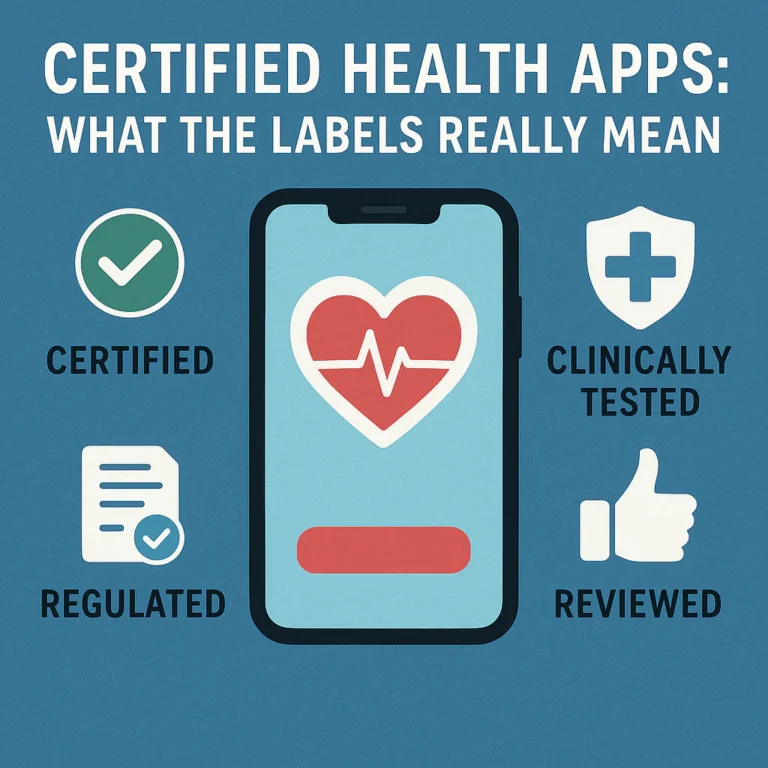
When a company says “clinically tested,” ask what was tested: the exact app version, a related prototype, a short-term engagement measure, or a meaningful health outcome? Those are very different receipts.
Gamification, serious games, and wellness apps: key differences
Gamification adds game-design elements to an activity that is not primarily a game. A serious game is a game created with a purpose beyond entertainment, such as training or education. A gamified digital therapeutic may use either approach, but its health purpose and evidence should remain central.
| Approach | Typical design | Potential value | Common pitfall |
|---|---|---|---|
| Gamification | Progress bars, quests, feedback, streaks | Makes repeated practice easier to understand and sustain | Rewards can become the reason to use the app, displacing the health goal |
| Serious game | A playable experience built around learning or practice | Can create realistic, repeatable scenarios | An engaging game may still lack clinical validation |
| Wellness app | Tracking, reminders, content, or self-care tools | Supports everyday habits and awareness | Users may mistake general wellbeing support for treatment |
| Digital therapeutic | Structured software intervention with health claims | May extend access to evidence-informed care | Requires careful evaluation of outcomes, safety, and implementation |
Our experience designing game systems has taught us to separate “people enjoyed it” from “it helped them.” Both can be true. Neither proves the other. For more examples of how mechanics can support a real-world objective, see our gamification case studies and game-based learning resources.
🎮 How Gamification Can Support Treatment
The strongest therapeutic game design makes the next useful action clear. It helps a person see what to do, why it matters, and how they are progressing—without turning health into a high-pressure contest.
A clinician may think in terms of treatment adherence and measurable outcomes. A patient may think, “Will this fit into a tiring Tuesday?” A caregiver may ask whether the instructions are understandable. Good design has to answer all three.
Behavior change techniques behind the game mechanics
| Mechanic | How it may help | Design caution |
|---|---|---|
| Small goals | Break a complex plan into manageable actions | Goals should adapt when symptoms, energy, or circumstances change |
| Progress feedback | Show practice completed and skills developing | Don’t imply clinical improvement from activity counts alone |
| Prompts and reminders | Help people remember intended actions | Too many alerts can feel naging or punitive |
| Challenges | Encourage deliberate practice and skill-building | Difficulty should be adjustable; failure should not shame users |
| Narrative and characters | Give tasks context and emotional continuity | Story should support the intervention, not obscure it |
| Social support | Add encouragement or shared accountability | Protect privacy and offer a meaningful opt-out |
| Rewards | Recognize effort and reinforce a routine | Avoid coercive mechanics or rewards tied to sensitive health data |
The behavior-change literature includes many techniques beyond points and badges. The Behaviour Change Technique Taxonomy offers researchers and designers a shared way to describe intervention components. That’s useful because “gamified” alone tells us very little about what a product is asking someone to do.
Personalization, feedback, rewards, and social features
Personalization should mean more than choosing an avatar. A therapeutic system might adjust task difficulty, pacing, reminders, instructions, or support based on a person’s abilities and preferences. But adaptation needs guardrails: an algorithm should not quietly turn a low score into a medical judgment.
A practical sequence looks like this:
- Set a health-relevant goal. Define the behavior or outcome the intervention is meant to support.
- Establish a baseline. Understand the user’s starting point without treating one measurement as a diagnosis.
- Choose an appropriate challenge. Start at a level that feels achievable but still requires attention or practice.
- Give useful feedback. Explain what happened and suggest a next step.
- Adapt cautiously. Change difficulty or support based on repeated signals, not a single bad day.
- Review progress with the user. Where relevant, connect app activity to a clinician’s care plan.
A thoughtful system rewards effort, learning, or consistency, rather than implying that a person can “win” their way out of illness. If a user misses a session, the app should help them restart—not send a digital guilt trip wearing a cartoon hat.
🏥 Conditions and Care Pathways Using Gamified Digital Therapeutics
Different conditions call for different treatment mechanisms. A cognitive-training game, a physical rehabilitation program, and a mental health intervention may all use quests or feedback, but their outcomes and safety requirements are not interchangeable.
| Care area | Possible role for gamified software | Evidence and implementation questions |
|---|---|---|
| Mental health | Practice coping skills, self-monitoring, or therapeutic exercises | Is the intervention appropriate for symptom severity, and what crisis support exists? |
| Cognitive health | Practice attention, memory, or executive-function tasks | Do improvements transfer beyond the game to everyday function? |
| Chronic conditions | Support routines, self-management, and education | Does app use improve relevant clinical outcomes or care coordination? |
| Rehabilitation | Encourage repeated movement and track practice | Are exercises safe, individualized, and compatible with clinical guidance? |
| Pediatric care | Make age-appropriate practice and education more engaging | Were children and caregivers involved in design and testing? |
The World Health Organization’s digital health guidance offers a useful reminder: digital tools should strengthen health systems and care, not be treated as magic substitutes for them.
Mental health, stress, and substance use
For mental health, game mechanics may support rehearsal, reflection, behavioral activation, or coping practice. The central question is whether the app delivers an intervention with a plausible evidence base and a safe plan for users whose symptoms worsen.
Products such as SuperBetter illustrate how quests and social support can frame personal goals as actionable steps. That makes the design worth examining, but an engaging self-help experience is not automatically a regulated treatment or a replacement for professional care.
Before relying on a mental-health product, check:
- Whether it clearly describes its intended users and limitations.
- Whether it provides crisis guidance and routes users to appropriate support.
- Whether the evidence applies to the exact product and population.
- Whether the person can reduce reminders or social features.
- Whether clinician involvement is recommended or required.
For severe symptoms or an urgent safety concern, an app is not an emergency service. Use local emergency or crisis resources and professional care.
Chronic disease management and medication adherence
For chronic conditions, gamification may help make recurring tasks more visible: tracking symptoms, practicing self-management skills, preparing for appointments, or following a clinician-approved plan. The app should fit into care rather than create a parallel universe of notifications and dashboards.
| Potential feature | Useful when… | Watch for… |
|---|---|---|
| Routine reminders | The user wants help remembering a specific action | Alert overload, especially when schedules change |
| Symptom logging | Entries inform a care conversation or self-management decision | Data collection without explanation or feedback |
| Educational quests | Lessons are paced and relevant to the user’s condition | Oversimplified content or rewards for merely clicking through |
| Progress summaries | Users and clinicians can interpret trends together | Charts that overstate what the data can prove |
A good product lets users understand what information is recorded, why, and who can see it. The FDA’s digital health resources and the HS Health Information Privacy guidance can help frame questions about intended use and health information, though privacy rules vary by service and jurisdiction.
Rehabilitation, pain management, and physical activity
Movement-based games can make repetitive practice feel less repetitive. In rehabilitation, that can be a real design advantage—provided the activities are appropriate for the person’s condition and do not encourage unsafe movements.
Exergames combine physical activity with game-like tasks. A cognitive digital therapeutics review notes potential benefits from combined cognitive and physical training in older adults, while also highlighting evidence and implementation gaps (review). This is promising, but results depend on the population, intervention, study design, and outcome being measured.
Use a cautious setup:
- Confirm the activity is suitable with a qualified clinician when needed.
- Check that the software gives clear movement instructions and safety guidance.
- Start with an accessible difficulty level and a stable environment.
- Stop if pain, dizziness, or other concerning symptoms occur.
- Track function and wellbeing—not just completed levels.
For pain-related use, be especially wary of systems that frame discomfort as a score to beat. A game should support a care plan, never pressure someone to push through symptoms.
Children, adolescents, and neurodevelopmental care
Children may respond well to stories, characters, and short challenges, but “kids like games” is not a clinical strategy. A pediatric therapeutic should be designed for the child’s developmental stage, involve caregivers appropriately, and protect a young person’s privacy.
For attention-related care, EndeavorRx is a notable example of a video-game-based prescription treatment authorized by the FDA for a specific pediatric indication. Authorization is not a promise that every child will benefit, and the product’s current labeling and clinician guidance should be checked directly.
Questions for caregivers and clinicians:
- Is this intended for the child’s age and condition?
- What outcomes were evaluated, and over what period?
- How does the product handle missed sessions or frustration?
- What data is collected from the child, and how is consent managed?
- Does it complement the existing care plan?
📱 The Technology Shaping the Future
The next generation of gamified digital therapeutics may combine adaptive software, wearable signals, remote support, and immersive environments. More sensors do not automatically mean better care, though. A system can collect a mountain of data and still fail to answer the question a patient actually has.
The future-facing cognitive therapeutics review calls for tools to move “from standalone tools to fully embedded components within the cognitive care delivery system” (source). That means useful connections to care, not merely a shiny app with a login.
AI-driven personalization and adaptive gameplay
AI could help tailor content, task difficulty, feedback, or support. It might also help identify patterns in how someone interacts with an intervention. The important distinction is between personalizing the experience and making a clinical decision.
| AI use | Potential benefit | Key safeguard |
|---|---|---|
| Adaptive difficulty | Keeps tasks appropriately challenging | Validate changes and allow clinician or user control |
| Conversational support | Makes instructions or education easier to access | Prevent unsupported clinical advice and provide escalation routes |
| Pattern detection | Flags changes in engagement or performance | Avoid treating app behavior as a diagnosis |
| Content tailoring | Presents relevant practice and explanations | Test for accuracy, bias, and accessibility |
| Outcome forecasting | May support research or care planning | Require external validation and transparent limits |
A cognitive therapeutics review discusses AI, machine learning, and language technologies as emerging tools, while emphasizing privacy, bias, and clinical grounding (review). A chatbot can sound confident and still be wrong. In healthcare, a pleasant tone is not a safety feature.
Wearables, sensors, and real-time health feedback
Wearables may provide information about movement, sleep patterns, or other signals, depending on the device. In a closed-loop experience, data could help software adjust timing or challenge. But consumer sensors vary in accuracy, and a sensor reading is not necessarily a clinical measurement.
A responsible design should explain:
- Which signals are collected and why.
- Whether the device has been validated for the intended use.
- How missing, noisy, or unusual data are handled.
- Whether users can disconnect a device without losing access to core care.
- How sensor data may influence recommendations.
The FDA’s overview of digital health technologies can help distinguish general wellness functions from functions that may fall under medical-device oversight. More data is only useful when it improves a decision.
Virtual reality, augmented reality, and immersive therapy
Virtual reality (VR) can create controlled environments for practice, exposure, or rehabilitation. Augmented reality (AR) can add digital prompts to a person’s physical surroundings. These formats may make some experiences more engaging or realistic, but they bring practical questions: comfort, motion sensitivity, device access, supervision, and safety at home.
For cognitive care, early work on immersive tasks and virtual environments has potential, but evidence is still developing. A review of cognitive digital therapeutics describes VR as promising while noting that effectiveness evidence remains limited (source).
✅ Best use case: Immersion serves a specific therapeutic task that is difficult to deliver as effectively through a simpler interface.
❌ Weak use case: VR is included mainly because it looks futuristic in a product demo.
Digital twins, connected care, and interoperable platforms
A “digital twin” in healthcare generally refers to a digital representation that can combine data to support analysis or planning. In gamified therapeutics, a related ambition is a more responsive care experience that learns from repeated interactions and connects relevant information across services.
That ambition depends on practical infrastructure. The cognitive DTx review points to interoperability standards such as HL7 FHIR and open APIs as possible ways to support exchange between software and electronic health records (review). But interoperability is not a magic “connect everything” button. Consent, data quality, governance, and clinical workflow still matter.
A useful platform should answer:
- What information is shared?
- Who is permitted to access it?
- How can users correct or withdraw data?
- Does the information change a care decision?
- Can the clinician review it without adding unreasonable workload?
📊 Clinical Evidence: What Works, for Whom, and Why
Evidence is where a clever game earns its clinical stripes. A product can be attractive, easy to use, and still fail to improve the outcome it claims to target. Conversely, a useful intervention may need redesign if people cannot access or sustain it.
A review of cognitive digital therapeutics describes the evidence base as difficult to compare because studies use different populations, measures, and protocols, while software can change faster than research (review). That explains why confident-sounding claims may outpace what the studies actually establish.
Clinical trials, real-world evidence, and validated outcomes
When reviewing evidence, check five things:
- The population: Does the study include people like the intended users?
- The intervention: Was it the same product version, or a different prototype?
- The comparator: Was it compared with usual care, another app, or no intervention?
- The outcome: Did the study measure a health outcome, a behavior, or merely engagement?
- The follow-up: Was the effect sustained long enough to matter?
| Evidence source | What it can tell us | What it may miss |
|---|---|---|
| Randomized controlled trial | Whether an intervention may cause a measured difference under study conditions | Performance in everyday care and underepresented groups |
| Pilot study | Feasibility, usability, and early signals | Reliable estimates of clinical benefit |
| Real-world evidence | Use patterns and outcomes in routine settings | Confounding and incomplete data |
| User feedback | Friction, preferences, accessibility, and perceived usefulness | Clinical effectiveness by itself |
| App engagement metrics | Whether people interacted with software | Whether their health improved |
A useful primer on research reporting is the CONSORT statement. For digital interventions, also look for clear descriptions of software version, updates, technical support, and user engagement.
Engagement, adherence, and long-term behavior change
Engagement can help treatment work by giving people repeated opportunities to practice. But it is a means, not the endpoint. A streak that lasts 30 days is not necessarily meaningful if the activity does not support a health outcome.
We have seen this design tension across gamified systems: reward loops can create a helpful routine, but aggressive streaks can make one missed day feel like failure. A more humane design uses recovery paths, flexible goals, and feedback that recognizes real-life variability.
The cognitive DTx review notes that dropout and nonadherence can stem from confusing instructions, technical problems, low digital literacy, or weak perceived usefulness. It also reports that clinician recommendation may increase trust among older users (source).
Track more than logins:
- Reach: Who starts, and who never gets access?
- Persistence: Who continues, and why do users stop?
- Dose: What intervention activities were completed?
- Outcome: Did relevant health or functional measures change?
- Equity: Are results consistent across age, language, disability, and access groups?
Comparing gamified and non-gamified digital treatments
Gamification is not always the answer. Some users prefer quiet, straightforward tools; others benefit from structure, feedback, or a playful narrative. The right comparison asks whether game mechanics improve outcomes, usability, or adherence for a particular group.
| Question | Gamified version | Non-gamified version |
|---|---|---|
| Does it make next steps clearer? | Potentialy, through quests and progress cues | Potentialy, through a simple checklist |
| Does it support practice? | Challenges may encourage repetition | Direct exercises may be more efficient |
| Is it motivating? | Narrative and rewards can help some users | A calm, low-friction interface may suit others |
| Does it risk distraction? | Yes, if rewards overshadow the health task | Less likely, but may feel less engaging |
| What should decide? | Comparative evidence and user preference | Comparative evidence and user preference |
Our recommendation: test the mechanic, don’t assume it works. A product team can compare versions, observe where users struggle, and assess clinical outcomes alongside usability. Our case studies show why context matters: the same mechanic can motivate one audience and irritate another.
Common evidence gaps and research priorities
The field needs better answers to several questions:
- Does gamification add benefit beyond the underlying therapeutic content?
- Which mechanics help which populations, and under what circumstances?
- Do gains last after active app use ends?
- Can outcomes transfer from game performance to everyday function?
- How do software updates affect evidence tied to earlier versions?
- What happens to people who stop using the intervention?
Research should use meaningful, standardized outcomes and include the people expected to use the product. The cognitive DTx review calls for standardized outcomes, stronger real-world evidence, and international coordination (source).
A recent Taylor & Francis page titled “Evaluation of a gamified digital intervention programme for self …” is relevant to this discussion, but its accessible page may present a security-verification screen rather than article text. We can’t responsibly attribute findings or quotations to a paper we can’t inspect. The sound approach is to check the full article and its methods before relying on its results.
🛡️ Safety, Privacy, Accessibility, and Ethical Design
Health software carries a different responsibility from a casual puzzle game. It may influence treatment choices, collect sensitive information, or reach people when they feel vulnerable. Good design should make safety and dignity visible—not bury them under a cheerful mascot.
Clinical safety, crisis support, and human oversight
A therapeutic app should state what it is designed to do, what it does not do, and when a user should seek professional help. For higher-risk conditions or symptoms, human oversight and escalation pathways may be essential.
Before use, ask:
- Does the app identify who it is appropriate for?
- Is there a clear route to a clinician or crisis support?
- How does the system respond to concerning answers or abrupt changes?
- Can a clinician review relevant information when appropriate?
- Is there a process to report technical or safety problems?
For US consumers, the FDA’s digital health policy resources explain why intended use and risk matter. Local rules differ, so check the relevant regulator in your country.
Health data privacy, cybersecurity, and informed consent
Gamified interfaces can make data collection feel effortless. That convenience is not a substitute for meaningful consent. Users should be able to understand what information is collected, how it is used, whether it is shared, and how to change their choices.
The cognitive DTx review recommends measures including encryption, anonymization, secure storage, and plain-language consent (source). In the United States, HIPAA applies to covered entities and business associates, but not every consumer health app is automatically covered by HIPAA. The HS guidance explains the rule’s scope.
✅ Look for a readable privacy notice, clear retention rules, secure account controls, and a way to delete or export information where available.
❌ Don’t assume that a health-related app is private simply because it appears in an app store or uses a medical-looking design.
Accessible, inclusive, and culturally responsive design
A therapeutic that only works for digitally confident users with the newest phone is not broadly accessible. The cognitive DTx review specifically highlights challenges such as low digital literacy, difficult instructions, and technical barriers among some older users (source).
Inclusive design should consider:
- Adjustable text size, contrast, audio, and captions.
- Clear instructions and a way to replay them.
- Simple navigation and predictable controls.
- Language options and culturally relevant examples.
- Compatibility with assistive technologies.
- Low-bandwidth or offline use where feasible.
- Co-design with patients, caregivers, and clinicians.
Accessible design often helps everyone. A large, readable button is useful to a person with low vision and to anyone trying to complete a task while distracted. For more on inclusive interfaces, see our gamification and UX design resources.
Avoiding dark patterns, stigma, and reward fatigue
A health intervention should not use guilt, shame, or manipulative urgency to keep users active. Streak loss, public rankings, and pressure-based reminders may create engagement in the short term while damaging trust.
| Risky design choice | More responsible alternative |
|---|---|
| “You failed your streak” | “Want to restart with a smaller goal?” |
| Public health leaderboard by default | Private progress or opt-in peer support |
| Rewards for sharing sensitive data | Explain data use and keep participation optional |
| One-size-fits-all reminders | User-controlled timing and frequency |
| Punishing missed sessions | Flexible plans and supportive re-entry |
A therapeutic game should feel like a coach, not a disappointed gym teacher who lives in your pocket.
📜 Regulation, Prescription, and Digital Health Standards
Regulation helps define what a product can claim and what evidence or controls may be required. It does not mean all products are regulated the same way, nor does a regulatory status guarantee that an intervention suits every person.
FDA oversight and software as a medical device
In the United States, the FDA’s approach depends on a software product’s function and intended use. Some general wellness tools may fall outside medical-device oversight, while software making certain diagnostic or treatment claims may be regulated.
Use the FDA’s Digital Health Policy Navigator to explore the distinction. When evaluating a product, verify its current status and intended indication on the official source rather than relying on an app-store description or marketing slogan.
Prescription digital therapeutics and clinician workflows
A prescription pathway can connect software to clinical decision-making, but it also adds workflow requirements. Clinicians need to know who is eligible, how to prescribe, what users should expect, and whether app-generated information needs review.
A practical implementation sequence:
- Identify the clinical need and suitable users.
- Review the product’s authorization, evidence, and instructions.
- Define who will introduce and support the intervention.
- Agree how progress or safety concerns will be reviewed.
- Check that the product fits existing care and documentation workflows.
- Reassess adoption and outcomes after implementation.
EndeavorRx is an example of a game-based treatment with a specific FDA-authorized indication. Its status should not be generalized to every game-like health app—or even to every use of the product.
International regulation, quality standards, and evidence requirements
Regulation differs across jurisdictions. A product’s authorization in one country does not automatically establish approval, reimbursement, or clinical suitability elsewhere.
Organizations should examine:
- Local medical-device rules and software guidance.
- Quality-management and cybersecurity practices.
- Clinical evidence for the precise intended claim.
- Privacy and data-protection requirements.
- Post-market monitoring and update management.
- Accessibility and language obligations.
The cognitive DTx review recommends clearer, adaptable regulatory pathways and stronger post-market monitoring (source). Its suggestion of supervised testing environments, sometimes called regulatory sandboxes, reflects a broader need: let innovation be evaluated without asking patients to carry the risk of untested claims.
💼 Business Models, Reimbursement, and Market Adoption
A clinically promising product can still struggle if nobody knows who pays, who supports the user, or how it fits into care. Adoption is a system problem, not just a download problem.
Health plans, employers, providers, and direct-to-consumer models
| Model | Potential advantage | Questions to ask |
|---|---|---|
| Provider-led | Clinician can recommend and monitor use | Does the workflow add more work than it removes? |
| Health-plan supported | May connect the product to covered services | What populations and outcomes qualify? |
| Employer benefit | Can make wellbeing tools easy to access | Are participation and health data genuinely private? |
| Direct-to-consumer | Low-friction access for users | Are claims, limitations, and privacy clear? |
| Prescription pathway | Can align software use with clinical care | What support exists if the user has difficulty? |
Each model has tradeoffs. Direct access may reduce barriers but can leave users without guidance. Clinician-led use may provide support but be difficult to scale. A credible product strategy should explain the support model, not just the app store link.
Reimbursement, health economics, and value measurement
Payers and health systems typically need evidence that a product provides value for a defined population. That can include clinical outcomes, functional improvement, patient experience, reduced burden, or cost-effectiveness—but engagement alone is rarely enough.
A robust value case should identify:
- The care problem and current alternative.
- The population expected to benefit.
- The intervention’s measured outcomes.
- Resource and support requirements.
- Durability of benefit and use.
- Equity effects and implementation costs.
Avoid equating “digital” with “cheap.” Software may require clinical review, technical support, accessibility work, security updates, and ongoing evidence generation. Those costs are part of the care model.
Partnerships with pharmaceutical and medical device companies
Partnerships can connect digital therapeutics with existing treatment pathways, devices, and clinical expertise. They can also create conflicts of interest or narrow a product’s design around commercial priorities.
Good partnerships should be transparent about:
- Who owns the data and intellectual property.
- Whether evidence is independently reviewed.
- How patient interests influence product changes.
- Whether a product complements or promotes a related treatment.
- How safety reports and software updates are managed.
The best partnership is the one that improves care and accountability—not the one with the flashiest launch event.
🚀 The Future of Gamified Digital Therapeutics
The future is likely to be less about one universal “health game” and more about carefully matched experiences: the right intervention, for the right person, at the right point in a care pathway. That means better personalization, stronger evidence, and more thoughtful integration—not simply more badges.
The first video’s speaker frames the opportunity as “experiential medicine” and a closed-loop system that can respond to a person’s behavior or physiological signals. The idea is compelling: practice, feedback, and adaptation could work together rather than sit in separate tools. But it remains a vision to evaluate against clinical evidence, safety, and real-world access. Watch the featured video.
Emerging trends and next-generation treatment experiences
Likely areas of development include:
- Adaptive interventions that adjust pacing and support while maintaining user control.
- Multimodal systems combining software with optional sensors or clinician input.
- Cognitive and physical training delivered together where clinically appropriate.
- Remote supervision to support home-based practice.
- More accessible interfaces with voice support, visual aids, and simpler navigation.
- Interoperable care tools that share only relevant information with clinical systems.
- More rigorous real-world evaluation after launch.
The cognitive DTx review suggests that AI, wearables, remote monitoring, and clinical integration may help move tools toward personalized care. It also stresses that privacy, fairness, usability, and standardized evaluation must keep pace (source).
Oportunities for clinicians, patients, and developers
| Group | Opportunity | Practical priority |
|---|---|---|
| Patients and caregivers | More flexible practice and clearer feedback | Choose products that fit needs, preferences, and privacy expectations |
| Clinicians | Support between visits and observe patterns | Keep decision-making grounded in validated evidence |
| Developers | Build engaging, adaptive interventions | Co-design with users and test outcomes, not just clicks |
| Health systems | Extend care beyond clinic walls | Plan integration, support, equity, and evaluation |
| Researchers | Study what mechanics work for whom | Use consistent measures and share limitations transparently |
The review recommends “multistakeholder collaboration” and “user-centered design” (source). We agree: the best design workshop includes the people who will actually use and support the tool, not just the people who draw the wireframes.
Challenges that could slow adoption
The main hurdles are not mysterious:
- Evidence gaps: Small or inconsistent studies make comparison difficult.
- Access barriers: Devices, connectivity, language, and digital literacy vary.
- Trust concerns: Users need clear explanations of claims and data practices.
- Workflow friction: Clinicians cannot reasonably monitor another disconnected dashboard.
- Engagement drop-off: Confusing tasks, technical issues, or low perceived value drive disengagement.
- Regulatory uncertainty: Requirements differ across markets and claims.
- Equity risks: Algorithms and product design may work better for some groups than others.
One expert speaker claims that a digital therapeutic had more than 200,000 prescriptions in its first four months. That kind of number can signal interest, but it is not proof of clinical effectiveness; the product, time period, and prescription data should be independently verified before using it as evidence. Adoption and benefit are separate questions.
🧰 How to Evaluate a Gamified Digital Therapeutic
Here is a straightforward way to separate a promising therapeutic from a beautifully packaged distraction.
Questions patients and caregivers should ask
- What condition or health goal is this designed to support?
- Is it intended to supplement care or replace something?
- What evidence supports this exact product and intended use?
- What happens if symptoms worsen or I need help?
- Can I control reminders, social features, and data sharing?
- Is the app accessible for my needs and devices?
- Can I stop using it without losing access to important records or care?
Questions clinicians and health systems should ask
- Does the evidence apply to our patient population?
- Are outcomes clinically meaningful and measured over an appropriate period?
- How are risk, escalation, and adverse experiences handled?
- Does the system integrate with current workflows and records?
- Who provides onboarding and troubleshooting?
- How will engagement and outcomes be monitored?
- What data are collected, shared, retained, or deleted?
The HL7 FHIR standard may be relevant when considering health-information exchange, but a technical connection does not automatically make a product clinically useful.
A practical checklist for developers and buyers
Use this checklist before committing to a product or pilot:
- ✅ Clinical purpose: The health goal and intended user are clearly stated.
- ✅ Evidence: Studies evaluate the product and outcomes relevant to its claims.
- ✅ Useful mechanics: Game elements support practice or behavior rather than distracting from it.
- ✅ Accessibility: Instructions, controls, language, and assistive technology needs are addressed.
- ✅ Safety: There are clear limits, escalation routes, and appropriate human oversight.
- ✅ Privacy: Data practices are understandable, secure, and proportionate.
- ✅ Interoperability: Information can fit into care workflows where needed.
- ✅ Evaluation plan: Engagement, health outcomes, and equity are measured separately.
- ❌ Red flag: Marketing promises broad treatment results based mainly on testimonials or app engagement.
- ❌ Red flag: The company cannot explain what data it collects or how users can control it.
The quick answer to the question we teased earlier—what should win when a flashy game mechanic clashes with clinical care?—is the health goal, user safety, and evidence. If the mechanic gets in the way, redesign the mechanic. The patient is not there to keep the leaderboard alive.