Support our educational content for free when you purchase through links on our site. Learn more
🎮 Gameful Design for Behavior Change: What Really Works

Gameful design for behavior change works best when it makes a useful action easier, rewarding, and meaningful—not when it simply adds points and badges. Start with the behavior people need to do, understand what gets in their way, then use game-inspired feedback, choice, and progress to support lasting change.
At Gamification Hub™, we’ve seen a familiar pattern in design reviews: a team arrives with a leaderboard, and the conversation ends with a better question—what would help someone keep going when the novelty wears off? That shift matters. A streak may prompt one more workout today; a thoughtful experience can help make movement part of someone’s routine.
The evidence is promising, but no mechanic works like a magic button. Research reviews find that gamified interventions can support behavior change, while outcomes depend on the target behavior, design choices, and how success is measured. The practical test is simple: does the experience help people do something beneficial, repeatedly, and by choice?
Key Takeaways
- Design for the behavior, not the badge. Define the action you want to support before choosing mechanics.
- Make progress visible and achievable. Clear goals, useful feedback, and appropriately scaled challenges help people see what to do next.
- Support autonomy and intrinsic motivation. Offer meaningful choices and avoid making participation feel coercive.
- Measure real-world outcomes. App visits and points earned are not proof of lasting behavior change.
- Build for people, not averages. Test with your audience, account for accessibility and context, and protect privacy.
- Treat gameful design as an ongoing experiment. Start small, learn from evidence and user feedback, and revise what isn’t helping.
Table of Contents
- ⚡️ Quick Tips and Facts
- 🎮 What Is Gameful Design for Behavior Change?
- Gameful design, gamification, and serious games: key differences
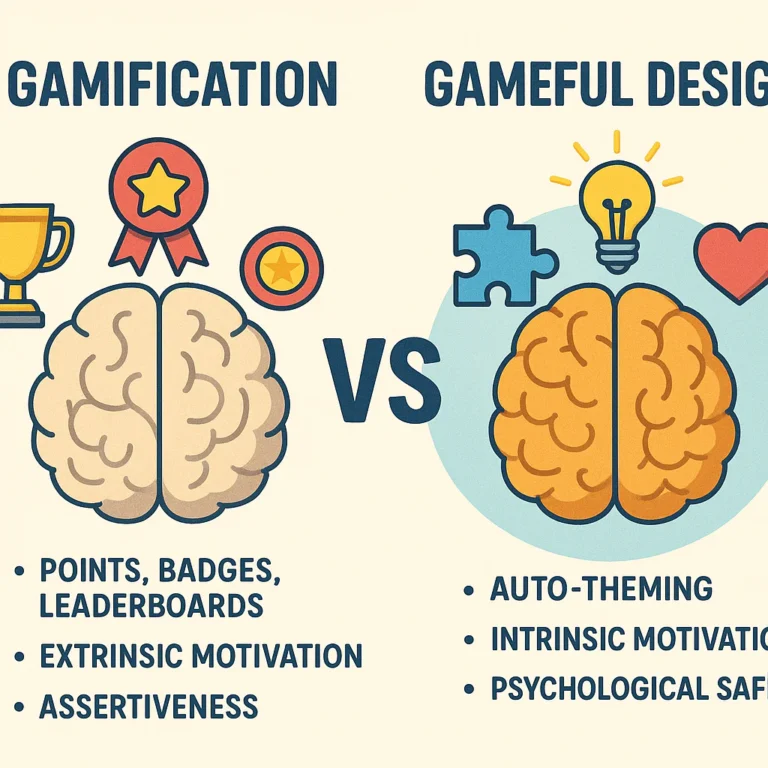
- How gameful design differs from points, badges, and leaderboards
- 📚 Roots of Gameful Design and Behavior Change
- From game mechanics to behavioral science
- Theories behind motivation, habits, and engagement
- 🧠 How Gameful Design Changes Behavior
- Motivation, ability, and prompts
- Intrinsic and extrinsic motivation
- Habit formation, reinforcement, and feedback loops
- Autonomy, mastery, purpose, and social connection
- 🎯 Choose the Right Behavior-Change Goal
- Define the target behavior and desired outcome
- Map barriers, benefits, and user motivations
- Select behaviors that are measurable and ethical
- 🔍 Understand Your Audience and User Journey
- User research, segmentation, and accessibility needs
- Map the behavior-change journey
- Design for different player types without stereotypes
- 🛠️ A Step-by-Step Gameful Design Process
- 1. Diagnose the behavior and its context
- 2. Set behavioral objectives and success measures
- 3. Choose gameful mechanics that fit the goal
- 4. Prototype the experience and test it with users
- 5. Launch, learn, and improve responsibly
- 🧩 Game Mechanics and Motivational Design Patterns
- Goals, challenges, quests, and meaningful choices
- Progress bars, feedback, and visible achievement
- Points, badges, levels, and leaderboards
- Narrative, identity, and role-play
- Coperation, competition, and social support
- Rewards, streaks, notifications, and reminders
- Personalization, adaptive difficulty, and user choice
- 🌍 Gameful Design Applications Across Sectors
- Health, fitness, and behavior-change interventions
- Education, training, and lifelong learning
- Workplace wellbeing, safety, and productivity
- Sustainability, climate action, and civic participation
- Finance, digital wellbeing, and everyday habits
- 📊 Measure Impact and Evaluate Effectiveness
- Behavioral KPIs, engagement metrics, and retention
- Short-term participation versus lasting behavior change
- A/B testing, experiments, and comparison groups
- Qualitative feedback, equity, and unintended outcomes
- ⚖️ Ethics, Safety, and Inclusive Gameful Design
- Avoid manipulation, coercion, and harmful competition
- Protect privacy, consent, and sensitive behavior data
- Design for accessibility, fairness, and cultural context
- Prevent reward fatigue, shame, and unhealthy streak pressure
- 🚧 Common Gameful Design Mistakes and How to Fix Them
- 💡 Real-World Examples and Lessons from Practice
- ❓ Frequently Asked Questions
- Does gamification reliably change behavior?
- How long does gameful behavior change take?
- Can gameful design work without rewards?
- How do you keep users engaged after launch?
- What is the difference between engagement and behavior change?
- ✅ Practical Checklist for a Behavior-Change Design
- Conclusion
- Recommended Links
- Reference Links