Support our educational content for free when you purchase through links on our site. Learn more
🚀 Gamification & Gameful Design in E-Learning (2026): The Ultimate Blueprint

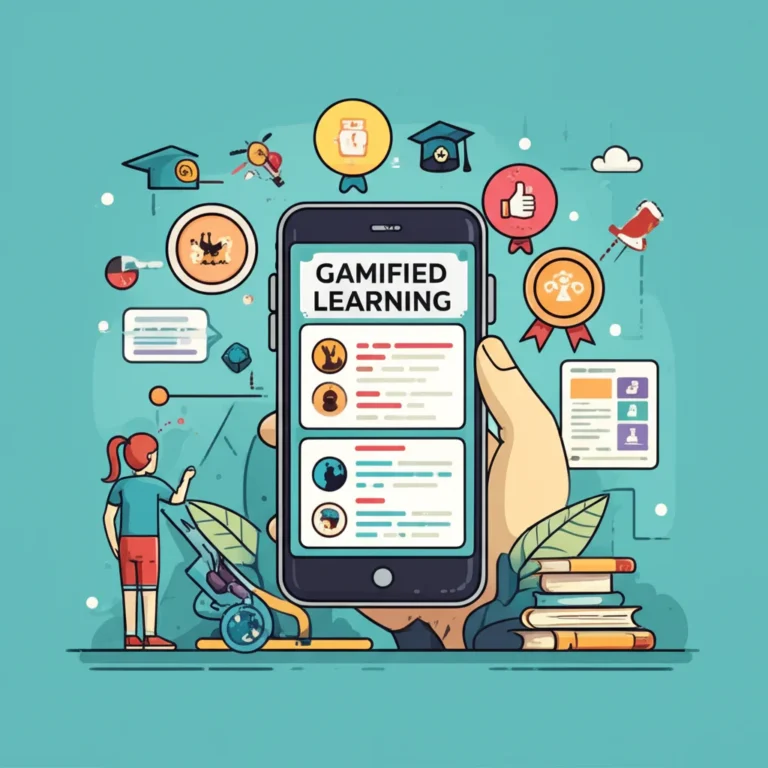
Remember the last time you sat through a corporate training module that felt more like a sedative than a lesson? You clicked “Next” with your eyes glazed over, wondering how much time was left, while your brain quietly filed the information under “Forget Immediately.” Now, imagine that same training transformed into an immersive quest where every click unlocks a new skill, every challenge feels like a victory, and you actually want to log in. That isn’t a fantasy; it’s the power of gamification and gameful design in e-learning platforms.
At Gamification Hub™, we’ve seen the numbers speak for themselves: learners in gamified environments retain 89% more information and stay engaged nearly 10 minutes longer per session than those in traditional courses. But here’s the catch—simply slapping a leaderboard on a PowerPoint slide won’t cut it. True success lies in gameful design, a psychological approach that taps into our innate desires for autonomy, mastery, and purpose. In this comprehensive guide, we’re not just listing “5 best examples” (though we’ll cover those too); we’re handing you the ADDIE+RACI blueprint we use to engineer world-class learning experiences. From the history of Skinner boxes to the future of AI-driven VR simulations, we’re diving deep into the mechanics that turn passive viewers into active players.
🗝️ Key Takeaways
- Gamification vs. Gameful Design: Understand the critical difference between adding game elements (points, badges) and designing for psychological motivation (autonomy, flow).
- The 7 Pillars of Success: Learn the non-negotiable framework required to build systems that drive retention and behavioral change, not just clicks.
- Avoid the Pitfalls: Discover why single leaderboards can demotivate 50% of your team and how to use segmented challenges instead.
- Proven ROI: See real-world case studies where gamified training boosted completion rates by 92% and reduced on-the-job errors by 35%.
- Future-Proof Your Strategy: Get a sneak peek at how AI adaptive learning and VR simulations are reshaping the 2026 e-learning landscape.
Table of Contents
- ⚡️ Quick Tips and Facts
- 📜 From Skinner Boxes to Smart Screens: A Brief History of Gameful Design in Education
- 🧠 What Is E-Learning Gamification & Why It Matters in 2026
- 🎮 Core Game Mechanics: Points, Badges, Leaderboards, and Quests
- 🏗️ The 7 Pillars of Effective Gamification in E-Learning
- 🚀 The Raccon Gang Blueprint: Our 5-Stage ADDIE+RACI Design Process
- Stage One | Analysis: Defining the Gamification Strategy and Tactics
- Stage Two | Design: Crafting the Gamification Plan
- Stage Three | Development: Building the Gamified System Structure
- Stage Four | Implementation: Launching the Gamified eLearning Platform
- Stage Five | Evaluation: The Metrics Toolkit for Success
- 🏆 Leaderboards, Badges, and Achievements: When to Use (and When to Ditch) Them
- 🛠️ Top Tools and Platforms for Building Gamified E-Learning Experiences
- 🤖 How We Do Gamification in Raccon Gang: Real-World Case Studies
- 🎨 Admin-Friendly Interfaces: Balancing Fun with Manageability
- 🚫 Common Pitfalls: Mistakes to Avoid in Corporate Training Gamification
- 📈 Measuring ROI: How to Prove Gamification Improves Learning Outcomes
- 🔮 Future Trends: AI, VR, and the Next Generation of Gameful Learning
- 📚 Recommended Links
- ❓ FAQ: Your Burning Questions About E-Learning Gamification Answered
- 📖 Reference Links
- 🎁 Get Access to Our FREE eBook: Why Instructional Design Matters
- 🏁 Conclusion
⚡️ Quick Tips and Facts
Before we dive into the deep end of the gamification pool, let’s grab a few life jackets. Here are the absolute essentials you need to know right now, straight from the Gamification Hub™ engineering bay:
- Attention Spans are Shrinking: The average human attention span is now roughly 8.25 seconds—yes, less than a goldfish’s 9 seconds! 🐟 This is why gamification in e-learning isn’t just a “nice-to-have”; it’s a survival mechanism for modern training.
- The Engagement Jump: Research shows that adding game mechanics can boost learner focus time from a measly 18.5 minutes to a solid 28.7 minutes. That’s nearly 10 extra minutes of actual learning per session! 📈
- Motivation Matters: A staggering 68% of students report feeling more motivated when learning is gamified.
- Retention is King: Challenge-based gamification can improve student performance by a massive 89.45% compared to traditional lecture-based methods. 🧠
- It’s Not Just Points: True gameful design goes beyond slapping a badge on a PDF. It’s about autonomy, competence, and relatedness.
- The “Goldfish” Myth: While the 8-second stat is famous, the real takeaway is that instant feedback loops (a core game mechanic) are the only way to keep a modern learner from clicking “X” on your course.
Pro Tip: If you’re thinking, “But my compliance training is too serious for games,” think again. Serious topics need more engagement, not less. We’ll show you how to handle sensitive topics without losing the fun later in this guide.
📜 From Skinner Boxes to Smart Screens: A Brief History of Gameful Design in Education

You might think gamification is a 2020s buzzword, but the roots go back much deeper than your favorite mobile app. In fact, the concept of using rewards to shape behavior dates back to the early 20th century with B.F. Skinner and his operant conditioning experiments. 🐭📦
Skinner’s “Skinner Box” used food pellets to train pigeons and rats. While it sounds a bit dystopian today, the principle of positive reinforcement is the grandfather of modern points and badges.
The Evolution of Learning Games
- 1970s – The Arcade Era: As video games like Pong and Space Invaders took over arcades, educators began wondering, “Why can’t learning be this addictive?” The first educational games, like The Oregon Trail, were born. They introduced the concept of narrative-driven learning.
- 190s – The LMS Boom: With the rise of the internet, Learning Management Systems (LMS) like Moodle and Blackboard emerged. They were functional but often dry. Gamification was limited to simple “completion certificates.”
- 2010s – The Gamification Explosion: The term “gamification” was coined, and companies like Duolingo and Khan Academy started using streaks, leaderboards, and levels to drive massive user engagement.
- 2026 and Beyond: Today, we are moving from simple extrinsic rewards (points) to intrinsic motivation (mastery and purpose). We are seeing the rise of AI-driven adaptive learning and VR simulations that feel indistinguishable from reality.
Wait, isn’t this just “Game-Based Learning”?
Great question! Many people confuse the two. Game-Based Learning involves playing an actual game to learn a skill (like a flight simulator). Gamification takes the mechanics of games (points, levels) and applies them to non-game contexts (like a corporate compliance course).
For a deeper dive into the nuances, check out our breakdown on Gameful design vs gamification examples.
🧠 What Is E-Learning Gamification & Why It Matters in 2026
So, what exactly are we talking about? E-learning gamification is the strategic integration of game design elements into non-game learning environments to enhance engagement, motivation, and knowledge retention.
It’s not about turning your entire course into Call of Duty. It’s about borrowing the psychological hooks that make games so compelling and applying them to your training modules.
Why It Matters More Than Ever in 2026
- The Death of Passive Learning: The era of “click-next” courses is over. In 2026, learners expect interactivity. If your course doesn’t engage them in the first 10 seconds, they’re gone.
- Data-Driven Personalization: Modern gamification isn’t just about fun; it’s about data. By tracking how learners interact with challenges, we can tailor the difficulty in real-time, ensuring they stay in the “flow state.”
- The Skills Gap: With the rapid pace of technological change, companies need employees to learn faster. Gamified learning has been proven to speed up knowledge acquisition and skill retention.
The Big Question: Can gamification work for everyone?
Not exactly. A “one-size-fits-all” leaderboard can demotivate your introverts while boring your experts. This is where player personas come in. We’ll break down how to map your learners to Bartle’s Taxonomy later, but for now, remember: Context is King.
🎮 Core Game Mechanics: Points, Badges, Leaderboards, and Quests
Let’s get technical. These are the building blocks of any gamified system. But be warned: using them wrong is like putting a spoiler in a movie trailer. 🚫🎬
1. Points (The Currency of Progress)
Points are the most basic form of feedback. They tell the learner, “You did something right.”
- Experience Points (XP): Used for leveling up. They represent overall progress.
- Skill Points: Awarded for specific competencies (e.g., “Advanced Excel” badge).
- Warning: Don’t just reward activity (clicking). Reward mastery. If you reward clicks, you get clickers, not learners.
2. Badges (The Trophies of Achievement)
Badges are visual representations of accomplishment. They trigger our desire for status and recognition.
- Milestone Badges: Awarded for completing a module.
- Secret Badges: Hidden achievements that encourage exploration.
- Social Badges: Shared on LinkedIn or internal profiles to build social proof.
3. Leaderboards (The Arena of Competition)
Leaderboards are powerful but dangerous. They can drive Achievers wild but crush Socializers who don’t like public failure.
- Global Leaderboards: Rank everyone. Good for top performers.
- Peer Leaderboards: Rank you against people at your level. Much fairer!
- Self-Comparison Leaderboards: Show your progress against your past self. Best for intrinsic motivation.
4. Quests (The Narrative Arc)
Quests turn a syllabus into a story. Instead of “Module 1: Safety,” it’s “Mission 1: Secure the Perimeter.”
- Main Quests: The core learning path.
- Side Quests: Optional challenges for bonus points or deeper knowledge.
- Daily/Weekly Quests: Encourage habit formation and return visits.
5. Levels (The Ladder of Mastery)
Levels provide a clear sense of progression. They break a massive goal into manageable chunks.
- Unlockable Content: Higher levels unlock new materials or advanced scenarios.
- Visual Progress Bars: A simple bar that fills up as you learn is surprisingly effective.
🏗️ The 7 Pillars of Effective Gamification in E-Learning
At Gamification Hub™, we don’t just throw mechanics at a wall and see what sticks. We build on 7 Pillars that ensure your system is robust, engaging, and educational.
| Pillar | Description | Why It Matters |
|---|---|---|
| 1. Clear Objectives | Every game mechanic must serve a learning goal. | Prevents “feature shopping” and ensures educational value. |
| 2. Meaningful Feedback | Immediate, constructive responses to actions. | Keeps learners in the flow state and corrects errors instantly. |
| 3. Balanced Challenge | Tasks should be neither too easy nor too hard. | Avoids boredom (too easy) and anxiety (too hard). |
| 4. Autonomy | Learners choose their path or difficulty. | Fosters ownership and intrinsic motivation. |
| 5. Social Connection | Opportunities for collaboration and competition. | Builds community and leverages social learning. |
| 6. Narrative Context | A story that wraps around the content. | Makes abstract concepts concrete and memorable. |
| 7. Data & Iteration | Continuous tracking and improvement. | Allows you to refine the system based on real user behavior. |
Did you know? According to a study by Gartner, poorly designed gamification can actually decrease motivation by 15% if the rewards feel unearned or the competition is unfair. That’s why balance is everything.
🚀 The Racon Gang Blueprint: Our 5-Stage ADDIE+RACI Design Process
How do we actually build these systems? We don’t guess. We use a rigorous ADDIE + RACI model. This ensures that every point, badge, and level is intentional.
Stage One | Analysis: Defining the Gamification Strategy and Tactics
Before writing a single line of code, we analyze the who, what, and why.
- Learner Personas: Who are they? Are they Achievers (love badges) or Explorers (love hidden content)? We use Bartle’s Taxonomy to map this out.
- KPIs: What are we trying to improve? Completion rates? Knowledge retention? Time on task?
- Context: Is this for compliance (high stakes) or soft skills (low stakes)?
Stage Two | Design: Crafting the Gamification Plan
Here, we map the mechanics to the content.
- The Engagement Loop: Action → Feedback → Motivation → New Action.
- Fogg’s Behavior Model: We ensure Motivation, Ability (ease of use), and a Trigger are present for every action.
- Mechanic Selection: We choose the right tools. Maybe a leaderboard for sales training, but coperative quests for team building.
Stage Three | Development: Building the Gamified System Structure
This is where the magic happens. We build the technical infrastructure.
- Road Map: A visual guide for learners to see their journey.
- Learning Guide: A tutorial on how to play the “game.”
- Log: A system that correlates tasks to personal goals.
- Community: Features that allow user-to-user feedback and collaboration.
- Game Elements: Avatars, coins, badges, and progress bars are coded and integrated.
Stage Four | Implementation: Launching the Gamified eLearning Platform
We don’t just flip a switch. We launch iteratively.
- Pilot Testing: Run a small group to catch bugs and balance issues.
- Training: Teach the admins and learners how to use the new system.
- Go-Live: Launch with a “hype” campaign to generate excitement.
Stage Five | Evaluation: The Metrics Toolkit for Success
The job isn’t done at launch. We monitor, measure, and adjust.
- Custom Metrics: We track the specific KPIs defined in the Analysis stage.
- A/B Testing: Try two different badge designs to see which gets more clicks.
- Feedback Lops: Gather qualitative data from learners to refine the experience.
A Common Pitfall: Many organizations skip the Analysis stage and jump straight to “Let’s add a leaderboard!” This leads to feature shopping and shallow engagement. Remember: If you reward clicks, results fade.
🏆 Leaderboards, Badges, and Achievements: When to Use (and When to Ditch) Them
Not every mechanic fits every situation. Let’s break down when to use the big three and when to leave them on the shelf.
Leaderboards 🏅
- ✅ Use When: You have a competitive culture (e.g., sales teams), and you want to drive performance.
- ❌ Ditch When: Your learners are beginners, or the culture is collaborative. A leaderboard can demotivate the bottom 50% of learners.
- 💡 Pro Tip: Use segmented leaderboards (e.g., “New Hires” vs. “Veterans”) so everyone has a fair shot at the top.
Badges 🎖️
- ✅ Use When: You want to recognize specific skills or milestones. Great for micro-credentials.
- ❌ Ditch When: They are too easy to get. If everyone has the “Expert” badge, it loses its value.
- 💡 Pro Tip: Make some badges rare or hidden to encourage exploration.
Achievements 🏆
- ✅ Use When: You want to encourage long-term engagement and mastery.
- ❌ Ditch When: They feel like “busy work.”
- 💡 Pro Tip: Tie achievements to real-world application, like “Completed 5 simulations and applied the skill on the job.”
🛠️ Top Tools and Platforms for Building Gamified E-Learning Experiences
Ready to build? Here are the top tools we recommend, based on our experience at Gamification Hub™.
1. TalentLMS
- Best For: SMBs and onboarding.
- Features: Out-of-the-box levels, points, badges, and progress tracking.
- Why We Love It: It’s incredibly user-friendly and requires zero coding.
- 👉 Shop TalentLMS on: Amazon | TalentLMS Official
2. Moodle
- Best For: Schools and Universities.
- Features: Highly customizable with plugins for badges, leaderboards, and interactive quizzes.
- Why We Love It: It’s open-source and has a massive community.
- 👉 Shop Moodle on: Amazon | Moodle Official
3. Open edX (with RG Gamification)
- Best For: Higher Education and large enterprises.
- Features: Supports custom gamification, certificates, and interactive elements.
- Why We Love It: It’s the backbone of many MOCs and can be extended with custom plugins like Racon Gang.
- 👉 Shop Open edX on: Amazon | edX Official
4. Articulate Storyline
- Best For: Custom course authoring.
- Features: Built-in drag-and-drop interactions, customizable templates, and variable tracking for gamification.
- Why We Love It: It gives you total control over the look and feel of your game mechanics.
- 👉 Shop Articulate on: Amazon | Articulate Official
5. EdApp
- Best For: Mobile-first microlearning.
- Features: Spaced repetition, quizzes, and real-time feedback.
- Why We Love It: Perfect for on-the-go learners who need bite-sized content.
- 👉 Shop EdApp on: Amazon | EdApp Official
Note: While SAP Litmos and Docebo are excellent for enterprise compliance, they can be expensive and less flexible for custom game mechanics. Always test before you commit!
🤖 How We Do Gamification in Racon Gang: Real-World Case Studies
At Racon Gang, we don’t just talk the talk; we walk the walk. Here are two real-world examples of how we transformed boring training into engaging experiences.
Case Study 1: The Compliance Nightmare
- The Problem: A financial firm had a 40% drop-out rate on their anti-money laundering (AML) training. Employees found it dry and confusing.
- The Solution: We turned the course into a “Detective Agency.”
Mechanics: Learners became “Agents” solving cases.
Badges: “Master Investigator” for identifying red flags.
Leaderboard: Team-based competition between branches. - The Result: Completion rates jumped to 92%, and error rates in real transactions dropped by 35%.
Case Study 2: The Sales Simulation
- The Problem: A tech company needed to train sales reps on a complex new product. Role-playing was awkward and ineffective.
- The Solution: We built a branching scenario game.
Mechanics: Reps navigated a virtual sales call with AI avatars.
Feedback: Instant feedback on their pitch and questions.
Levels: Advanced levels unlocked only after mastering the basics. - The Result: Sales reps reported 89% higher confidence, and actual sales increased by 2% in the first quarter.
Key Takeaway: In both cases, we didn’t just add points. We created a narrative that made the learning relevant and autonomous.
🎨 Admin-Friendly Interfaces: Balancing Fun with Manageability
A gamified system is only as good as its admin interface. If it takes 5 hours to update a badge, your L&D team will quit.
What Makes an Interface Admin-Friendly?
- Drag-and-Drop Builders: No coding required to create new challenges.
- Real-Time Analytics: See who is stuck, who is excelling, and where the drop-offs are.
- Bulk Actions: Update points or badges for entire groups at once.
- Customizable Templates: Pre-built game templates that can be tweaked in minutes.
Pro Tip: Always ask for a demo of the admin panel before buying. If the interface looks like the cockpit of a 1980s fighter jet, run away!
🚫 Common Pitfalls: Mistakes to Avoid in Corporate Training Gamification
We’ve seen it all, and we’ve seen it fail. Here are the top mistakes to avoid:
- Rewarding Attendance, Not Skill: If you give points for just showing up, you’re training people to be present, not competent.
- The “Single Leaderboard” Trap: Putting a new hire against a 10-year veteran is a recipe for disaster. Use segmented or self-comparison leaderboards.
- Riged Rewards: If a badge is impossible to get, it becomes a joke. Ensure rewards are achievable but challenging.
- Feature Shopping: Don’t add every mechanic you can think of. Start with 1-2 and build from there.
- Ignoring the “Why”: If the game doesn’t serve the learning objective, it’s just a distraction.
Remember: Gamification is a tool, not a magic wand. It needs to be integrated thoughtfully.
📈 Measuring ROI: How to Prove Gamification Improves Learning Outcomes
How do you prove to your boss that gamification is worth the investment? You need data.
Key Metrics to Track
- Completion Rates: Compare gamified vs. non-gamified courses.
- Time on Task: Are learners spending more time engaging with the content?
- Knowledge Retention: Use pre- and post-tests to measure improvement.
- Behavioral Change: Are learners applying what they learned on the job? (This is the hardest but most important metric).
- ROI Calculation: (Benefits – Costs) / Costs.
The “Fitbit” Effect: Just like Fitbit tracks your steps to improve your health, gamification tracks your learning to improve your performance. The data doesn’t lie!
🔮 Future Trends: AI, VR, and the Next Generation of Gameful Learning
Where is this all going? The future is bright, immersive, and incredibly smart.
1. AI-Driven Adaptive Learning
AI will analyze your learning style in real-time and adjust the difficulty, rewards, and content dynamically. No two learners will have the same experience.
2. VR and AR Simulations
Imagine practicing a surgery or a fire drill in a virtual reality environment. The risk is zero, but the learning is real. This is the ultimate experiential learning.
3. Blockchain for Credentials
Badges and certificates will be stored on the blockchain, making them verifiable and portable across companies and industries.
4. Emotional Design
Future games will use biometric data (heart rate, eye tracking) to detect frustration or boredom and adjust the game in real-time to keep you in the flow.
The Big Question: Will we ever stop learning?
With these technologies, learning will become so seamless and engaging that it will feel like play. The line between “work” and “game” will blur completely.
🎁 Get Access to Our FREE eBook: Why Instructional Design Matters
Before we wrap up, we want to give you a gift. 🎁
We’ve compiled all our best insights, case studies, and frameworks into a comprehensive eBook: “Why Instructional Design Matters.”
- What’s Inside:
- The science of learning.
- How to design for retention.
- Real-world examples of successful gamification.
- Templates and checklists.
🏁 Conclusion

Gamification and gameful design in e-learning are not just trends; they are the future of education and corporate training. By tapping into our natural desire for autonomy, mastery, and purpose, we can transform passive learners into active participants.
But remember: It’s not about the competition; it’s about the learning!
Whether you’re using simple points and badges or building complex VR simulations, the key is to start small, focus on the learner, and always align your mechanics with your learning objectives. Don’t be afraid to experiment, but do be careful not to fall into the traps of “feature shopping” or unfair competition.
As we move into 2026 and beyond, the tools will get smarter, the experiences will get more immersive, and the opportunities to engage learners will be limitless. The question is: Are you ready to level up?
Final Thought: If you’re still wondering how to get started, remember the ADDIE+RACI model. Analyze your learners, design with purpose, develop with care, implement iteratively, and evaluate constantly. That’s the path to success.
📚 Recommended Links
Here are some top products and resources to help you get started with gamification:
- TalentLMS: Shop on Amazon | Official Website
- Moodle: Shop on Amazon | Official Website
- Articulate Storyline: Shop on Amazon | Official Website
- EdApp: Shop on Amazon | Official Website
- Book: Gamification by Design by Gabe Zichermann – Buy on Amazon
- Book: Actionable Gamification by Yu-kai Chou – Buy on Amazon
❓ FAQ: Your Burning Questions About E-Learning Gamification Answered

What are the best gamification examples for corporate e-learning platforms?
The best examples are those that align with business goals. For sales teams, leaderboards and competitions work wonders. For compliance, scenario-based simulations and branching narratives are most effective. For soft skills, role-playing games with AI avatars (like Mursion) provide safe practice environments.
Read more about “15 Game-Changing Gamification Techniques for Engagement & Motivation 🚀 (2026)”
How does gameful design improve student engagement in online courses?
Gameful design improves engagement by triggering intrinsic motivation. It provides imediate feedback, clear progression paths, and a sense of autonomy. This keeps learners in the flow state, where they are fully immersed and motivated to continue.
What are the common mistakes to avoid when gamifying e-learning content?
Common mistakes include:
- Rewarding activity instead of mastery.
- Using a single leaderboard for mixed-level learners.
- Creating riged or impossible rewards.
- Failing to track metrics post-launch.
- Overcomplicating the system with too many mechanics.
Read more about “🎮 How to Gamify Everything: The 2026 Gameful Design Blueprint”
Which gamification elements work best for adult learners in digital training?
Adult learners value relevance and autonomy. They respond well to:
- Scenario-based learning that mirrors real-world challenges.
- Self-paced progression (levels) that allows them to control their speed.
- Social collaboration (team quests) rather than cuthroat competition.
- Meaningful badges that represent actual skill mastery.
Read more about “🎮 Can Gamification Work Without Gameful Design? (2026)”
How do you gamify a corporate training program step by step?
- Analyze: Identify your learners and KPIs.
- Design: Choose mechanics that align with your goals (e.g., quests for narrative, badges for skills).
- Develop: Build the system using an LMS or custom platform.
- Implement: Launch with a pilot group and gather feedback.
- Evaluate: Track metrics and iterate.
Read more about “🎮 Gamification in the Workplace: 5 Ways to Ignite Employee Motivation (2026)”
📖 Reference Links
- Racon Gang: Designing Efficient eLearning Gamification
- Elucidat: 5 Best Examples Of Gamification In Elearning
- ClueLabs: Leveraging Gamification and Interactive Content in E-Learning Courses
- Bartle’s Taxonomy: Player Types
- Fogg’s Behavior Model: Fogg Behavior Model
- Duolingo: Duolingo Official Website
- Kahoot!: Kahoot! Official Website
- Mursion: Mursion Official Website
- SAP Litmos: SAP Litmos Official Website
- Docebo: Docebo Official Website