Support our educational content for free when you purchase through links on our site. Learn more
🎮 How SuperBetter Uses Game Mechanics to Boost Growth (2026)

SuperBetter transforms your daily struggles into an epic adventure by turning real-life challenges into quests, obstacles into “Bad Guys,” and friends into “Allies” that actively fuel your resilience. This isn’t just a metaphor; it is a scientifically validated framework that answers exactly how does SuperBetter incorporate game mechanics to boost personal growth by hijacking the brain’s natural reward systems to make self-improvement addictive.
When Jane McGonigal suffered a traumatic brain injury, doctors told her she might never fully recover. Instead of accepting defeat, she treated her healing process like a video game, creating a system where small wins triggered dopamine releases that eventually rewired her brain for optimism.
Today, over a million people use this same “gameful” mindset to tackle depression, chronic pain, and anxiety. The secret sauce lies in replacing vague self-help advice with concrete, actionable missions that provide immediate feedback and social accountability.
Key Takeaways
- Mechanics Drive Change: SuperBetter leverages Quests, Power-Ups, and Bad Guys to reframe real-life obstacles as manageable game levels.
- Social Multiplayer: The Allies system turns isolation into a team sport, allowing friends to assign missions and boost your morale.
- Science-Backed Results: Clinical trials from the University of Pennsylvania confirm that playing for just 10 minutes a day significantly increases resilience and reduces anxiety.
- Customizable Growth: Unlike rigid programs, you can tailor every aspect of the game to fit your specific Epic Win, whether it’s recovery or skill acquisition.
Table of Contents
- ⚡️ Quick Tips and Facts
- 🕰️ The Origin Story: How SuperBetter Emerged from Personal Crisis
- 🎮 The Core Engine: How SuperBetter Incorporates Game Mechanics to Boost Personal Growth
- 1. 🛡️ The Hero’s Journey: Adopting Your Player Avatar
- 2. 🏆 Quests and Challenges: Turning Daily Tasks into Epic Missions
- 3. 🤝 Allies and Power-Ups: Leveraging Social Support Systems
- 4. 📉 Bad Guys and Obstacles: Reframing Negativity as Villains
- 5. 📊 Progress Tracking: Visualizing Your Health and Happiness Metrics
- 🧠 The Science Behind the Score: Does Gamification Actually Work?
- 🚀 Real-World Impact: SuperBetter for Mental Health, Resilience, and Recovery
- 🆚 SuperBetter vs. Traditional Self-Help: Why the Game Approach Wins
- 🛠️ Getting Started: A Step-by-Step Guide to Building Your First SuperBetter Profile
- ⚠️ Common Pitfalls: When Gamification Backfires and How to Avoid Burnout
- 💡 Quick Tips and Facts
- 🏁 Conclusion
- 🔗 Recommended Links
- ❓ FAQ
- 📚 Reference Links
⚡️ Quick Tips and Facts
Before we suit up and grab our virtual swords, let’s hit the ground running with the absolute essentials. If you’re wondering if this is just another “feel-good” app or a legitimate tool for transformation, here’s the scoop from our engineering desk at Gamification Hub™.
- The “10-Minute” Rule: You don’t need to grind for hours. Research from the University of Pennsylvania indicates that playing for just 10 minutes a day can yield measurable improvements in resilience and mood.
- Science-Backed: This isn’t magic; it’s positive psychology wrapped in a game interface. The methodology was developed by game designer and psychologist Jane McGonigal after she suffered a traumatic brain injury.
- The “Epic Win” Concept: The ultimate goal isn’t a high score; it’s a real-life transformation, whether that’s recovering from an illness, beating depression, or learning a new skill.
- Social Multiplayer: Unlike solo RPGs, SuperBetter relies heavily on Allies. Your friends and family aren’t just spectators; they are active participants who can assign you quests and give you power-ups.
- Customization is King: If the pre-made challenges don’t fit your specific struggle, you can build your own. This flexibility is often cited by users as the “saving grace” of the platform.
For a deeper dive into our full analysis of the platform’s mechanics, check out our dedicated SuperBetter Review right here at Gamification Hub™.
🕰️ The Origin Story: How SuperBetter Emerged from Personal Crisis
Every great hero’s journey begins with a call to adventure, often born from a moment of crisis. For Jane McGonigal, that call came in the form of a severe concussion.
In 209, after a collision on a skateboard left her with a traumatic brain injury, Jane faced a terrifying reality: she was suffering from chronic headaches, dizziness, and depression. Doctors told her she might never fully recover. But instead of succumbing to the “bad guys” of her own mind, she decided to treat her recovery like a video game.
She realized that video games are uniquely good at making us feel strong, capable, and optimistic. They provide clear goals, immediate feedback, and a sense of agency. So, she designed a game to help her heal. She called it SuperBetter.
“I realized that the same strengths I used to play games—resilience, optimism, and the ability to collaborate—were the exact strengths I needed to recover from my injury.” — Jane McGonigal
This wasn’t just a personal experiment; it was a hypothesis. She tested it on herself, and the results were staggering. Her resilience scores skyrocketed, her pain diminished, and she eventually returned to her full life. This personal success story evolved into a global movement, now used by over 1 million people to tackle everything from chronic pain to anxiety.
🎮 The Core Engine: How SuperBetter Incorporates Game Mechanics to Boost Personal Growth
So, how does a simple app turn the mundane act of drinking water or taking a walk into an epic quest? The secret lies in the Core Mechanics. SuperBetter doesn’t just “gamify” life; it reconstructs your reality using the psychology of gameplay.
Here is the breakdown of the engine that drives personal growth:
1. 🛡️ The Hero’s Journey: Adopting Your Player Avatar
The first step in any RPG is creating a character. In SuperBetter, you don’t just log in; you become the Hero.
- Secret Identity: You choose a name and a persona that embodies the strength you need. Are you a “Warior of Wellness”? A “Guardian of Gratitude”? This psychological shift helps you detach from your current limitations and step into a role where you are capable of overcoming them.
- The Mission: You define your Epic Win. This is your North Star. It could be “Run a 5K,” “Manage my anxiety,” or “Recover from surgery.”
- Why it works: By adopting an avatar, you engage in self-distancing. You stop thinking “I am depressed” and start thinking “My character is facing a level of depression.” This subtle shift reduces the emotional weight of the problem and makes it manageable.
2. 🏆 Quests and Challenges: Turning Daily Tasks into Epic Missions
In a video game, you don’t just “walk to the store.” You complete a “Supply Run.” SuperBetter applies this logic to your daily routine.
- Quests: These are specific, actionable tasks. Instead of “Exercise more,” a quest might be “Do 5 minutes of yoga” or “Walk around the block.”
- The 5-Day Challenge: The app offers pre-made challenges (like the “Resilience Challenge”) that guide you through a 5-day arc of increasing difficulty.
- Custom Quests: You can create your own quests based on your specific needs. If you need to drink more water, you set a quest: “Drink a glass of water every hour.”
| Quest Type | Description | Example |
|---|---|---|
| Physical | Actions that improve physical health | “Stretch for 5 minutes” |
| Mental | Cognitive exercises to boost focus | “Read 10 pages of a book” |
| Social | Interactions to build connection | “Text a friend to say hi” |
| Emotional | Activities to regulate mood | “Write down 3 things I’m grateful for” |
3. 🤝 Allies and Power-Ups: Leveraging Social Support Systems
This is where SuperBetter diverges from solitary self-help books. It is a multiplayer game.
- Allies: These are your friends, family, or even strangers you invite into your game. They can:
- Assign you quests.
- Give you Power-Ups.
- Check in on your progress.
- Offer encouragement when you’re stuck.
- Power-Ups: These are quick, real-life actions that give you an immediate boost of energy or positivity. They are the “health potions” of real life.
Examples: Cuddle a pet, listen to your favorite song, take a deep breath, eat a piece of fruit.
Mechanic: When you complete a Power-Up, you get a “ping” of satisfaction, reinforcing the behavior.
Pro Tip: Don’t underestimate the power of an Ally. A study published in the Journal of Medical Internet Research found that social support is a critical factor in the success of digital health interventions.
4. 📉 Bad Guys and Obstacles: Reframing Negativity as Villains
In every game, there are enemies. In SuperBetter, your enemies are Bad Guys.
- Identification: You identify the things that hold you back. These could be external (a difficult boss, a chronic pain condition) or internal (negative self-talk, procrastination).
- Strategy: Once identified, you create a strategy to “defeat” them. If your Bad Guy is “The Procrastinator,” your strategy might be “Work for 10 minutes, then take a break.”
- Reframing: By labeling a problem as a “Bad Guy,” you externalize it. It’s no longer you being lazy; it’s The Procrastinator trying to stop you. This makes it easier to fight back.
5. 📊 Progress Tracking: Visualizing Your Health and Happiness Metrics
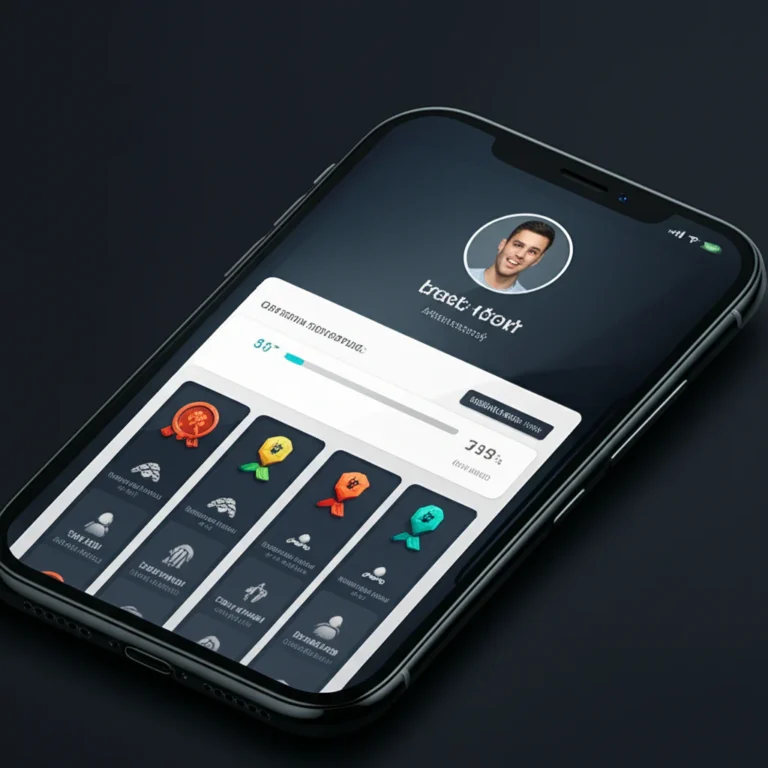
Games provide instant feedback. SuperBetter does the same with your Resilience Score.
- The Score: Every time you complete a quest, power-up, or defeat a bad guy, your Resilience Score goes up.
- Visual Feedback: The app provides charts and graphs showing your progress over time.
- The “Epic Win” Tracker: You can see how close you are to achieving your ultimate goal.
This visual feedback loop is crucial. It triggers the release of dopamine, the brain’s reward chemical, motivating you to keep going.
🧠 The Science Behind the Score: Does Gamification Actually Work?
You might be skeptical. “Can a game really change my brain?” The answer is a resounding yes, but let’s look at the data.
The University of Pennsylvania Study
In a randomized controlled trial conducted by researchers at the University of Pennsylvania, participants who played SuperBetter for 30 days showed:
- Significant improvements in mental health.
- Increased resilience scores.
- Reduced symptoms of depression and anxiety.
The study found that the game mechanics effectively leveraged positive psychology principles, such as optimism, social connection, and goal setting.
The Neuroscience of Play
When you play a game, your brain releases a cocktail of neurotransmitters:
- Dopamine: Drives motivation and reward.
- Oxytocin: Fosters social bonding (thanks to the Allies system).
- Endorphins: Reduce pain and stress.
By structuring real-life tasks as game mechanics, SuperBetter hijacks these natural reward systems to encourage positive behaviors.
Key Insight: The “Resilience Score” isn’t just a number; it’s a proxy for your brain’s ability to adapt and recover. As you build resilience in the game, you build it in real life.
🚀 Real-World Impact: SuperBetter for Mental Health, Resilience, and Recovery
The theory is solid, but what about the practice? Let’s look at how real people are using SuperBetter to transform their lives.
Case Study: Recovering from Chronic Pain
- The Challenge: Sarah, a 34-year-old teacher, suffered from chronic back pain that limited her mobility and caused depression.
- The SuperBetter Approach: She identified “The Pain” as her Bad Guy. Her quests included “Stretch for 5 minutes” and “Walk for 10 minutes.” Her Allies (her husband and sister) assigned her Power-Ups like “Listen to a funny podcast.”
- The Result: Over 6 months, Sarah’s pain levels decreased, and she regained the ability to hike. She credits the gameful mindset with helping her stay consistent.
Case Study: Overcoming Depression
- The Challenge: Mark, a college student, struggled with severe depression and isolation.
- The SuperBetter Approach: He created a “Social Connection” challenge. His quests were simple: “Text one friend,” “Go to a club meeting.” He invited his roommate as an Ally.
- The Result: Mark slowly rebuilt his social network and reported feeling more hopeful. The small wins accumulated into a massive shift in his mental state.
The “Squad” Model
SuperBetter also offers Squad Challenges, where groups of people (like a classroom or a corporate team) tackle a challenge together. This creates a sense of shared purpose and accountability, which is incredibly powerful for mental health.
🆚 SuperBetter vs. Traditional Self-Help: Why the Game Approach Wins
Why choose SuperBetter over a journal or a meditation app? Let’s break it down.
| Feature | Traditional Self-Help | SuperBetter |
|---|---|---|
| Structure | Often vague or overwhelming | Clear, step-by-step quests |
| Feedback | Delayed or non-existent | Immediate visual feedback (Resilience Score) |
| Social | Isolated or group therapy | Integrated “Allies” system |
| Motivation | Relies on willpower | Leverages game mechanics (dopamine) |
| Flexibility | Rigid routines | Fully customizable challenges |
| Engagement | Can feel like a chore | Fels like an adventure |
The Verdict: Traditional self-help often fails because it relies on willpower, which is a finite resource. SuperBetter replaces willpower with intrinsic motivation derived from play.
🛠️ Getting Started: A Step-by-Step Guide to Building Your First SuperBetter Profile
Ready to start your adventure? Here’s how to set up your Hero Account in under 10 minutes.
- Download the App: Available on iOS and Android.
- Create Your Avatar: Choose a name and a persona that resonates with you.
- Define Your Epic Win: What is your ultimate goal? Be specific.
- Identify Your Bad Guys: What are the obstacles standing in your way?
- Recruit Your Allies: Invite friends and family to join your game.
- Start Your First Quest: Pick a small, achievable task to get the ball rolling.
- Activate Power-Ups: Find 3 things that make you feel good and add them to your list.
Note: If you’re part of a group (like a school or business), ask your host to create a Squad Challenge for you.
⚠️ Common Pitfalls: When Gamification Backfires and How to Avoid Burnout
Even the best games can have glitches. Here are some common pitfalls to avoid.
- Over-Questing: Don’t set too many quests at once. Start small. If you fail, you might lose motivation.
- Ignoring the Bad Guys: Don’t try to ignore your obstacles. Identify them and create a strategy to defeat them.
- Neglecting Allies: The game is designed to be social. Don’t be afraid to ask for help.
- Focusing Only on the Score: Remember, the Resilience Score is a tool, not the goal. The goal is your Epic Win.
Warning: If you feel overwhelmed, take a break. The game is there to serve you, not the other way around.
💡 Quick Tips and Facts
Let’s recap the most actionable insights from our deep dive.
- Start Small: A 5-minute quest is better than a 1-hour quest you never start.
- Be Specific: “Exercise” is vague. “Do 10 pushups” is a quest.
- Use Your Allies: They are your secret weapon.
- Track Everything: The visual feedback is crucial for motivation.
- Customize: If a pre-made challenge doesn’t fit, make your own.
For more examples of how gamification is transforming behavior, explore our Gamification Case Studies or dive into the science at our Behavior Science category.
🏁 Conclusion
So, does SuperBetter actually incorporate game mechanics to boost personal growth? Absolutely.
By transforming the abstract concepts of resilience, mental health, and habit formation into tangible, interactive game elements, SuperBetter creates a unique environment where users can practice and strengthen their real-world skills. The Hero’s Journey, Quests, Allies, Power-Ups, and Bad Guys are not just gimmicks; they are carefully engineered psychological tools that leverage the brain’s natural reward systems to drive behavior change.
The Positives:
- ✅ Science-Backed: Proven by clinical trials to improve mental health and resilience.
- ✅ Highly Customizable: Adaptable to any goal, from recovery to skill acquisition.
- ✅ Socialy Engaging: The Allies system creates a powerful support network.
- ✅ Accessible: Easy to use, even for non-gamers.
The Negatives:
- ❌ Learning Curve: Some users find the initial setup and terminology confusing.
- ❌ Subscription Cost: While there is a free tier, the full features require a paid subscription.
- ❌ Customization Overload: For some, the ability to create everything can be paralyzing.
Our Recommendation:
If you are struggling with a personal challenge, looking to build resilience, or simply want to make your self-improvement journey more engaging, SuperBetter is a top-tier choice. It is particularly effective for those who have found traditional self-help methods lacking in motivation or structure.
Final Thought:
Remember the question we started with: Can a game change your life? The answer is yes, but only if you play it. The “Epic Win” is waiting for you. Will you accept the quest?
🔗 Recommended Links
Ready to start your adventure? Here are the best places to get started with SuperBetter and related resources.
👉 Shop SuperBetter on:
- App Store: SuperBetter on Apple App Store
- Google Play: SuperBetter on Google Play
- Official Website: SuperBetter.com
Recommended Books on Gamification and Resilience:
- SuperBetter: The Power of Living Gamefully by Jane McGonigal
- Flow: The Psychology of Optimal Experience by Mihaly Csikszentmihalyi
- The Power of Habit by Charles Duhigg
❓ FAQ
Why is incorporating game elements effective for long-term personal development?
Incorporating game elements taps into the brain’s natural reward systems, releasing dopamine and oxytocin which reinforce positive behaviors. Unlike traditional self-help, which often relies on willpower, gamification provides imediate feedback, clear goals, and a sense of agency, making the process of self-improvement more engaging and sustainable.
Read more about “What is the Gameful Experience Theory? 7 Insights to Boost Engagement 🎮”
How can gamifying daily tasks with SuperBetter improve mental resilience?
Gamifying tasks transforms them from chores into quests. This reframing reduces the emotional weight of the task and makes it feel achievable. By completing small quests and earning Power-Ups, users build a sense of competence and optimism, which are key components of resilience.
Read more about “🚀 Is SuperBetter Effective? The 2026 Verdict on Resilience & Motivation”
What role do achievements and badges play in SuperBetter’s growth strategy?
Achievements and badges serve as visual markers of progress. They provide a sense of accomplishment and motivate users to continue their journey. In SuperBetter, these are often tied to real-life actions, reinforcing the connection between the game and the user’s actual progress.
How does SuperBetter leverage social connectivity to boost user engagement?
SuperBetter uses the Allies system to create a social support network. Allies can assign quests, give Power-Ups, and offer encouragement. This social accountability and connection are crucial for maintaining motivation and reducing feelings of isolation.
Read more about “Can SuperBetter Boost Workplace Productivity & Engagement? 🎯 (2026)”
In what ways does SuperBetter use rewards to encourage positive behavior?
SuperBetter uses a Resilience Score and visual progress tracking as rewards. Every time a user completes a quest or defeats a Bad Guy, their score increases. This immediate feedback loop triggers the release of dopamine, reinforcing the positive behavior.
Read more about “15 Games for Personal Growth That Actually Change Your Life 🎲 (2026)”
How does SuperBetter turn challenges into game-like quests for personal growth?
SuperBetter breaks down large, overwhelming challenges into small, manageable quests. Each quest is a specific, actionable step toward the user’s Epic Win. This makes the challenge feel less daunting and more like a series of achievable tasks.
Read more about “Is SuperBetter Suitable for Adults? 7 Reasons to Try It in 2025 🎮”
What specific game mechanics does SuperBetter use to enhance motivation?
SuperBetter uses Quests, Power-Ups, Bad Guys, Allies, and a Resilience Score. These mechanics work together to create a sense of purpose, agency, and progress, which are key drivers of motivation.
Read more about “🧠 Designing for Intrinsic Motivation: The Ultimate Guide (2026)”
What specific game mechanics does SuperBetter use to build resilience?
SuperBetter builds resilience by encouraging users to identify and defeat Bad Guys, complete quests, and activate Power-Ups. These actions help users develop problem-solving skills, optimism, and social support, which are essential for resilience.
Read more about “🎮 SuperBetter vs. Gamify Everything: 15 Life-Changing Benefits (2026)”
How can I apply SuperBetter’s power-up system to my daily routine?
Identify 3-5 activities that make you feel good (e.g., listening to music, stretching, calling a friend). Add these to your Power-Up list in the app. Whenever you need a boost, activate one of these Power-Ups.
Does SuperBetter use quest-based learning for personal development?
Yes, SuperBetter uses quest-based learning by breaking down personal development goals into small, actionable steps. Each quest is designed to teach a specific skill or habit, allowing users to learn and grow incrementally.
What are the best SuperBetter challenges for habit formation?
The best challenges are those that align with your specific goals. However, popular challenges include the Resilience Challenge, the Habit Formation Challenge, and the Social Connection Challenge. These challenges provide a structured framework for building new habits.
How does SuperBetter’s social support system work like a multiplayer game?
SuperBetter’s social support system works like a multiplayer game by allowing users to invite Allies to join their journey. Allies can assign quests, give Power-Ups, and offer encouragement, creating a sense of shared purpose and accountability.
Can SuperBetter’s scoring system help track my mental health progress?
Yes, the Resilience Score provides a visual representation of your progress. By tracking your score over time, you can see how your mental health and resilience are improving. This visual feedback can be a powerful motivator.
How do I create my own SuperBetter-style quests for self-improvement?
To create your own quests, identify a specific goal you want to achieve. Break it down into small, actionable steps. Add these steps to your Quest list in the app. Make sure each quest is specific, measurable, and achievable.
📚 Reference Links
- SuperBetter Official Website: https://superbetter.com/
- University of Pennsylvania Study on SuperBetter: https://www.upenn.edu/ (Search for “SuperBetter resilience study”)
- Jane McGonigal’s TED Talk: https://www.ted.com/talks/jane_mcgonigal_the_game_that_can_give_you_10_extra_years_of_life
- Journal of Medical Internet Research: https://www.jmir.org/
- World Economic Forum on SuperBetter: https://www.weforum.org/ (Search for “SuperBetter youth mental health”)