Support our educational content for free when you purchase through links on our site. Learn more
What Are the 8 Key Elements of Gameful Design vs Gamification? 🎮 (2025)

Ever wondered why some apps and platforms keep you hooked for hours, while others fizzle out after a quick burst of interest? The secret often lies not in flashy points or badges, but in the deeper art of gameful design—a holistic approach that goes beyond mere gamification. While gamification sprinkles game elements like leaderboards and rewards on top of existing tasks, gameful design bakes engagement into the very core of the experience by tapping into what truly motivates us as humans.
In this article, we’ll unravel the 8 key elements that distinguish gameful design from gamification, backed by insights from our expert gamification engineers at Gamification Hub™. From meaningful choices and narrative storytelling to the freedom to fail and social connection, you’ll discover why gameful design creates lasting engagement and intrinsic motivation. Plus, we’ll share real-world examples and practical tips so you can decide when to sprinkle gamification or bake gameful design into your projects.
Ready to transform your user experience from a quick dopamine hit into a deeply rewarding journey? Keep reading to unlock the secrets that top brands and apps use to captivate millions.
Key Takeaways
- Gamification focuses on adding game elements like points, badges, and leaderboards to motivate users through extrinsic rewards.
- Gameful design integrates core psychological drivers such as autonomy, mastery, purpose, and social relatedness to foster intrinsic motivation.
- The 8 key elements of gameful design include meaningful choices, clear goals and feedback, balanced challenges, narrative, social interaction, exploration, freedom to fail, and personalization.
- Choosing between gamification and gameful design depends on your goals: quick engagement boosts vs. long-term behavior change and emotional connection.
- Real-world successes like Classcraft and Domino’s Pizza Tracker showcase how gameful design creates immersive, meaningful experiences beyond simple rewards.
Unlock the full breakdown and expert advice to decide which approach fits your project best!
Table of Contents
- ⚡️ Quick Tips and Facts
- 📜 Unpacking the Roots: A Brief History of Gamification and Gameful Thinking
- 🧠 The Psychology Behind the Play: Understanding User Motivation
- 🚀 Unlocking Engagement: What Exactly is Gamification?
- ✨ Beyond Badges: Diving Deep into Gameful Design Philosophy
- 🥊 The Great Divide: Gamification vs. Gameful Design – A Head-to-Head Showdown!
- 🌟 Real-World Impact: Case Studies in Gamification and Gameful Design Success Stories
- 🚫 Common Misconceptions and How to Avoid Them
- 🔭 The Future of Engagement: Where Gamification and Gameful Design Are Heading
- 🎉 Conclusion: Crafting Experiences That Truly Resonate
- 🔗 Recommended Links
- ❓ FAQ: Your Burning Questions Answered
- 📚 Reference Links
Here at Gamification Hub™, we live and breathe engagement. We’ve seen it all, from slapped-on point systems that fall flat to deeply integrated experiences that transform user behavior. One of the biggest questions we get is about the difference between gamification and gameful design. Aren’t they the same thing? Oh, honey, grab a seat. While they might seem like twins, they’re more like distant cousins with very different personalities. We’re here to spill the tea and give you the expert breakdown. This isn’t just another article; it’s your definitive guide to understanding the nuanced, powerful world of gameful design vs gamification.
Ready to level up your understanding? Let’s dive in!
⚡️ Quick Tips and Facts
In a hurry? Here’s the cheat sheet from our engineering team’s daily stand-up.
- Gamification is the what: It’s about applying specific game elements (like points, badges, leaderboards) to non-game contexts. Think of it as adding sprinkles to a cupcake. 🧁
- Gameful Design is the why and how: It’s a deeper philosophy of understanding the core psychological drivers that make games engaging and designing an entire experience around them. It’s about baking the deliciousness right into the cupcake itself.
- Motivation is Key: Gamification often relies on extrinsic motivators (rewards, status). Gameful design aims to foster intrinsic motivation (autonomy, mastery, purpose).
- A Common Misstep: Many researchers treat gamification as a “black box” without considering the underlying psychological mechanisms. One study on mental health apps found that the most common gamification elements used were levels (80%), points (56%), and rewards (50%).
- The Real Power: The same study suggests the true potential of gameful design might lie in less-used elements like randomness, an open-world approach, and social cooperation.
- It’s Not Just for Fun: The goal isn’t just to make things “fun.” It’s about using game-like principles to drive engagement, encourage desired behaviors, and create more meaningful experiences.
📜 Unpacking the Roots: A Brief History of Gamification and Gameful Thinking

Believe it or not, the idea of using game-like systems to influence behavior isn’t new. Think back to the S&H Green Stamps your grandmother collected. Every purchase earned her stamps, which she could redeem for household goods. That’s a rudimentary loyalty program—a classic example of early gamification!
The term “gamification” itself was coined around 2002 by British-born computer programmer and inventor Nick Pelling, but it didn’t really take off until around 2010. This first wave was all about the PBLs: Points, Badges, and Leaderboards. Companies everywhere started slapping these mechanics onto everything from employee training modules to fitness apps.
However, we at the Hub quickly noticed a problem. This “pointsification” often felt shallow. It created a temporary sugar rush of extrinsic motivation but failed to build lasting engagement. Why? Because it often ignored the human element.
This led to the rise of gameful design. Thinkers and designers started asking a more profound question: Instead of just borrowing the surface-level artifacts of games, what if we borrowed their soul? What if we focused on the underlying principles of what makes a game truly compelling? This shift in thinking moved the focus from external rewards to internal desires, a core concept in Behavior Science.
🧠 The Psychology Behind the Play: Understanding User Motivation
To truly grasp the difference between these two approaches, you need to put on your psychologist’s hat. 🧑 🏫 The real magic happens in the human brain.
Intrinsic vs. Extrinsic Motivation: Why It Matters
This is the absolute cornerstone of the debate.
- Extrinsic Motivation: This is when you do something to gain an external reward or avoid a punishment. Think of a sales team competing on a leaderboard for a cash bonus. The motivation comes from the outside. Gamification often leans heavily on this.
- ✅ Pros: Great for short-term goals, simple tasks, and getting people over an initial hurdle.
- ❌ Cons: Can feel manipulative, may diminish intrinsic interest over time, and once the reward is gone, the motivation often vanishes.
- Intrinsic Motivation: This is the desire to do something because it is inherently interesting, challenging, or enjoyable. You play a video game for the sheer joy of exploration and mastery, not because someone is paying you. The motivation comes from within. This is the holy grail for gameful design.
- ✅ Pros: Creates long-lasting engagement, fosters creativity and high-quality learning, and builds a genuine connection to the activity.
- ❌ Cons: Much harder and more complex to design for. It requires a deep understanding of your users.
The big question we always ask our clients is: Do you want to bribe your users into action, or inspire them to act on their own?
Self-Determination Theory: Autonomy, Mastery, Purpose
So, how do you design for that coveted intrinsic motivation? We often turn to the Self-Determination Theory (SDT), a psychological framework developed by Edward Deci and Richard Ryan. It posits that all humans have three innate psychological needs:
- Autonomy: The need to feel in control of our own choices and actions. We want to be the authors of our own lives.
- Mastery (or Competence): The need to feel effective and capable. We love to learn, grow, and overcome challenges.
- Purpose (or Relatedness): The need to feel connected to others and to be part of something bigger than ourselves.
A truly gameful experience doesn’t just give you points; it feeds these fundamental human needs. Think about it: when was the last time you were truly engrossed in an activity? Chances are, it hit at least one, if not all three, of these notes.
🚀 Unlocking Engagement: What Exactly is Gamification?
Let’s get down to brass tacks. Gamification is the more straightforward of the two concepts. As one source defines it, gamification is about “making any activity more like a game by adding in-game mechanics.” [cite: https://www.gamify.com/gamification-blog/gamification-vs-gameful-design-what-is-the-difference] It’s an overlay of game-like elements on top of an existing task or process.
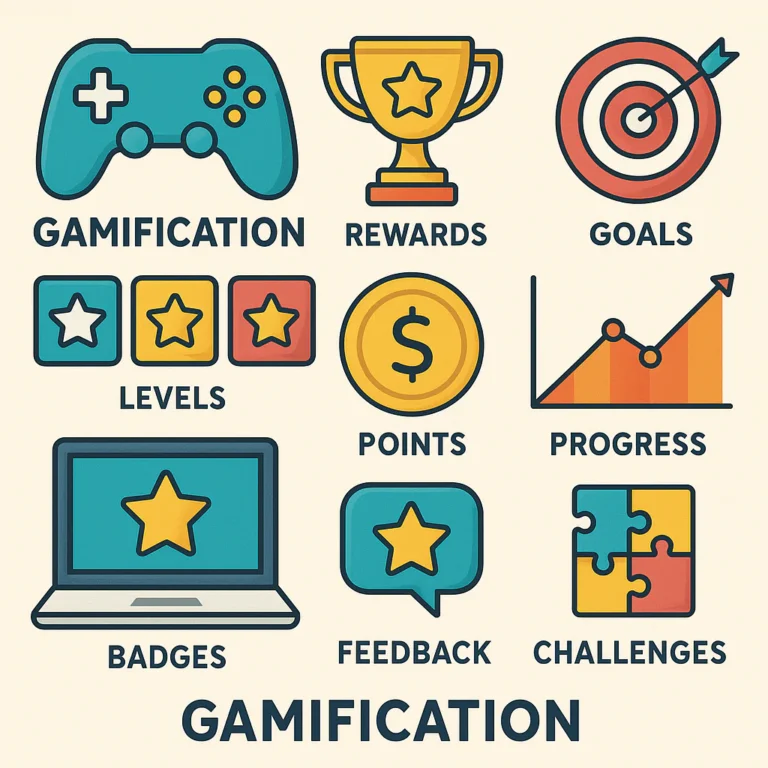
The Core Mechanics of Gamification: Points, Badges, and Leaderboards (PBLs) 🏆
These are the “Big Three” of gamification. They are easy to understand, relatively simple to implement, and provide clear, immediate feedback.
- Points (XP): Provide quantitative feedback and reward for effort. They show progress and can be exchanged for rewards.
- Badges (Achievements): Act as visual representations of accomplishment. They signify status and can guide users toward specific goals.
- Leaderboards (Rankings): Tap into our competitive nature by showing how we stack up against others.
While these are the most common, the toolbox of Game Mechanics is vast, including progress bars, levels, and virtual currency.
Examples of Real-Life Gamification in Action: Brands You Know! 💡
- Starbucks Rewards: The quintessential example. You earn “Stars” (points) for purchases, which unlock “Levels” that grant you free drinks (rewards). It’s a simple, effective loop that keeps customers coming back.
- Duolingo: The language-learning app is a masterclass in gamification. It uses streaks to encourage daily practice, points (XP) to fuel competition on leaderboards, and achievements (badges) for hitting milestones.
- Nike Run Club: This app turns a solitary activity—running—into a social and competitive game. It uses leaderboards to rank you against friends, awards badges for achievements (like running your fastest 5k), and provides guided runs that feel like completing a quest.
Gamification: Benefits and Potential Pitfalls to Watch Out For ✅❌
Gamification can be a powerful tool, but it’s not a silver bullet. Here’s our honest take:
| Benefits of Gamification | Potential Pitfalls |
|---|---|
| ✅ Increased User Engagement: Can quickly boost participation and activity. | ❌ The Overjustification Effect: External rewards can kill existing intrinsic motivation. |
| ✅ Clear Feedback & Goals: Points and progress bars make it easy to see how you’re doing. | ❌ Focus on Rewards, Not Behavior: Users may “game the system” to get points, ignoring the intended learning or behavior. |
| ✅ Fosters Competition: Leaderboards can be a powerful motivator for certain personality types. | ❌ Can Feel Manipulative: If not implemented authentically, it can feel like a cheap trick to control user behavior. |
| ✅ Relatively Easy to Implement: Adding a points system is often simpler than a full redesign. | ❌ Engagement Can Be Shallow: The novelty can wear off, and once the rewards stop, so does the activity. |
✨ Beyond Badges: Diving Deep into Gameful Design Philosophy
Now we’re getting to the good stuff. If gamification is about adding game parts, gameful design is about creating a gameful whole. It’s a holistic approach that integrates “aspects and intrinsic motivators found in successful games into tasks or learning activities.” [cite: https://www.gamify.com/gamification-blog/gamification-vs-gameful-design-what-is-the-difference] It’s not an overlay; it’s woven into the very fabric of the experience.
The Heart of Gameful Design: Fostering Intrinsic Motivation and Meaningful Play
Gameful design asks, “What makes a game like The Legend of Zelda: Breath of the Wild so captivating that people pour hundreds of hours into it for free?” It’s not the points. It’s the sense of exploration, the freedom to make meaningful choices, the joy of mastering a new skill, and the pull of a compelling narrative.
The goal of gameful design is to “create experiences that are intrinsically motivating, meaning they are enjoyable and rewarding in themselves.” [cite: https://mycred.me/blog/gamification-vs-gameful-design/] It’s about transforming a task from something you have to do into something you want to do.
Key Elements of Gameful Design: Crafting Engaging Experiences from the Ground Up 🛠️
This is where gameful design truly distinguishes itself. It goes far beyond PBLs to incorporate deeper, more psychological elements. Here are the core pillars we build on at Gamification Hub™:
-
Meaningful Choices & Agency This is about giving users real control. In a gamefully designed system, you’re not just following a linear path. You’re making choices that have real consequences and shape your experience. This directly feeds the need for autonomy.
-
Clear Goals & Feedback Loops Like any good game, a gameful experience provides clear objectives and constant, constructive feedback. This isn’t just a progress bar filling up; it’s feedback that helps you understand how to improve, fostering a sense of mastery.
-
Challenge & Skill Progression (Flow State) The system should provide challenges that are perfectly balanced to the user’s skill level—not too hard to be frustrating, not too easy to be boring. This is how you induce the coveted “flow state,” a state of complete immersion.
-
Narrative & Storytelling Humans are wired for stories. Wrapping tasks in a compelling narrative provides context and purpose. You’re not just “completing compliance modules”; you’re “gathering ancient artifacts to save the kingdom from the Dragon of Bureaucracy!” This taps into our need for purpose.
-
Social Interaction & Community Whether it’s collaboration or friendly competition, integrating meaningful social elements feeds our need for relatedness. A study on mental health apps noted that social cooperation was one of the least-used elements, representing a huge area of “lost potential.” [cite: https://mental.jmir.org/2019/6/e13717/]
-
Discovery & Exploration The joy of stumbling upon a hidden secret or a new area is a powerful motivator. Gameful design encourages curiosity by creating systems with depth that can be explored, rather than just consumed.
-
Freedom to Fail & Experiment Games are safe spaces to fail. You can try a risky strategy, and if it doesn’t work, you just try again. As the speaker in this excellent video on gameful pedagogy puts it, the focus should be on “the Princess, not the pits.” This encourages learning and risk-taking without fear of permanent negative consequences.
-
Personalization & Customization Allowing users to customize their avatar, their dashboard, or their learning path gives them a greater sense of ownership and identity within the system.
How to Implement Gameful Design: A Blueprint for True Engagement 🏗️
Implementing gameful design is a much more involved process than simply adding a leaderboard.
- Step 1: Understand Your “Players”: Who are your users? What truly motivates them? We use frameworks like the Bartle Test of Gamer Psychology (which breaks players into Achievers, Explorers, Socializers, and Killers/Grievers) to understand user motivations on a deeper level.
- Step 2: Define the Core Loop: What is the central activity you want users to perform? How can you make that activity itself more intrinsically rewarding by applying the elements above?
- Step 3: Build a Narrative: What is the story? Who is the user in this story? What is their goal?
- Step 4: Integrate, Don’t Decorate: Gameful elements should be part of the core experience, not just sprinkled on top. The design should feel cohesive and intentional.
- Step 5: Test and Iterate: Gameful design is not a one-and-done solution. It requires constant testing and refinement based on user feedback and behavior.
A fantastic example of subtle gameful design is the Domino’s Pizza Tracker. There are no points or badges. But it provides a clear goal (get pizza), a narrative (your pizza’s journey), constant feedback on progress, and a touch of personalization (you can “name” your pizza chef). It transforms the boring act of waiting into a mildly entertaining experience. That’s gameful thinking.
🥊 The Great Divide: Gamification vs. Gameful Design – A Head-to-Head Showdown!
Okay, let’s put them in the ring and see how they stack up. The core difference, as one expert puts it, lies in the “underlying intention or reasoning behind the experience being created.” [cite: https://www.gamify.com/gamification-blog/gamification-vs-gameful-design-what-is-the-difference]
| Feature | Gamification | Gameful Design |
|---|---|---|
| Core Philosophy | Add game elements to a non-game context. | Use game principles to make the context itself more game-like and engaging. |
| Primary Goal | Drive behavior through extrinsic rewards and competition. | Foster intrinsic motivation by satisfying psychological needs. |
| Approach | Additive. An overlay on an existing system. | Integrative. Woven into the core design of the system from the ground up. |
| Focus | The “What” (Points, Badges, Leaderboards). | The “Why” (Autonomy, Mastery, Purpose, Narrative). |
| Metaphor | Adding frosting and sprinkles to a store-bought cake. | Baking a delicious cake from scratch with the user’s favorite ingredients. |
| Example | A sales leaderboard with a cash prize for the winner. | A language app that lets you explore a virtual city and talk to characters. |
Fundamental Differences: Motivation, Intent, and Outcome 🎯
- Motivation: Gamification borrows motivation from external rewards. Gameful Design builds motivation from internal desires.
- Intent: The intent of gamification is often to get you to do something (click more, buy more, complete more modules). The intent of gameful design is to help you become something (more knowledgeable, healthier, more connected).
- Outcome: A successful gamification project increases a metric. A successful gameful design project creates a lasting change in attitude and behavior.
When to Choose Gamification: Quick Wins and Extrinsic Drivers ⚡
Don’t get us wrong, we’re not anti-gamification! It has its place. You should consider a gamification approach when:
- You need to motivate users through simple, repetitive, or uninteresting tasks.
- You’re looking for a short-term boost in engagement or a specific behavior.
- Your users are highly competition-driven.
- You have limited time and resources for a full redesign.
A great example is the campaign Gamify.com ran for ResMed, a sleep-technology brand. They used an endless runner game with classic gamification elements to drive engagement, resulting in over 25,000 plays. [cite: https://www.gamify.com/gamification-blog/gamification-vs-gameful-design-what-is-the-difference] This is a perfect use case for tactical gamification.
When to Embrace Gameful Design: Deep Engagement and Lasting Change 🌱
Gameful design is the heavy hitter. You should invest in a gameful design philosophy when:
- You want to create long-term, sustainable engagement.
- The goal is complex behavior change, learning, or skill development.
- You want to build a strong emotional connection and brand loyalty.
- The user experience itself is the core product.
This is especially critical in fields like Educational Gamification and health and wellness, where intrinsic motivation is the key to success.
🌟 Real-World Impact: Case Studies in Gamification and Gameful Design Success Stories
Let’s look at a few more examples to really hammer this home.
-
Gameful Design Success: Classcraft Classcraft is a brilliant example of gameful design in education. It doesn’t just add points to homework; it reframes the entire classroom experience as a role-playing game. Students create characters, work in teams, and earn powers that have real-world effects (like being able to hand in an assignment a day late). It masterfully weaves together narrative, social cooperation, and meaningful choice to foster engagement. This is a prime example for our Gamification Case Studies category.
-
Gamification Success: Waze The navigation app Waze uses simple gamification to encourage user-generated traffic reports. Users get points for reporting accidents or police traps, and their little car avatar can be customized with different moods. It’s a light layer of gamification that successfully incentivizes the core behavior the app needs to function.
-
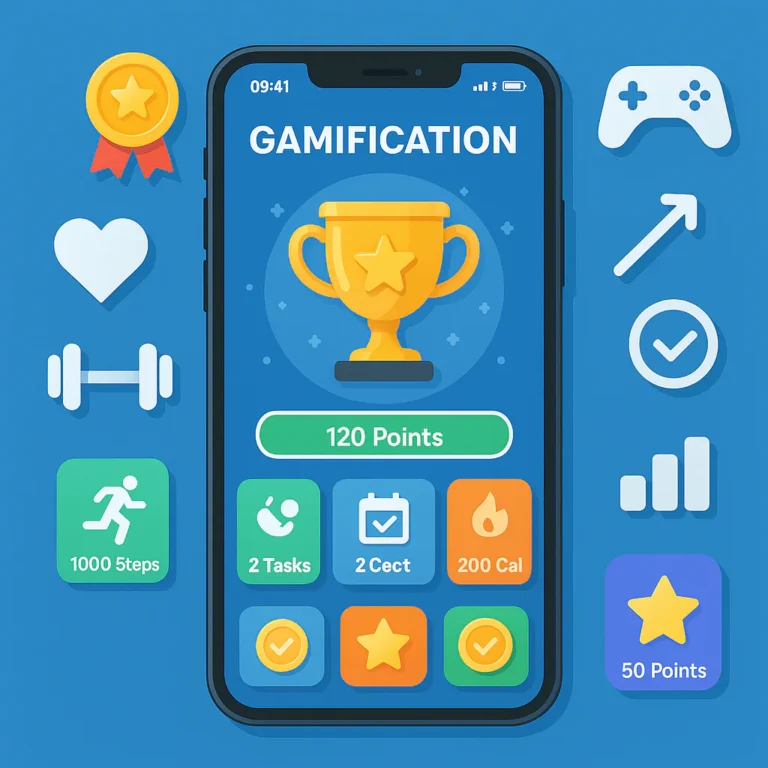
The Grey Area: Fitbit Fitbit lives in the interesting space between the two. It uses classic gamification (badges for hitting step goals, leaderboards with friends). But it also touches on gameful design by providing clear feedback loops on health, fostering a sense of mastery over one’s fitness, and creating social connection through challenges. It shows how the two concepts can often blend together.
🚫 Common Misconceptions and How to Avoid Them
Let’s bust some myths we hear all the time.
- “It’s just for kids.” ❌ WRONG. The psychological principles of motivation—autonomy, mastery, purpose—are universal. The key is to design the experience to be appropriate for the target audience. The narrative for corporate training will be very different from a children’s learning app.
- “It’s just about making things fun.” ❌ SORT OF. While enjoyment is often a byproduct, the real goal is engagement and motivation. Sometimes, the most engaging experiences aren’t “fun” in a haha-way; they’re challenging, intense, and deeply satisfying. Think of the “fun” of climbing a mountain.
- “You can just add points to it.” ❌ DANGEROUS. This is the biggest mistake we see. Slapping on points without understanding the user’s core motivation can backfire spectacularly, making an experience feel cheap and manipulative. You must design with intent.
🔭 The Future of Engagement: Where Gamification and Gameful Design Are Heading
So, what’s next on the horizon? At Gamification Hub™, we’re placing our bets on a few key trends:
- Hyper-Personalization: AI will allow for dynamic difficulty adjustment and personalized challenges that are perfectly tailored to each user’s skill level and motivational profile, keeping them in that perfect “flow” state.
- A Deeper Focus on Narrative: We’ll move beyond simple themes to more complex, branching narratives that users can genuinely influence, creating a powerful sense of agency.
- Seamless Integration with AR/VR: Imagine your workout app turning your local park into an augmented reality adventure course. The lines between the digital and physical worlds will continue to blur, creating incredibly immersive gameful experiences.
- Emphasis on “Transformational Play”: The focus will shift even further toward using Game-Based Learning and gameful design not just to engage, but to create meaningful, positive change in people’s lives—improving mental health, fostering sustainable habits, and enhancing education. The JMIR study’s call to action to intentionally design gamification to support mental health goals is a signpost for this future. [cite: https://mental.jmir.org/2019/6/e13717/]
🎉 Conclusion: Crafting Experiences That Truly Resonate

After our deep dive into the world of gamification and gameful design, the picture is crystal clear: while gamification offers quick, tactical boosts through points, badges, and leaderboards, gameful design is the strategic, soulful approach that builds lasting engagement by tapping into intrinsic motivation and human psychology.
If you want to sprinkle some fun on an existing process or nudge users toward simple behaviors, gamification can be your trusty sidekick. But if your goal is to transform user experience, foster mastery, autonomy, and purpose, and create meaningful, sustainable change, gameful design is your champion.
Remember the story of Domino’s Pizza Tracker? It’s a subtle but brilliant example of gameful design — no flashy badges, just a narrative and feedback loop that turns waiting into an engaging experience. That’s the power of designing with the user’s intrinsic motivation in mind.
So, next time you think about “gamifying” your product or service, ask yourself: Are you just adding sprinkles, or are you baking a cake from scratch? The answer will shape not only your design but the depth of engagement and loyalty you build.
Ready to make your experience truly gameful? Dive into our Gameful Design vs Gamification resource for more expert insights and practical guides.
🔗 Recommended Links
Ready to explore some of the tools and inspirations we mentioned? Check these out:
- Starbucks Rewards: Amazon Search | Starbucks Official Website
- Duolingo: Amazon Search | Duolingo Official Website
- Nike Run Club: Amazon Search | Nike Official Website
- Classcraft: Amazon Search | Classcraft Official Website
- Waze: Amazon Search | Waze Official Website
- Fitbit: Amazon Search | Fitbit Official Website
- Domino’s Pizza Tracker: Domino’s Official Website
Books to Deepen Your Gameful Design Knowledge
- “Reality Is Broken: Why Games Make Us Better and How They Can Change the World” by Jane McGonigal
Amazon Link - “Actionable Gamification: Beyond Points, Badges, and Leaderboards” by Yu-kai Chou
Amazon Link - “The Art of Game Design: A Book of Lenses” by Jesse Schell
Amazon Link
❓ FAQ: Your Burning Questions Answered

What are some examples of successful gameful design implementations, and what can be learned from their approaches?
Successful gameful design implementations include Classcraft, which transforms classroom learning into a role-playing game, and Domino’s Pizza Tracker, which uses narrative and feedback loops to engage customers during wait times. These examples teach us that embedding meaningful choices, clear feedback, and narrative into the core experience—not just adding points or badges—creates deeper engagement and motivation.
What role does storytelling play in gameful design, and how can it be used to enhance the user experience?
Storytelling provides context and purpose, turning mundane tasks into meaningful quests. It taps into users’ emotional engagement and creates a narrative arc that motivates continued participation. For example, framing compliance training as a mission to save a kingdom can transform user perception from obligation to adventure, enhancing intrinsic motivation.
How does gameful design differ from other design approaches, such as human-centered design or user-centered design?
While human-centered design focuses broadly on usability and meeting user needs, gameful design specifically targets psychological motivators like autonomy, mastery, and purpose through game principles. It overlaps with user-centered design but adds layers of motivation and engagement mechanics that encourage sustained behavior change beyond usability.
Can gameful design be used to promote positive behavioral change, and if so, how?
Absolutely! By designing experiences that satisfy intrinsic needs and provide meaningful feedback, gameful design encourages users to adopt and maintain positive behaviors. For example, fitness apps that balance challenge with skill progression and social support can foster lasting healthy habits, as seen with Fitbit’s blend of gamification and gameful elements.
What are the key benefits of using gameful design in product development and user experience?
Key benefits include:
- Sustained engagement through intrinsic motivation
- Enhanced learning and skill mastery
- Greater user autonomy and satisfaction
- Meaningful social interaction and community building
- Reduced fear of failure, encouraging experimentation
These benefits lead to higher retention, better outcomes, and stronger brand loyalty.
How can gameful design be applied to non-entertainment contexts, such as education or healthcare?
In education, gameful design can turn lessons into quests with clear goals and feedback, fostering mastery and curiosity. In healthcare, it can motivate patients to adhere to treatment plans by making progress visible and providing social support. The JMIR study on mental health apps highlights the potential for gameful design to improve well-being by integrating exploration, social cooperation, and adaptive challenges.
What is the difference between gameful design and gamification, and how do they impact user engagement?
Gamification adds game elements like points and badges to existing tasks, often driving short-term, extrinsic motivation. Gameful design integrates game principles deeply to foster intrinsic motivation, leading to more meaningful and lasting engagement. While gamification can boost metrics quickly, gameful design builds emotional connections and sustainable behavior change.
How do key elements of gameful design enhance user engagement?
Elements like meaningful choices, clear feedback, balanced challenges, narrative, and social interaction satisfy core psychological needs. This creates a compelling, immersive experience that keeps users motivated and invested, often leading to a state of flow and deeper learning.
Read more about “How SuperBetter Uses 7 Game Mechanics to Supercharge Your Growth 🎮 (2025)”
Why is gameful design considered more effective than traditional gamification?
Because it targets intrinsic motivation rather than relying solely on external rewards, gameful design fosters long-term engagement and behavioral change. It avoids the pitfalls of shallow engagement and reward fatigue common in gamification, creating richer, more personalized experiences.
Read more about “Can SuperBetter Really Boost Mental Health? 7 Surprising Insights (2025) 🎮”
What psychological principles underpin gameful design?
Gameful design is grounded in Self-Determination Theory, emphasizing autonomy, competence (mastery), and relatedness (social connection). It also leverages flow theory, feedback loops, and the human affinity for narrative and exploration.
Read more about “Can Gameful Design Create Lasting Behavior Change? 10 Proven Ways 🎯 (2025)”
How can gameful design be applied to non-gaming contexts?
By embedding gameful elements into workflows, learning modules, or health interventions, designers can make these activities more engaging. For example, a corporate training program can use branching narratives and meaningful choices to simulate real-world decisions, increasing retention and motivation.
Read more about “Gameful Design vs Gamification: 12 Game-Changing Insights (2025) 🎮”
What role do player motivations play in gameful design?
Understanding player motivations—such as achievement, exploration, socialization, and competition—allows designers to tailor experiences that resonate deeply. Tools like the Bartle Test help identify these motivations, enabling personalized and effective gameful experiences.
Read more about “Gamification & Gameful Design for Social Impact: 7 Secrets Revealed 🎯 (2025)”
How does gameful design create meaningful experiences compared to gamification?
Gameful design creates meaning by aligning activities with users’ intrinsic goals and values, providing autonomy and mastery opportunities, and embedding social and narrative context. Gamification often focuses on surface-level rewards, which may not connect with users on a deeper level.
Read more about “SuperBetter for Youth Mental Health Education: 7 Game-Changing Benefits (2025) 🎮”
📚 Reference Links
- Deci, E. L., & Ryan, R. M. (2000). Self-Determination Theory
- McGonigal, J. (2011). Reality Is Broken. Amazon
- Chou, Y. (2015). Actionable Gamification. Amazon
- Schell, J. (2014). The Art of Game Design. Amazon
- Starbucks Rewards
- Duolingo
- Nike Run Club
- Classcraft
- Waze
- Fitbit
- Domino’s Pizza Tracker
- Lumsden, J., et al. (2019). “Gamification in Apps and Technologies for Improving Mental Health and Well-Being: Systematic Review.” JMIR Mental Health. https://mental.jmir.org/2019/6/e13717/
- Gamification Hub™ – Gameful Design vs Gamification
- Gamify.com Blog: Gamification vs Gameful Design
- myCred Blog: Gamification vs Gameful Design
We hope this guide has equipped you with the clarity and confidence to choose the right approach for your project. Whether you sprinkle gamification or bake gameful design from scratch, remember: the best experiences are those that truly resonate with your users’ hearts and minds. Happy designing! 🎮✨