Support our educational content for free when you purchase through links on our site. Learn more
🎮 Gameful Design for Community Building: 10 Principles

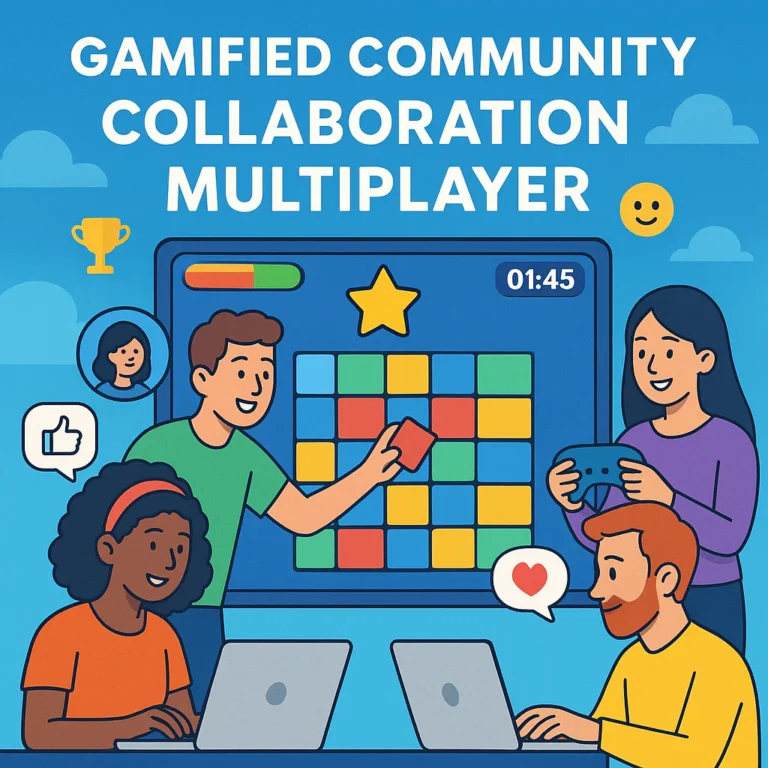
Gameful design for community building works best when it makes meaningful participation easier, more rewarding, and more connected to a shared purpose. Start with what your community needs, then choose game-inspired tools—such as team quests, thoughtful feedback, and shared milestones—that help members contribute and belong.
A badge can celebrate a helpful answer. But if a newcomer still doesn’t know where to begin, the badge is decoration on a locked door. The real design challenge is creating an experience where people can find their first step, see how their effort matters, and choose how they want to take part.
That calls for more than points and leaderboards. Inclusive participation, trust, accessibility, good moderation, and useful feedback all shape whether a playful system strengthens a community—or just gives everyone another thing to click.
Key Takeaways
- Begin with shared purpose: Choose mechanics only after you know what the community wants to achieve.
- Reward meaningful contributions: Recognize collaboration, mentoring, welcoming, and quality—not activity volume alone.
- Make participation inclusive and optional: Offer different ways to contribute, and avoid making public competition the default.
- Use game mechanics as tools, not shortcuts: Quests, badges, team goals, and progress displays should serve members’ needs.
- Measure community health: Track belonging, retention, contribution quality, accessibility, and workload alongside engagement.
- Test, listen, and adjust: Pilot designs with members, explain the rules clearly, and remove mechanics that create pressure or add little value.
Table of Contents
- ⚡️ Quick Tips and Facts
- 🎮 What Is Gameful Design for Community Building?
- Gamification, Game-Based Learning, and Playful Design: What’s the Difference?
- How Gameful Design Strengthens Community
- 🧭 From Points and Badges to Community-Centered Design
- A Brief History of Gamification and Social Play
- What Research Says About Motivation, Belonging, and Participation
- 🧩 10 Principles for Designing Gameful Communities
- 1. Start With Shared Purpose
- 2. Make Participation Meaningful and Easy
- 3. Support Autonomy, Mastery, and Connection
- 4. Reward Helpful Contributions, Not Just Activity
- 5. Build Belonging Through Rituals and Shared Stories
- 6. Encourage Cooperation Before Competition
- 7. Design Inclusive Challenges for Different Members
- 8. Give Feedback That Helps People Grow
- 9. Protect Trust, Privacy, and Psychological Safety
- 10. Keep the Experience Fresh Without Creating Reward Fatigue
- 🛠️ Game Mechanics That Help Communities Thrive
- Points, Badges, Levels, and Reputation
- Challenges, Quests, and Community Missions
- Team Goals, Cooperative Play, and Shared Progress
- Progress Bars, Milestones, and Feedback Lops
- Leaderboards: When They Help and When They Hurt
- Narrative, Identity, and Community Lore
- 🧑 🤝 🧑 Designing for Different Community Types
- Online Communities and Digital Platforms
- Local, Neighborhood, and In-Person Groups
- Workplace, Learning, and Professional Communities
- Volunteer, Advocacy, and Civic Communities
- 🧠 A Step-by-Step Gameful Community Design Process
- Discover Member Needs and Community Goals
- Map the Member Journey and Key Behaviors
- Choose Mechanics That Fit the Culture
- Prototype, Test, and Improve the Experience
- Launch With Clear Rules and Community Hosts
- 📊 Measuring Community Engagement and Long-Term Impact
- Useful Metrics: Belonging, Retention, Contribution, and Well-Being
- Qualitative Feedback, Surveys, and Member Stories
- A/B Testing Game Mechanics Responsibly
- ⚠️ Common Gameful Design Mistakes and How to Avoid Them
- Overusing Points, Badges, and Extrinsic Rewards
- Rewarding Quantity Instead of Quality
- Creating Unfair Competition or Exclusion
- Ignoring Accessibility, Moderation, and Member Safety
- ♿ Inclusive, Accessible, and Ethical Gamification
- Accessibility and Neurodiversity Considerations
- Cultural Sensitivity and Fair Participation
- Consent, Data Privacy, and Transparent Rules
- 💡 Gameful Community Design Examples and Case Studies
- Successful Patterns From Online Communities
- Lessons From Education, Open Source, and Civic Projects
- What to Adapt—and What Not to Copy
- 🔧 Tools and Platforms for Gameful Community Building
- Community Platforms and Built-In Gamification Features
- Events, Challenges, and Participation Tools
- Choosing Tools Based on Your Community’s Needs
- 🚀 Quick Tips for a More Engaging Community
- Conclusion
- Recommended Links
- FAQ
- What is gameful design for community building?
- How is gameful design different from gamification?
- What game mechanics work best for community engagement?
- Can gameful design work without points or leaderboards?
- How do you keep community rewards fair and inclusive?
- How can you measure whether gameful design is working?
- What are the risks of gamifying a community?
- Reference Links
⚡️ Quick Tips and Facts
Gameful design for community building uses game-inspired experiences to help people contribute, connect, learn, and work toward shared goals. It’s less “sprinkle points on a forum” and more “design an experience people want to take part in together.” For a practical comparison of the concepts, see our guide to gameful design vs. gamification examples.
| At a glance | What it means |
|---|---|
| Start with the community’s purpose | Identify the shared outcome before choosing mechanics. |
| Reward meaningful contributions | Recognize mentoring, useful answers, care, and collaboration—not only posting volume. |
| Make progress visible | Show how individual actions contribute to a shared goal. |
| Offer more than one way to participate | Members differ in time, confidence, access, ability, and preferred social style. |
| Use competition carefully | Cooperative missions often build belonging more reliably than public rankings. |
| Measure community health, not clicks alone | Track retention, contribution quality, inclusion, trust, and reported belonging alongside activity. |
A few useful guardrails:
- ✅ Test mechanics with members before rolling them out widely.
- ✅ Make rules, rewards, and data practices clear.
- ✅ Give newcomers small, welcoming ways to contribute.
- ❌ Don’t assume badges create belonging by themselves.
- ❌ Don’t make a public leaderboard the only path to recognition.
- ❌ Don’t confuse frequent activity with a healthy community.
The design principle we return to most often is simple: make helpful participation satisfying, understandable, and socially meaningful. The trick is deciding what “helpful” means in your community. We’ll get there.
🎮 What Is Gameful Design for Community Building?
Gameful design applies elements commonly found in games—such as goals, feedback, choice, progression, storytelling, and cooperation—to experiences that aren’t games. For a community, that might mean a shared learning quest, a neighborhood challenge, a peer-mentoring pathway, or a visible record of collective progress.
The aim isn’t to turn every conversation into a contest. It’s to shape participation so people can see what they can do, why it matters, and how they belong.
A community can be online or in person, large or small, formal or delightfully scrappy. What makes it a community is not the platform; it’s the pattern of relationships, shared purpose, participation, and norms that develop over time.
Gamification, Game-Based Learning, and Playful Design: What’s the Difference?
These terms overlap, but they aren’t interchangeable.
| Approach | What it means | Example in a community |
|---|---|---|
| Gamification | Using game elements in a non-game activity | A forum awards a badge for answering a first question. |
| Gameful design | Designing an experience around qualities associated with games, such as agency, progression, purpose, and meaningful feedback | Members choose how to contribute to a community-wide project and see their shared progress. |
| Game-based learning | Using a game as a vehicle for learning | Members play a wildfire-preparedness simulation and discuss their decisions afterward. |
| Playful design | Making an experience more exploratory, expressive, or enjoyable | A book club uses creative prompts and optional themed meetups. |
The distinction matters because a badge system can be technically “gamified” while still feeling mechanical. Gameful design takes a wider view of the whole experience: the activity, relationships, choices, rules, feedback, and community context.
For related approaches, explore our sections on game mechanics, gamification and UX design, and game-based learning.
How Gameful Design Strengthens Community
Done thoughtfully, gameful design can support several community-building jobs at once:
- Reduce the “Where do I start?” problem. A first-step challenge gives newcomers an obvious, low-pressure action.
- Make contributions visible. Feedback helps members understand how their effort supports a shared goal.
- Encourage connection. Team missions and peer recognition create reasons to interact.
- Support learning. Scenarios let members practice, compare perspectives, and reflect.
- Sustain momentum. Milestones and shared progress make longer efforts feel achievable.
- Surface community values. The behavior a system recognizes tells members what the group truly values.
That last point is powerful—and a little dangerous. If you reward only fast replies, members may optimize for speed rather than care. If you recognize thoughtful explanations, welcome, and mentoring, you signal that those contributions count.
Research on motivation offers a useful lens. Self-determination theory describes the importance of autonomy, competence, and relatedness—having meaningful choice, feeling capable, and experiencing connection. See the overview from Self-Determination Theory and Ryan and Deci’s review in American Psychologist. These ideas can inform design, but they aren’t a guarantee that a particular mechanic will work for every community.
🧭 From Points and Badges to Community-Centered Design
A mechanic is a tool, not a strategy. Before choosing points, quests, or a progress bar, ask: What kind of community behavior are we trying to make easier, more meaningful, or more visible?
That shift—from “Which reward should we add?” to “What experience should members have?”—helps keep gameful design connected to actual community needs.
A Brief History of Gamification and Social Play
Communities have used playful structures long before the modern word “gamification” became popular: clubs have rituals, teams track shared milestones, and groups pass down stories, roles, and traditions. Digital platforms made it easier to formalize some of these patterns through reputation scores, badges, streaks, challenges, and leaderboards.
The modern gamification conversation has often focused on visible mechanics. Community-centered design broadens it to include relationships, agency, context, and collective outcomes. The difference is like comparing a scoreboard to the whole match: the score may matter, but it doesn’t explain teamwork, fairness, or whether anyone wants to play again.
For historical and practical examples of applied programs, browse our Gamification Case Studies.
What Research Says About Motivation, Belonging, and Participation
Research can help us ask better questions, but it shouldn’t be used as a magic stamp for any particular feature. Findings depend on the population, activity, context, implementation, and how outcomes are measured.
A careful design team should distinguish among:
- Participation: Are members taking part?
- Motivation: Why are they taking part, and do they feel choice?
- Belonging: Do they feel accepted and connected?
- Learning or behavior change: Are they gaining skills or acting differently?
- Community resilience: Can the group share knowledge, coordinate, and respond to challenges?
A useful caution comes from research on gamification: effects can vary by design and audience. A systematic review by Hamari, Koivisto, and Sarsa notes that gamification’s observed effects are context-dependent; the authors discuss the importance of studying how and why specific elements work in particular settings (2014 review). In practice, we treat that as a reason to test the experience with real members, not as a reason to abandon play.
🧩 10 Principles for Designing Gameful Communities
These principles work as a design checklist—not a recipe to apply mechanically. A local gardening group, developer community, and disaster-preparedness network won’t need the same structure.
1. Start With Shared Purpose
Write down the community outcome in plain language. “Increase engagement” is a dashboard goal, not a purpose members can rally around.
Try a purpose statement such as:
- “Help new members find trusted advice.”
- “Make our neighborhood more prepared for wildfire season.”
- “Help learners practice a skill and teach it to peers.”
- “Connect volunteers with useful, manageable actions.”
Then ask members whether that purpose reflects their priorities. A gameful system should serve the community’s purpose, not quietly replace it with a points target.
2. Make Participation Meaningful and Easy
Give people clear, varied ways to take part. One member might write a detailed guide; another might welcome newcomers, attend an event, translate a resource, or share a short observation.
A helpful participation ladder could look like this:
| Participation level | Example | Design support |
|---|---|---|
| Notice | Read a welcome guide or view a project update | Clear navigation and concise summaries |
| Try | Answer a simple prompt or vote on a topic | Low-stakes first action |
| Contribute | Share knowledge, feedback, or a resource | Useful prompts and supportive feedback |
| Collaborate | Join a team task or peer discussion | Shared goals and clear roles |
| Lead or mentor | Coach others or steward a recurring activity | Recognition, guidance, and manageable responsibility |
Not everyone needs to climb every rung. A healthy community offers meaningful participation without treating leadership as the only valuable destination.
3. Support Autonomy, Mastery, and Connection
Offer choice in how members contribute, provide feedback that helps them improve, and create opportunities for genuine connection. These design decisions align with the autonomy, competence, and relatedness described in self-determination theory.
For example:
- Autonomy: Let members choose between a discussion, a field task, or a short learning activity.
- Mastery: Show a clear next step and offer constructive feedback.
- Connection: Pair newcomers with volunteers or invite members to solve a shared challenge.
A system that offers one rigid path may be simple to build—but a community is made of people, not identical player characters.
4. Reward Helpful Contributions, Not Just Activity
Before assigning points, define contribution quality. Consider recognizing:
- A clear, accurate answer
- A thoughtful welcome
- An accessible resource
- A useful correction delivered respectfully
- A behind-the-scenes task
- Peer mentoring
- Collaborative problem-solving
Use several signals to assess value: peer feedback, moderator review, usefulness reactions, follow-up outcomes, and member stories. Avoid claiming that any one metric captures the full worth of a contribution.
If the system rewards volume alone, it may produce more volume. That is not automatically the same thing as more value.
5. Build Belonging Through Rituals and Shared Stories
Rituals give members predictable reasons to return: a weekly help thread, a monthly show-and-tell, a new-member welcome, or a seasonal community challenge. Shared stories help people understand how the group got here and what it wants to become.
Keep rituals welcoming rather than compulsory. A community tradition should feel like an open door, not an attendance policy wearing a party hat.
6. Encourage Cooperation Before Competition
Competition can energize some members, but public ranking can also discourage newcomers or turn peers into rivals. A safer starting point is often a shared team goal:
- Collect community questions for a live Q&A.
- Build a shared resource library.
- Complete a neighborhood preparedness checklist.
- Help a cohort practice a new skill.
If you use competition, make it optional, time-limited, and fair. Celebrate different forms of contribution, and avoid making basic access or belonging depend on rank.
7. Design Inclusive Challenges for Different Members
A challenge should be possible to approach through multiple routes. Consider different schedules, devices, languages, comfort with public posting, physical abilities, and access to transport or reliable internet.
Useful design moves include:
- Offer asynchronous participation.
- Provide text alternatives to audio or video.
- Allow private or low-visibility contributions where practical.
- Avoid challenges that assume members have money, equipment, or free time.
- Make instructions understandable and screen-reader friendly.
- Offer multiple difficulty levels or contribution formats.
The W3C Web Content Accessibility Guidelines provide a strong technical reference for accessible digital experiences. Community accessibility also requires listening to members, not just checking a compliance box.
8. Give Feedback That Helps People Grow
Useful feedback tells members what happened, why it mattered, and what they can do next.
Instead of a generic “+10 points,” try: “Your step-by-step answer helped three new members complete the setup. Would you like to add it to the shared guide?” That feedback connects action to impact and offers a meaningful next choice.
Feedback should be timely and respectful. For sensitive or high-stakes topics, public correction may embarrass members; consider private moderation or supportive follow-up.
9. Protect Trust, Privacy, and Psychological Safety
Trust is infrastructure. Make rules understandable, explain what data is collected, let members know who can see rankings or activity, and provide a path to report problems.
Use the OECD Privacy Guidelines as a starting point for privacy principles such as collection limitation and transparency. For online spaces, pair design features with clear moderation practices and human support.
A points system cannot repair an unsafe culture. In fact, it can amplify harm if it gives status to aggressive or abusive behavior.
10. Keep the Experience Fresh Without Creating Reward Fatigue
Repeatable routines can create stability; changing challenges can renew curiosity. Balance both:
- Keep core community rituals predictable.
- Rotate optional missions or themes.
- Ask members which activities feel worthwhile.
- Retire mechanics that add work without adding value.
- Avoid escalating rewards just to keep participation going.
Freshness should come from meaningful new experiences, not an endless arms race of shinier badges.
🛠️ Game Mechanics That Help Communities Thrive
Choose mechanics based on the behavior and experience you want to support. Our Game Mechanics resources explore how mechanics can shape interaction; the table below is a quick design map.
| Mechanic | Can support | Watch out for |
|---|---|---|
| Points | Feedback and progress tracking | Turning contribution into a volume contest |
| Badges | Recognition of milestones or skills | Treating a badge as proof of expertise without criteria |
| Quests | Guided participation and learning | Making tasks feel like chores |
| Team goals | Cooperation and shared purpose | Hiding individual effort or creating peer pressure |
| Progress indicators | Clarity and momentum | Misleading members about what progress means |
| Leaderboards | Friendly competition for willing participants | Public shame, unfair comparisons, and newcomer drop-off |
| Story and role-play | Empathy, perspective-taking, and exploration | Trivializing serious topics or imposing unwanted roles |
Points, Badges, Levels, and Reputation
These familiar mechanics work best when their meaning is transparent.
- Points can show activity or progress, but should not stand in for quality.
- Badges can recognize a specific milestone, skill, or community role.
- Levels can make a learning pathway visible, provided each level has useful meaning.
- Reputation can help members identify trusted contributions, but should be grounded in clear, reviewable criteria.
A badge called “Helpful Guide” should have a clear standard. Did the member write a reviewed resource? Mentor peers? Keep a shared reference current? When recognition has no definition, it can feel like confetti with a database.
Challenges, Quests, and Community Missions
A well-designed quest breaks a large goal into manageable actions. For example, a community preparedness mission might invite members to:
- Learn one local hazard.
- Identify a trusted information source.
- Discuss a household or neighborhood action.
- Share a resource with a peer.
- Reflect on what remains unclear.
Make the steps optional or adaptable where possible, especially when they touch on safety, personal circumstances, or sensitive information. The point is to support learning and coordination—not to pressure members into disclosing private details.
Team Goals, Cooperative Play, and Shared Progress
Team mechanics connect individual effort to a collective result. A shared progress display might show that members have reviewed the community guide, contributed local knowledge, or completed a set of learning activities.
Good team mechanics clarify:
- The shared objective
- The actions that count
- Who can participate
- How progress is calculated
- What happens when the goal is reached
Avoid designing a system in which inactive members are publicly blamed for slowing everyone down. Cooperation should create mutual support, not a digital version of “we’re all looking at you.”
Progress Bars, Milestones, and Feedback Lops
Progress indicators are useful when they represent something members understand. A bar labeled “community readiness” is unhelpful if no one knows what readiness includes. Break large goals into visible milestones and explain the criteria.
A practical feedback loop has four parts:
- Action: A member contributes or participates.
- Response: The system or community acknowledges it.
- Meaning: The member learns how the action helped.
- Next step: The member can choose what to do next.
That loop should reinforce community purpose, not merely keep members clicking.
Leaderboards: When They Help and When They Hurt
Leaderboards may suit opt-in events, friendly contests, or contexts where members enjoy comparison. They’re a poor default for many communities because visible rank can emphasize unequal experience, time, access, or confidence.
If you use one:
- Make participation optional.
- Consider team or cohort rankings instead of a single all-time list.
- Reset rankings for short events.
- Recognize multiple contribution types.
- Provide a noncompetitive route to participate.
- Watch for signs of stress, spam, or disengagement.
A useful alternative is a collective progress board: the community sees what it has accomplished together without ranking individuals.
Narrative, Identity, and Community Lore
A narrative can make abstract work tangible: members might be “mapmakers,” “mentors,” or “stewards” in a shared project. Roles should be invitations, not labels imposed on people.
For serious topics—health, safety, climate risk, conflict—use narrative carefully. Role-play can support perspective-taking, but scenarios should respect real stakes and lived experience. Ask members whether the story feels relevant, accurate, and respectful.
🧑 🤝 🧑 Designing for Different Community Types
The same mechanic can feel welcoming in one setting and awkward in another. Start with the community’s relationships, purpose, constraints, and norms.
Online Communities and Digital Platforms
Online spaces can make participation visible and asynchronous, but they also create challenges around moderation, accessibility, notification overload, and trust.
Good foundations include:
- A clear welcome path and community code of conduct
- Searchable knowledge and helpful conversation prompts
- Moderation tools with transparent rules
- Multiple contribution formats
- Clear controls for notifications and privacy
- Recognition for knowledge-sharing and peer support
Platforms such as Discord and Mighty Networks offer different community features; evaluate them against your needs rather than assuming built-in engagement tools equal good community design.
Local, Neighborhood, and In-Person Groups
Local communities may benefit from missions tied to place: share local knowledge, welcome a neighbor, map a resource, or prepare for an event. Keep challenges grounded in what members can reasonably access, and provide offline participation options.
When projects involve hazards or public safety, partner with appropriate local organizations and subject-matter experts. Gameful activities can support discussion and learning; they shouldn’t replace official advice or emergency guidance.
Workplace, Learning, and Professional Communities
In workplaces and professional groups, be especially careful about power dynamics. If participation scores could affect evaluation, promotion, or access to opportunities, members may experience an “optional” game as mandatory.
Consider:
- Using private progress feedback rather than public rankings.
- Recognizing collaboration, documentation, and mentoring.
- Separating playful learning from formal performance assessment.
- Checking whether employees or learners have equal time and access.
- Providing non-game alternatives when appropriate.
For educational settings, our Educational Gamification and Game-Based Learning collections offer related design perspectives.
Volunteer, Advocacy, and Civic Communities
Volunteer communities need sustainable participation. A challenge can help break down a large campaign into manageable contributions, but avoid gamifying sensitive acts of care as if people’s well-being were a high-score contest.
Use gameful design to clarify tasks, coordinate teams, share progress, and recognize contribution. Keep room for rest, changing capacity, disagreement, and the community’s own definition of success.
🧠 A Step-by-Step Gameful Community Design Process
Here’s a practical process we use to move from a promising idea to a testable community experience.
Discover Member Needs and Community Goals
Step 1: Listen before you design.
- Interview a mix of new, established, quiet, and highly active members.
- Ask what helps them participate and what gets in the way.
- Review existing community practices and recurring points of friction.
- Identify who is affected by the problem but may not be represented in leadership.
- Agree on a small number of outcomes the community cares about.
Use open questions: “When did you feel most useful here?” is often more revealing than “Would you like badges?”
Map the Member Journey and Key Behaviors
Step 2: Map what members actually experience.
Trace the journey from first contact to sustained contribution. Look for moments where people feel unsure, ignored, overloaded, or ready to help.
| Member moment | Common friction | Possible design response |
|---|---|---|
| First visit | “I don’t know what this group is for.” | Plain-language purpose and welcome guide |
| First contribution | “Will anyone respond?” | A low-pressure prompt and timely human acknowledgment |
| Growing involvement | “What could I do next?” | Optional pathways and peer invitations |
| Taking responsibility | “I’m doing too much.” | Shared roles, workload visibility, and easy ways to pause |
| Returning after a break | “Did I miss everything?” | Catch-up summary and a welcoming re-entry point |
Choose behaviors that genuinely support the agreed purpose. Don’t add a mechanic simply because a platform offers one.
Choose Mechanics That Fit the Culture
Step 3: Match mechanics to needs.
For each proposed mechanic, write down:
- What member need it addresses
- What behavior it supports
- What benefit members should experience
- What unintended behavior it might encourage
- How members can opt out or participate differently
- What evidence would indicate that it is helping
For example, if newcomers struggle to ask questions, a “first question” badge may help some people—but a friendly question thread, human responses, and clear norms may matter more. Mechanics are strongest when they reinforce good community conditions rather than trying to replace them.
Prototype, Test, and Improve the Experience
Step 4: Test the smallest useful version.
Start with a paper mockup, a short event, or a small pilot. Observe what members do, ask what they think the experience means, and check whether the design creates unintended pressure.
Collect both quantitative and qualitative signals:
- Did members understand the rules?
- Could people with different access needs participate?
- Did the activity create useful interaction?
- Did members feel appreciated, pressured, confused, or excluded?
- What happened after the challenge ended?
Our Gamification and UX Design resources can help frame these usability questions.
Launch With Clear Rules and Community Hosts
Step 5: Explain, host, and adjust.
At launch, tell members:
- What the activity is for
- How to participate
- Whether it is optional
- How recognition or progress works
- What data is visible
- Who can help with questions or concerns
- When the activity will end or be reviewed
A gameful experience still needs human hosts. People make a community feel welcoming; the software can support them, but it can’t substitute for them.
📊 Measuring Community Engagement and Long-Term Impact
Measure more than the number of posts or badges earned. Choose indicators that relate to the community’s purpose, and make clear that they are signals, not complete measures of human connection.
Useful Metrics: Belonging, Retention, Contribution, and Well-Being
A balanced measurement plan might include:
| Dimension | Possible indicator | Caution |
|---|---|---|
| Participation | Active contributors or event participation | Activity doesn’t prove value |
| Retention | Members returning over a defined period | A quiet member may still benefit |
| Contribution | Peer-rated usefulness, accepted answers, or completed tasks | Define quality and review bias |
| Belonging | Member-reported connection or welcome | Use respectful, optional surveys |
| Inclusion | Participation across different roles or formats | Don’t infer sensitive traits without consent |
| Learning | Demonstrated understanding or skill practice | Separate confidence from demonstrated ability |
| Sustainability | Volunteer workload and burnout signals | A high output can hide overwork |
Set a baseline before launch, choose a sensible review interval, and share what you learn with members. If the numbers improve but people report more pressure, the system needs adjustment.
Qualitative Feedback, Surveys, and Member Stories
Numbers tell you what changed; conversations can help explain why. Use short surveys, interviews, listening sessions, moderation notes, and member stories.
Ask questions such as:
- “What made it easier or harder to participate?”
- “Did recognition feel meaningful?”
- “Was there a moment you felt more connected to the group?”
- “Did any part of the activity feel unfair or uncomfortable?”
- “What would you change?”
Make clear how feedback will be used, and avoid collecting personal information you don’t need. The OECD privacy principles are a useful reference for responsible data practices.
A/B Testing Game Mechanics Responsibly
A/B testing can compare design variations, but community trust should come first. Test low-risk changes—such as different welcome prompts—rather than withholding essential support from one group.
Before a test:
- Define the question and outcome.
- Identify who may be affected.
- Check that the test is fair and understandable.
- Avoid collecting unnecessary personal data.
- Review unintended effects, not just the target metric.
- Share relevant findings with the community.
For small communities, formal statistical testing may not be appropriate or conclusive. Member feedback, careful observation, and repeated iteration can be more useful than pretending a tiny sample has delivered a grand verdict.
⚠️ Common Gameful Design Mistakes and How to Avoid Them
Gameful design can help, but poor design can create busywork, unhealthy competition, or distrust. Here are the traps we see most often.
Overusing Points, Badges, and Extrinsic Rewards
The problem: Members focus on collecting rewards rather than serving the community purpose.
Try instead: Make recognition specific, explain its meaning, and pair digital feedback with human appreciation. Remove mechanics that members ignore or find confusing.
Rewarding Quantity Instead of Quality
The problem: A system rewards frequent posting, so members post more—even when the community needs thoughtful answers, not a blizzard of low-value updates.
Try instead: Recognize helpfulness, care, learning, and collaboration through more than one signal. Include moderation judgment and peer feedback where appropriate.
Creating Unfair Competition or Exclusion
The problem: Members with more time, experience, access, or confidence rise to the top, while others feel they cannot compete.
Try instead: Use opt-in competition, multiple participation routes, rotating teams, shared goals, and private recognition. Evaluate the experience from the perspective of newcomers and less-visible contributors.
Ignoring Accessibility, Moderation, and Member Safety
The problem: A clever challenge sends members into an interface they can’t use, or a leaderboard amplifies harmful behavior.
Try instead: Include accessibility and safety in the design brief. Review WCAG guidance, set moderation expectations, and provide a real way to report problems.
♿ Inclusive, Accessible, and Ethical Gamification
Ethical design starts with a basic question: Can members understand the system, choose how to participate, and raise concerns without punishment?
Accessibility and Neurodiversity Considerations
Build for different needs from the beginning:
- Use readable text, clear structure, and consistent navigation.
- Provide captions and text alternatives.
- Avoid relying on color alone to communicate progress.
- Allow different timeframes and participation formats.
- Make notifications adjustable.
- Avoid surprise deadlines where possible.
- Offer concise instructions and examples.
Follow W3C accessibility standards for digital content, and ask disabled and neurodivergent members to help evaluate real tasks—not just review a checklist.
Cultural Sensitivity and Fair Participation
A mechanic’s meaning changes across groups. Public praise may motivate some members and make others uncomfortable. Humor, competition, role-play, and symbols can carry different meanings depending on context.
Co-design with members who bring varied perspectives. Offer alternative ways to receive recognition, avoid assumptions about time or technology access, and check whether the community’s norms are represented by a narrow set of voices.
Consent, Data Privacy, and Transparent Rules
Tell members what is tracked, who can see it, how long it is kept, and how they can ask questions. Avoid turning sensitive activity into a public score. Make participation voluntary where possible, especially when members have less power in a workplace, school, or service setting.
The OECD Privacy Guidelines offer established principles to consider. Local privacy laws also apply, so involve qualified legal or privacy professionals when the project handles personal data or operates across jurisdictions.
💡 Gameful Community Design Examples and Case Studies
The strongest examples are not always flashy. Often, the valuable design move is a clearer welcome, a useful shared goal, or a well-hosted activity that makes it easier for people to help each other.
Successful Patterns From Online Communities
Look for patterns worth adapting:
- New-member pathways: Give newcomers a simple first action and a human welcome.
- Peer recognition: Let members point out helpful contributions with context.
- Shared knowledge missions: Invite people to improve a resource together.
- Team challenges: Make progress collective instead of ranking individuals.
- Mentor pathways: Support experienced members to guide newcomers without making mentoring invisible labor.
Our Gamification Case Studies collection can help you compare applications across settings. When reviewing an example, ask not only “What mechanic did they use?” but also “What community problem did it address, and who benefited?”
Lessons From Education, Open Source, and Civic Projects
Different sectors offer useful design ideas:
- Education: Scaffold learning, provide feedback, and support peer teaching. See our Educational Gamification and Game-Based Learning resources.
- Open source: Recognize documentation, review, onboarding, maintenance, and support—not only visible code contributions.
- Civic projects: Connect local knowledge to shared decisions and real-world coordination.
- Volunteer networks: Make tasks clear, share workload, and support sustainable participation.
But borrowing a mechanic is not the same as borrowing its context. A leaderboard that works in a short classroom exercise may be a poor fit for a long-term volunteer community.
What to Adapt—and What Not to Copy
Adapt:
- Clear goals
- Useful feedback
- Member choice
- Visible shared progress
- Welcoming first steps
- Opportunities to learn and help
Be cautious about copying:
- Public rankings
- Reward schedules designed for a different audience
- Engagement tactics that rely on pressure or streak anxiety
- Unverified claims about impact
- Narrative themes that don’t match members’ lived experience
The best case study is a source of questions, not a stencil.
🔧 Tools and Platforms for Gameful Community Building
Tools can support a well-designed experience, but no platform can manufacture trust. Start with the job you need done: conversation, events, learning, knowledge-sharing, coordination, or recognition.
Community Platforms and Built-In Gamification Features
Compare tools against your actual requirements:
| Need | What to evaluate |
|---|---|
| Conversation | Search, threads, moderation, and notifications |
| Events | RSVP, scheduling, reminders, and follow-up |
| Recognition | Clear criteria, member control, and meaningful context |
| Accessibility | Keyboard access, captions, screen-reader support, and readable layouts |
| Privacy | Data controls, visibility settings, retention, and export |
| Community stewardship | Moderator permissions, reporting, and governance |
For example, Discord supports real-time community spaces, while Mighty Networks offers tools for branded community experiences. Compare features and policies directly with your needs, and involve members in testing before committing.
Events, Challenges, and Participation Tools
A lightweight challenge may need no specialized gamification software at all. A shared document, event calendar, discussion thread, and human host may be enough.
Before adding a tool, ask:
- Does it make participation easier?
- Can members use it with their devices and access needs?
- Does it collect data we actually need?
- Can moderators manage it safely?
- What happens if the tool changes or goes away?
Sometimes the best technology decision is one fewer dashboard.
Choosing Tools Based on Your Community’s Needs
Use a simple selection sequence:
- List essential community activities.
- Gather member needs and accessibility requirements.
- Identify privacy and moderation constraints.
- Test a small number of candidate tools.
- Ask members to complete real tasks.
- Review the results and choose the simplest option that works.
Don’t buy a feature because it looks fun in a demo. Choose the platform that supports your community’s relationships, work, and values.
🚀 Quick Tips for a More Engaging Community
- Make the first contribution easy: Offer a welcoming prompt, not a 12-step initiation ceremony.
- Show the shared purpose: Explain how participation connects to a real community goal.
- Recognize the quiet work: Documentation, welcoming, review, translation, and mentoring all count.
- Give people options: Not everyone wants public recognition or competitive play.
- Host the experience: A good facilitator often matters more than a clever badge.
- Measure unintended effects: Check for pressure, exclusion, spam, and volunteer overload.
- Ask members what felt meaningful: Their answer may surprise you—and may be more useful than another dashboard.