Support our educational content for free when you purchase through links on our site. Learn more
🚀 10 Gamification Strategies for Social Media Platforms (2026)

Stop guessing and start playing: the most effective gamification strategies for social media platforms leverage dynamic leaderboards, streaks, and variable rewards to turn passive scrollers into loyal brand advocates. By integrating these mechanics, you don’t just chase algorithms; you hack human psychology to drive 47% higher retention rates and triple engagement times.
Imagine a coffee shop where customers fight for the “Mayor” title just to get a free latte, or a language app that makes you cry when you break your daily streak. That isn’t magic; it’s behavioral design in action. We’ve seen small brands outperform giants simply by understanding that users crave autonomy, competence, and relatedness more than they crave content.
The secret isn’t building a complex app; it’s embedding simple, addictive loops into your existing social channels. Whether it’s a “spin the wheel” story on Instagram or a community challenge on Discord, the goal is to make every interaction feel like a win.
Ready to stop the scroll and start the game? Let’s dive into the 10 proven strategies that will level up your social presence.
Key Takeaways
- Human Motivation is King: Successful gamification strategies for social media platforms prioritize Self-Determination Theory (Autonomy, Competence, Relatedness) over flashy points.
- The Power of Streaks: Implementing streaks and loss aversion mechanics is the fastest way to boost daily active users and build unbreakable habits.
- Variable Rewards Win: Random reward mechanisms (like surprise badges or mystery boxes) create a dopamine loop that keeps users coming back far longer than predictable rewards.
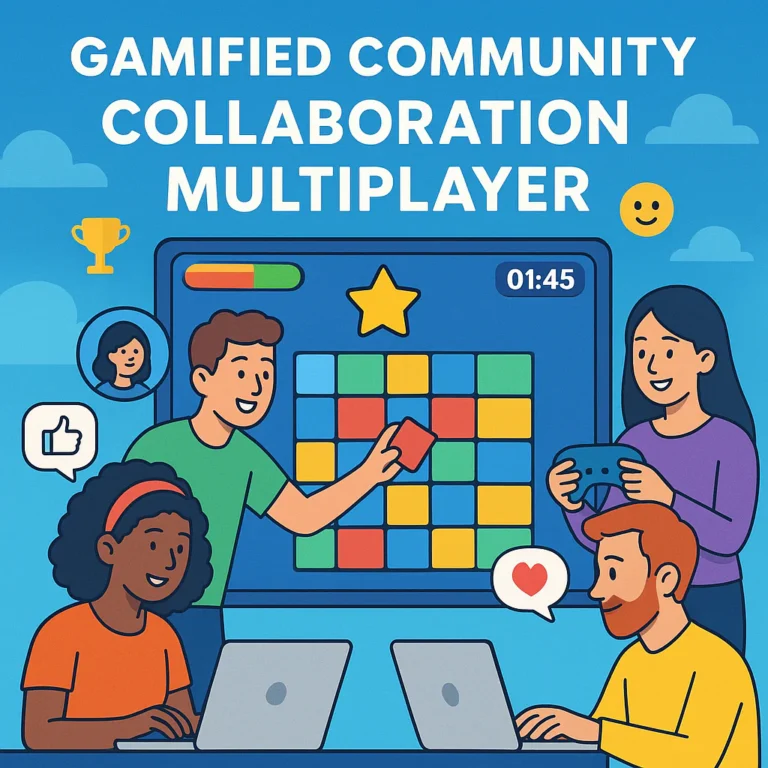
- Community Over Competition: While leaderboards work, team-based collaborations and guilds often drive deeper emotional investment and brand loyalty.
- Measure What Matters: Focus on retention rates and completion rates rather than just vanity metrics likes or followers.
Table of Contents
- ⚡️ Quick Tips and Facts
- 📜 The Evolution of Play: A Brief History of Gamification on Social Media
- 🧠 The Psychology Behind the Scroll: Why We Crave Digital Rewards
- 🏆 Top 10 Proven Gamification Strategies for Social Media Platforms
- 1. Implementing Dynamic Leaderboards to Spark Competition
- 2. Designing Meaningful Badge Systems for User Recognition
- 3. Crafting Progress Bars to Visualize User Journeys
- 4. Leveraging Streaks to Build Daily Habits
- 5. Utilizing Point Systems for Micro-Interactions
- 6. Creating Unlockable Content via Challenges
- 7. Integrating Social Voting and Peer Reviews
- 8. Developing Narrative-Driven Quests for Brand Storytelling
- 9. Deploying Random Reward Mechanisms (Variable Rewards)
- 10. Facilitating Team-Based Collaborations and Guilds
- 🛠️ Essential Tools and Platforms for Building Social Gamification
- 📊 Measuring Success: Key Metrics for Gamified Campaigns
- ⚠️ Common Pitfalls: When Gamification Backfires on Social Media
- 🚀 Future Trends: AI, AR, and the Next Level of Social Engagement
- 💡 Are You Ready to Level Up Your Engagement Game?
- 🏁 Conclusion
- 🔗 Recommended Links
- ❓ FAQ
- 📚 Reference Links
⚡️ Quick Tips and Facts
Before we dive into the deep end of the gamification pool, let’s grab a few life preservers. At Gamification Hub™, we’ve seen brands skyrocket and others crash and burn because they missed these fundamental truths.
- The Dopamine Loop is Real: Every time a user gets a notification, a like, or a badge, their brain releases dopamine. It’s the same chemical hit as winning a slot machine. Learn more about the neuroscience of rewards here.
- Not All Points Are Created Equal: Points that lead nowhere are just digital confetti. They must have utility or status. If a user can’t trade them, show them off, or unlock something, they are worthless.
- Social Proof is the Engine: 92% of consumers trust recommendations from friends and family over advertising. Gamification amplifies this by making user actions visible to their network. Check out these stats on social proof.
- The “First Video” Insight: You might be wondering, “Do I need a massive budget to start?” Absolutely not. As highlighted in the featured video perspective, even small brands like Benefit Cosmetics or Katmai National Park have used simple polls and voting mechanisms to drive massive engagement. Creativity beats budget every time.
| Fact | The Reality Check |
|---|---|
| Retention | Gamified apps see up to 47% higher retention rates than non-gamified ones. |
| Engagement | Users spend 3x longer on platforms with progress bars and challenges. |
| Failure Rate | 70% of gamification initiatives fail because they focus on mechanics, not human motivation. |
| Cost | You don’t need a $1M app. A well-crafted Instagram Story poll can be your MVP. |
📜 The Evolution of Play: A Brief History of Gamification on Social Media

You might think gamification is a buzzword born in the 2010s, but the roots go much deeper. We’ve been playing games since the first cave painting was a “high score” for the best hunter. However, the digital migration of these mechanics is a fascinating journey.
From Foursquare to Facebook
In the early days, Foursquare was the undisputed king of location-based gamification. They introduced the concept of the Mayor—a digital title awarded to the person who checked in most often at a venue. It was simple, yet it drove people to physically visit coffee shops and bars just to keep their crown.
“We didn’t just check in; we fought for territory. It was digital real estate with real-world consequences.” — Early Adopter, 2010
As social media evolved, platforms like Facebook and Twitter integrated these mechanics subtly. The “Like” button was a micro-reward system. But it wasn’t until Duolingo and Strava entered the chat that we saw the full potential of behavioral design on social platforms.
The Shift from Vanity to Value
Initially, gamification was about vanity metrics (likes, followers). Today, it’s about meaningful engagement. We’ve moved from “Look at me” to “Look what we did together.”
- Phase 1 (208-2012): Check-ins, badges, and leaderboards. (Foursquare, Gowalla)
- Phase 2 (2013-2018): Streaks, stories, and social sharing. (Snapchat, Instagram)
- Phase 3 (2019-Present): Community challenges, AR filters, and NFT-style digital collectibles. (TikTok, Discord)
For a deeper dive into how these mechanics differ from pure game design, check out our breakdown on Gameful design vs gamification examples.
🧠 The Psychology Behind the Scroll: Why We Crave Digital Rewards
Why can’t you stop scrolling? It’s not just bad willpower; it’s psychological engineering. At Gamification Hub™, we rely on Self-Determination Theory (SDT) to explain why users stick around.
The Three Pillars of Motivation
- Autonomy: Users need to feel they have control. If a challenge feels forced, they quit.
- Competence: Users need to feel they are getting better. Progress bars and leveling up satisfy this.
- Relatedness: Humans are social creatures. We crave connection. Leaderboards and team challenges feed this need.
The Variable Reward Trap
Remember the slot machine? Social media uses Variable Ratio Reinforcement. You don’t know when you’ll get a like or a comment, but you know it might happen. This unpredictability creates a powerful addiction loop.
“The uncertainty is the hook. If I knew exactly when I’d get a reward, I’d stop playing.” — Behavioral Psychologist
This is why random reward mechanisms (like surprise badges or mystery boxes) are so effective. They keep the brain in a state of anticipation.
🏆 Top 10 Proven Gamification Strategies for Social Media Platforms
Ready to build your empire? Here are the 10 most effective strategies we’ve engineered for social platforms. These aren’t just theories; they are battle-tested mechanics used by giants like Nike, Starbucks, and Duolingo.
1. Implementing Dynamic Leaderboards to Spark Competition
Leaderboards are the oldest trick in the book, but they are still the most potent. However, a static list of the top 10 users is boring. Dynamic leaderboards change based on time (daily, weekly) or category (most creative, most helpful).
- Why it works: It triggers social comparison and the desire to climb the ranks.
- Pro Tip: Don’t just show the top 10. Show the user’s rank relative to their friends. “You are #3 among your friends!” is more motivating than “You are #4,502 globally.”
2. Designing Meaningful Badge Systems for User Recognition
Badges are digital trophies. But they must mean something. A “Newbie” badge is fine for onboarding, but a “Community Hero” badge requires effort.
- Design Principle: Badges should represent mastery, not just participation.
- Example: GitHub uses contribution graphs and badges to showcase coding activity, turning a developer’s profile into a gamified resume.
3. Crafting Progress Bars to Visualize User Journeys
Nothing kills momentum like a blank slate. Progress bars provide a visual representation of how close a user is to a goal.
- The Zeigarnik Effect: People remember uncompleted tasks better than completed ones. A progress bar at 80% creates a psychological itch to finish the last 20%.
- Application: Use this for profile completion, challenge milestones, or learning paths.
4. Leveraging Streaks to Build Daily Habits
Streaks are the ultimate retention tool. Snapchat made them famous, but Duolingo perfected them. A broken streak feels like a loss, and humans are more motivated to avoid loss than to gain a reward (Loss Aversion).
- Strategy: Offer “streak freezes” or “extra lives” to prevent frustration, but keep the pressure on.
5. Utilizing Point Systems for Micro-Interactions
Points are the currency of engagement. They should be awarded for micro-interactions: liking, commenting, sharing, or posting.
- Crucial Detail: Points must have exchange value. Can they be redeemed for discounts, exclusive content, or status? If not, they are just numbers.
6. Creating Unlockable Content via Challenges
Give users a reason to engage. “Post a photo with #SummerVibes to unlock a special filter.” This creates a quest structure.
- Benefit: It drives specific user behaviors that align with your brand goals.
- Case Study: Starbucks rewards stars that unlock free drinks, creating a clear path from action to reward.
7. Integrating Social Voting and Peer Reviews
Let the community decide. Voting mechanisms turn passive viewers into active judges.
- Example: Reddit upvotes and downvotes determine content visibility. TikTok duets and stitches allow users to remix content, creating a collaborative game.
8. Developing Narrative-Driven Quests for Brand Storytelling
Turn your marketing campaign into a story. Instead of “Buy our product,” try “Join the mission to save the planet.”
- Implementation: Break the story into chapters. Each social post is a clue or a step in the narrative.
- Result: Higher emotional investment and longer session times.
9. Deploying Random Reward Mechanisms (Variable Rewards)
As mentioned in the psychology section, randomness is key. Surprise users with unexpected bonuses.
- Idea: “Spin the Wheel” features in stories or random “Golden Ticket” comments that unlock a prize.
10. Facilitating Team-Based Collaborations and Guilds
Humans love to belong to a tribe. Create teams or guilds where users work together to achieve a collective goal.
- Mechanic: “If our community reaches 10,0 likes, everyone gets a discount.”
- Why it works: It leverages social accountability. You don’t want to let your team down.
🛠️ Essential Tools and Platforms for Building Social Gamification
You don’t need to code an app from scratch. There are tools that integrate directly with social media or help you manage campaigns.
No-Code Gamification Platforms
- Bunchball Nitro: A robust platform for enterprise gamification.
- Badgeville: Great for loyalty and engagement programs.
- Gamify: Specializes in social learning and engagement.
Social Media Native Tools
- Instagram Stories: Use polls, quizzes, and sliders for instant interaction.
- TikTok Effects: Create custom AR filters that act as game mechanics.
- Discord: Perfect for building guilds, roles, and community challenges.
Analytics and Tracking
- Google Analytics: Essential for tracking user behavior and conversion.
- Mixpanel: Great for event-based tracking (e.g., “User earned badge X”).
Note: When choosing a tool, ensure it supports API integration with your social platforms. You want seamless data flow.
📊 Measuring Success: Key Metrics for Gamified Campaigns
How do you know if your gamification is working? You need to track the right Key Performance Indicators (KPIs).
| Metric | Definition | Why It Matters |
|---|---|---|
| DAU/MAU Ratio | Daily Active Users / Monthly Active Users | Measures stickiness. A high ratio means users are coming back daily. |
| Completion Rate | % of users who finish a challenge | Indicates if your game is too hard or too easy. |
| Social Shares | Number of times content is shared | Measures virality and social proof. |
| Time on Page/Post | Average time spent interacting | Indicates engagement depth. |
| Churn Rate | % of users who stop participating | Identifies where the game fails to retain users. |
Pro Tip: Don’t just look at vanity metrics. Look at conversion rates. Did the gamification lead to a sale, a sign-up, or a meaningful action?
⚠️ Common Pitfalls: When Gamification Backfires on Social Media
Even the best-laid plans can go wrong. Here are the traps we’ve seen companies fall into.
1. Over-Gamification
If you add too many points, badges, and leaderboards, you overwhelm the user. It becomes a chore, not a game. Simplicity is key.
2. Ignoring the “Why”
Gamification without a purpose is just noise. If the user doesn’t understand why they are doing something, they won’t care.
3. Unfair Leaderboards
If the top of the leaderboard is dominated by bots or a few power users, new users will feel hopeless and quit. Segment your leaderboards (e.g., “Newcomer,” “Pro,” “Week 1”).
4. Lack of Feedback
Users need immediate feedback. If they earn a point and nothing happens, they feel ignored. Instant gratification is essential.
5. Cheating and Exploits
If your system can be gamed, someone will. Implement anti-cheat measures and monitor for suspicious activity.
🚀 Future Trends: AI, AR, and the Next Level of Social Engagement
The future of gamification is immersive and intelligent.
AI-Driven Personalization
AI will analyze user behavior in real-time to dynamically adjust difficulty and rewards. No two users will have the same game experience.
Augmented Reality (AR)
AR filters and lenses are the next frontier. Imagine a Pokémon GO style experience on Instagram where users collect virtual items in the real world.
Blockchain and NFTs
Digital ownership is becoming real. Users could own their badges and items as NFTs, trading them or using them across different platforms.
The Metaverse
As the metaverse evolves, social platforms will become fully gamified 3D spaces where users can interact, play, and earn.
💡 Are You Ready to Level Up Your Engagement Game?
We’ve covered the history, the psychology, the strategies, and the tools. But here’s the million-dollar question: Are you ready to stop guessing and start playing?
Many brands hesitate because they think gamification is too complex or expensive. But as we saw with the first video perspective, creativity is the only real requirement. Whether it’s a simple poll on Instagram or a complex guild system on Discord, the goal is the same: connect with your audience on a human level.
The question isn’t “Can I afford to gamify?” It’s “Can I afford not to?”
🏁 Conclusion

Gamification is not a magic wand, but it is a powerful lever. When executed correctly, it transforms passive scrollers into active participants, building a community that is loyal, engaged, and excited to return.
The Verdict:
- ✅ Do: Focus on human motivation (Autonomy, Competence, Relatedness).
- ✅ Do: Start small with simple mechanics like polls or streaks.
- ✅ Do: Measure what matters (retention, conversion, not just likes).
- ❌ Don’t: Overcomplicate the game.
- ❌ Don’t: Ignore the feedback loop.
At Gamification Hub™, we believe the future of social media is playful. By integrating these strategies, you’re not just chasing algorithms; you’re building a culture. So, go ahead, pick one strategy from our top 10 list, and start your quest today. The leaderboard is waiting.
🔗 Recommended Links
Ready to get started? Here are some resources and tools to help you build your gamified social media strategy.
👉 Shop Gamification Tools & Resources:
- Gamification Case Studies: Explore real-world examples of success at Gamification Hub Case Studies.
- Educational Gamification: Learn how to apply these principles to learning at Educational Gamification.
- Game Mechanics Deep Dive: Understand the building blocks at Game Mechanics.
- Game-Based Learning: See how games teach at Game-Based Learning.
- Behavior Science: The psychology behind the play at Behavior Science.
Books & Guides:
- Actionable Gamification: Check Price on Amazon
- The Gamification of Learning and Instruction: Check Price on Amazon
- Play at Work: Check Price on Amazon
Brands to Watch:
- Duolingo: Visit Official Site
- Nike Run Club: Visit Official Site
- Starbucks Rewards: Visit Official Site
❓ FAQ

How can gamification increase user retention on social media?
Gamification increases retention by tapping into psychological drivers like the desire for achievement (badges, levels) and social connection (leaderboards, teams). By providing imediate feedback and clear goals, users feel a sense of progress and belonging, which encourages them to return daily. The streak mechanic, popularized by Snapchat and Duolingo, is a prime example of using loss aversion to keep users coming back.
What are the best gamification elements for Instagram engagement?
For Instagram, the best elements are interactive Stories (polls, quizzes, sliders), challenges with branded hashtags, and user-generated content (UGC) contests. Progress bars in bio links (e.g., “Help us reach 10k followers for a giveaway”) also work well. AR filters that act as mini-games or collectibles are becoming increasingly popular for driving shares and saves.
Read more about “🎮 Gameful Design vs. Gamifying Everything: The 2026 Reality Check”
How do reward systems work in social media gamification?
Reward systems work by assigning value to user actions. These rewards can be intrinsic (social recognition, status) or extrinsic (points, discounts, exclusive content). The key is variability; random rewards (variable ratio reinforcement) are more addictive than predictable ones. The system must also ensure that rewards are meaningful to the user, otherwise, they become meaningless numbers.
Read more about “🎮 Game vs. Gamification: The Real Difference (2026)”
Can gamification improve brand loyalty on social platforms?
Absolutely. Gamification fosters emotional connection and habit formation. When users invest time and effort into a brand’s gamified system (earning badges, climbing leaderboards), they develop a sense of ownership and loyalty. This is known as the IKEA effect—we value what we help build. Brands like Starbucks and Nike have successfully used gamification to turn casual customers into brand advocates.
Read more about “🎮 Gameful Design: Immersive Experiences Across 10 Industries (2026)”
📚 Reference Links
- ResearchGate: Gamification Strategies for Social Media (Access restricted, but a key topic in the field).
- Brame.io: Marketing Cookies and Tracking Technologies (Insight into the data side of social engagement).
- Wiley Online Library: Digital tracking, gamification, social media, and AI: How technology… Read the full article here.
- Nielsen: Social Proof is the New King of Conversion.
- NCBI: The Neuroscience of Rewards.
- Duolingo: Official Website.
- Starbucks: Official Rewards Program.
- Nike: Nike Run Club App.
- Snapchat: Official Website.
- TikTok: Official Website.
- Discord: Official Website.