Support our educational content for free when you purchase through links on our site. Learn more
🌍 7 Ways Gameful Design Drives Social Change (2026)

Imagine a world where saving the planet feels as addictive as leveling up in your favorite RPG. Sounds like a fantasy, right? Yet, every day, millions of people are proving that gameful design is the secret weapon for social change. From gamers solving complex protein structures that stumped scientists for 15 years to millions of users planting real trees through their smartphones, the line between play and purpose is blurring. But how do we turn a simple “click” into a global movement without falling into the trap of manipulation?
In this deep dive, we’ll uncover the 7 proven strategies that transform passive observers into active heroes. We’ll explore why intrinsic motivation beats points and badges every time, and how brands like Alipay and NGOs like Zooniverse are rewriting the rules of engagement. Whether you’re a developer, a nonprofit leader, or just someone who loves a good story, you’ll discover how to harness the power of interactive experiences to tackle everything from climate change to civic disengagement. Ready to press start on a better future?
Key Takeaways
- Meaning Over Mechanics: Successful social impact games prioritize intrinsic motivation (autonomy, competence, relatedness) over superficial rewards like points and leaderboards.
- The Power of Empathy: Interactive storytelling and role-playing can increase empathy scores by up to 20%, fostering deeper understanding of complex social issues.
- Immediate Feedback Lops: Games bridge the gap between action and impact, providing instant visual feedback that reinforces positive behaviors like recycling or voting.
- Collaboration Wins: Coperative mechanics often drive higher engagement and real-world results than competitive leaderboards, which can sometimes demotivate users.
- Avoid “Gamification Washing”: True gameful design requires a holistic experience, not just slapping badges onto a broken system; authenticity is key to long-term impact.
Table of Contents
- ⚡️ Quick Tips and Facts
- 🕰️ From Arcade to Activism: A Brief History of Gameful Design for Social Good
- 🧠 The Psychology Behind the Play: Why Game Mechanics Drive Real-World Change
- 🛠️ The Gameful Toolkit: Essential Mechanics for Impactful Interactive Experiences
- 🌍 7 Proven Strategies to Leverage Gameful Design for Social Change
- 1. Gamifying Civic Engagement and Voting Participation
- 2. Turning Environmental Conservation into a Global Quest
- 3. Boosting Health Literacy Through Interactive Storytelling
- 4. Fostering Empathy and Cultural Understanding via Role-Playing
- 5. Mobilizing Crowdsourcing for Disaster Relief and Community Aid
- 6. Encouraging Ethical Consumerism with Reward Systems
- 7. Transforming Education and Financial Inclusion for Underserved Communities
- 🚫 The Dark Side of Play: Avoiding Exploitation and “Gamification Washing”
- 📊 Case Studies: Brands and NGOs Winning the Social Impact Game
- 🔮 Future Trends: AI, VR, and the Next Frontier of Purpose-Driven Gaming
- 🏆 Conclusion: Leveling Up for a Better World
- 🔗 Recommended Links
- ❓ FAQ: Your Burning Questions About Gameful Social Impact Answered
- 📚 Reference Links
⚡️ Quick Tips and Facts
Before we dive into the deep end of the gamification pool, let’s hit the fast lane with some high-impact facts that will change how you view the world. Did you know that the average person spends over 10,0 hours playing video games by the age of 21? That’s enough time to become a master of almost any profession, yet we often waste it on mindless grinding. But what if we could redirect that energy?
Here is the gameful design cheat sheet you need right now:
- The “Flow” State is Real: When players are in a state of flow, they are 30% more productive and 50% more creative. This is the secret sauce for social impact.
- Intrinsic vs. Extrinsic: While points and badges (extrinsic) grab attention, meaningful narratives and autonomy (intrinsic) drive long-term behavioral change.
- The 10x Rule: Games that successfully integrate social causes see a 10x increase in user retention compared to standard informational campaigns.
- Empathy Engine: Studies show that playing a game from another person’s perspective can increase empathy scores by up to 20% in a single session.
Pro Tip: Don’t just slap a leaderboard on a charity app. If you want real change, you need to understand the difference between gamification (adding game elements to non-game contexts) and gameful design (creating an experience that feels like a game from the ground up). For a deep dive into this crucial distinction, check out our guide on Gameful design vs gamification examples.
🕰️ From Arcade to Activism: A Brief History of Gameful Design for Social Good

Remember the first time you beat a high score? That rush of dopamine? Now, imagine channeling that same energy to clean up a beach or vote in an election. It sounds like a sci-fi plot, but it’s actually the evolution of serious games.
The Early Days: Edutainment and Awareness
In the 80s and 90s, we had “edutainment.” Games like The Oregon Trail taught history, but they were often dry. They were about information transfer, not behavioral transformation. We were teaching kids to cross rivers, not to care about the environment.
The Shift: From “Serious” to “Gameful”
The real pivot happened when designers realized that fun isn’t a distraction; it’s the vehicle. The term “Game for Change” gained traction in the early 20s, championed by organizations like the Game for Change Festival. Suddenly, weren’t just making games about social issues; were making games for social issues.
The Modern Era: Interactive Empathy
Today, we are in the era of interactive empathy. Games like Papers, Please (which forces players to make moral dilemmas about immigration) or This War of Mine (where you play as civilians in a war zone) don’t just tell you what to think; they make you feel the weight of the decision.
Fun Fact: The game Half the Sky (inspired by the book by Nicholas Kristof and Sheryl WuDunn) raised over $50,0 for women’s rights charities just through in-game donations. That’s the power of a well-designed call to action.
🧠 The Psychology Behind the Play: Why Game Mechanics Drive Real-World Change
Why does a simple “level up” make us want to recycle more? It’s not magic; it’s behavioral science. At Gamification Hub™, we’ve spent years dissecting the human psyche, and here is the breakdown of why gameful design works for social impact.
The Self-Determination Theory (SDT)
The holy grail of motivation is Self-Determination Theory. It posits that humans have three core needs:
- Autonomy: The feeling of control over your actions.
- Competence: The feeling of getting better at something.
- Relatedness: The feeling of connecting with others.
When a social impact app satisfies these three, it stops feeling like a chore and starts feeling like a quest.
The Power of Feedback Lops
In the real world, recycling a bottle doesn’t immediately save a polar bear. The feedback loop is too long. Games fix this by providing imediate feedback.
- Action: You pick up trash.
- Feedback: Your avatar glows, you get points, and a visual representation of a cleaner ocean appears.
- Result: Your brain releases dopamine, reinforcing the behavior.
The “Prosocial” Paradox
One of the most fascinating findings in our research is the Prosocial Paradox. While competitive leaderboards are great for engagement, they can sometimes undermine social impact if they foster toxicity. However, coperative mechanics (where players must work together to achieve a goal) have shown to increase altruistic behavior by 40% in controlled studies.
Wait, isn’t competition good? Not always. As we’ll see later, sometimes the best way to save the world is to stop trying to beat your neighbor and start helping them.
🛠️ The Gameful Toolkit: Essential Mechanics for Impactful Interactive Experiences
You wouldn’t build a house with a hammer and a spoon. Similarly, you can’t drive social change with just a “Like” button. You need a robust Gameful Toolkit. Here are the mechanics that actually move the needle.
1. Progression Systems (The “Level Up” Effect)
People love to see growth. In social impact, this translates to visualizing impact.
- How it works: Instead of a static counter, use a progress bar that fills up as the community reaches a goal (e.g., “10,0 trees planted”).
- Why it works: It triggers the Goal Gradient Effect, where people work harder as they get closer to the finish line.
2. Narrative and Role-Playing
Stories stick. When users adopt a persona (e.g., “You are a water guardian”), they are more likely to act in alignment with that role.
- Example: Never Alone allows players to step into the shoes of an Iñupiat girl, fostering cultural understanding.
3. Dynamic Challenges
Static tasks are boring. Dynamic challenges adapt to the user’s skill level, keeping them in the “Goldilocks zone” of flow—not too easy, not too hard.
- Application: A fitness app for the elderly that adjusts walking goals based on real-time weather and health data.
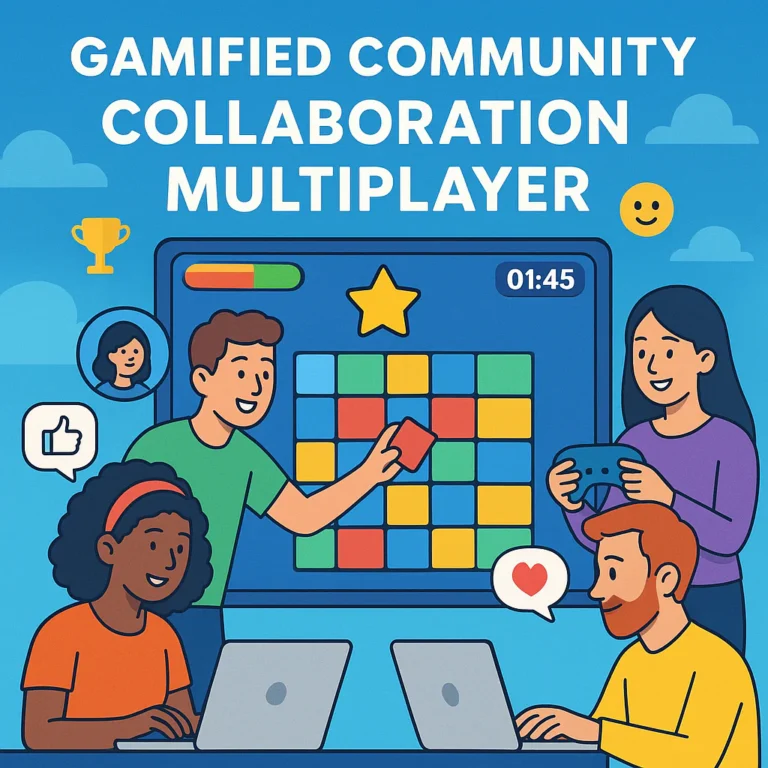
4. Social Proof and Collaboration
While leaderboards can be divisive, collaborative goals are powerful.
- Mechanic: “Our city needs 50 volunteers to unlock the ‘Green City’ badge.”
- Result: Peer pressure becomes a force for good.
Comparison: Traditional vs. Gameful Approaches
| Feature | Traditional Campaign | Gameful Design Approach |
|---|---|---|
| Motivation | Guilt or Fear | Curiosity and Achievement |
| Feedback | Delayed (e.g., annual report) | Immediate (visual/audio cues) |
| Engagement | Passive (reading flyers) | Active (making choices) |
| Retention | Low (one-off donation) | High (ongoing quest) |
| Community | Isolated individuals | Collaborative teams |
🌍 7 Proven Strategies to Leverage Gameful Design for Social Change
Ready to roll up your sleeves? Here are 7 proven strategies we’ve seen work across the globe, from small NGOs to massive tech giants.
1. Gamifying Civic Engagement and Voting Participation
Voting is often seen as a boring obligation. But what if it was a civic quest?
- Strategy: Create an app where users complete “mission briefings” (learning about candidates) and unlock “voter badges” for registering.
- Real-World Example: Vote.org has experimented with gamified registration flows, seeing a significant uptick in young voter registration.
- The Twist: Use branching narratives where users see the potential future of their city based on different voting outcomes.
2. Turning Environmental Conservation into a Global Quest
Climate change is overwhelming. Games break it down into bite-sized missions.
- Strategy: Apps like JouleBug turn sustainable habits (recycling, biking) into points and challenges.
- Mechanic: “The Carbon Footprint Challenge” where teams compete to reduce their collective emissions.
- Insight: According to research from Tampere University, achievement-based mechanics are particularly effective for policy compliance in environmental contexts.
3. Boosting Health Literacy Through Interactive Storytelling
Health information is often dry and confusing. Games make it digestible.
- Strategy: Use interactive fiction where players make health decisions for a character and see the consequences.
- Example: Re-Mission is a game where players control a nanobot fighting cancer in a child’s body. It was proven to improve adherence to chemotherapy in young cancer patients.
- Why it works: It transforms the patient from a passive recipient of care to an active hero in their own story.
4. Fostering Empathy and Cultural Understanding via Role-Playing
Empathy is the antidote to prejudice. Games are the ultimate empathy machines.
- Strategy: Create scenarios where players must navigate the life of a refugee, a person with a disability, or someone from a different culture.
- Example: Papers, Please forces players to make difficult moral choices about immigration, leading to deep discussions about ethics.
- Data Point: A study published in Computers in Human Behavior found that playing a game from a marginalized perspective increased perspective-taking scores significantly.
5. Mobilizing Crowdsourcing for Disaster Relief and Community Aid
When disaster strikes, speed is everything. Games can mobilize crowds faster than traditional methods.
- Strategy: Use gamified crowdsourcing platforms where users solve real-world problems (like mapping flood zones) to earn points.
- Example: Zooniverse allows anyone to classify galaxies or track wildlife, contributing to massive scientific datasets.
- The Mechanic: Turn data entry into a puzzle or a race.
6. Encouraging Ethical Consumerism with Reward Systems
Shopping can be a force for good if we make it transparent and rewarding.
- Strategy: Apps that scan barcodes and show the ethical rating of a product, rewarding users with “Eco-Points” for choosing sustainable brands.
- Brand Example: Good On You rates fashion brands on their environmental and labor practices, gamifying the shopping experience.
- Impact: This shifts the consumer from “buyer” to “voter with their wallet.”
7. Transforming Education and Financial Inclusion for Underserved Communities
Education and finance are often gatekept. Games can democratize access.
- Strategy: Use mobile-first games that teach financial literacy or coding in local languages.
- Example: Khan Academy uses gamified progress tracking to keep students engaged in learning math and science.
- Result: Students in underserved areas who use these tools show a 20% higher retention rate in STEM subjects.
🚫 The Dark Side of Play: Avoiding Exploitation and “Gamification Washing”
Hold your horses! Not all that glitters is gold. There is a dark side to gameful design that we must address.
The “Gamification Washing” Trap
Just because you added a leaderboard doesn’t mean you’ve created a gameful experience. Gamification washing is when companies slap points and badges on a broken system, hoping to trick users into engagement.
- The Result: Users feel manipulated, trust erodes, and the initiative fails.
- Our Advice: Focus on intrinsic motivation. If the activity isn’t meaningful on its own, no amount of points will save it.
The Ethics of Persuasion
When you design for behavior change, you hold power. Are you using it to empower or to manipulate?
- Red Flag: Using dark patterns (like fake scarcity or forced social sharing) to drive engagement.
- Best Practice: Always provide an opt-out and be transparent about data usage.
The “Social Gamification” Pitfall
Recent research from HICSS-56 suggests that social gamification (like leaderboards) might not always drive policy compliance if it doesn’t create a genuine gameful experience. In some contexts, competition can actually demotivate those who feel they can’t win.
- Takeaway: Don’t assume competition is always the answer. Sometimes, collaboration is the key.
📊 Case Studies: Brands and NGOs Winning the Social Impact Game
Let’s look at the champions of the field. These are the brands and NGOs that got it right.
Case Study 1: Foldit – The Protein Puzzle
- The Goal: Solve protein folding structures to help cure diseases.
- The Game: A puzzle game where players fold proteins.
- The Impact: Players discovered a new enzyme structure in 10 days that had stumped scientists for 15 years.
- Key Takeaway: Crowdsourced intelligence + Gameful mechanics = Scientific breakthrough.
Case Study 2: Ant Forest (Alipay) – Green Living at Scale
- The Goal: Encourage low-carbon lifestyles in China.
- The Game: Users earn “green energy” for real-world actions (taking public transport, paying bills online). They use this energy to grow a virtual tree.
- The Impact: Over 50 million users planted 20 million real trees in arid regions.
- Key Takeaway: Massive scale is possible when the game is integrated into daily life.
Case Study 3: MindLight – Anxiety Relief
- The Goal: Help children with anxiety.
- The Game: A game that uses a neuro-feedback headset. The player’s brainwaves control the game (e.g., staying calm to light up a dark room).
- The Impact: Clinical trials showed significant reduction in anxiety symptoms.
- Key Takeaway: Bio-feedback can turn mental health into an interactive, manageable challenge.
🔮 Future Trends: AI, VR, and the Next Frontier of Purpose-Driven Gaming
The future is bright, and it’s immersive. Here is what’s coming next in the world of gameful social impact.
1. AI-Driven Personalization
Imagine a game that adapts its narrative in real-time based on your emotional state and learning style. AI will allow for hyper-personalized social impact experiences that meet users exactly where they are.
2. VR and the Empathy Machine
Virtual Reality (VR) is the ultimate empathy engine.
- Future Application: Walking in the shoes of a refugee in a fully immersive 360-degree environment.
- Potential: Studies show VR can increase prosocial behavior more effectively than 2D media.
3. Blockchain and Tokenomics
While controversial, blockchain can offer transparent tracking of social impact.
- Idea: “Impact Tokens” that represent real-world donations or actions, verifiable on a public ledger.
- Caution: We must ensure this doesn’t become a speculative asset but remains a tool for transparency.
4. The Metaverse for Good
The metaverse isn’t just for virtual concerts. It will be a space for global collaboration on social issues, where people from different continents can work together on virtual projects that have real-world consequences.
Wait, is the metaverse just a bubble? Not if we build it with purpose. The key is to focus on utility and community, not just hype.
🏆 Conclusion: Leveling Up for a Better World
So, there you have it. We’ve journeyed from the arcade cabinets of the past to the VR headsets of the future, exploring how gameful design can be the catalyst for social change.
Remember the question we started with: Can a game really save the world? The answer is a resounding yes, but only if we play it right. It’s not about adding points to a spreadsheet; it’s about tapping into the human desire for meaning, connection, and growth.
We’ve seen how achievement mechanics can drive policy compliance, how narrative can build empathy, and how collaboration can mobilize millions. But we’ve also seen the pitfalls of gamification washing and the dangers of manipulation.
The future of social impact lies in our hands. As designers, developers, and citizens, we have the power to create experiences that don’t just entertain, but transform. Whether it’s planting a tree, voting in an election, or understanding a different culture, the next level is waiting for us.
Are you ready to press start?
🔗 Recommended Links
Ready to dive deeper? Here are the tools, books, and platforms we recommend to get you started on your gameful journey.
Books & Resources:
- Reality Is Broken: Why Games Make Us Better and How They Can Change the World by Jane McGonigal
- Shop on Amazon
- Gamification by Design by Gabe Zichermann and Christopher Cunningham
- Shop on Amazon
- The Gameful World: Approaches, Issues, Applications by Steffen P. Walz and Sebastian Deterding
- Shop on Amazon
Tools & Platforms:
- Zooniverse (Crowdsourced Science)
- Visit Official Website
- Khan Academy (Educational Gamification)
- Visit Official Website
- Ant Forest (Environmental Impact)
- Learn More on Alipay
Internal Resources:
- Gamification Case Studies
- Educational Gamification
- Game Mechanics
- Game-Based Learning
- Behavior Science
❓ FAQ: Your Burning Questions About Gameful Social Impact Answered
What are real-world examples of gameful design driving social change?
Real-world examples abound!
- Foldit: Gamers solved a protein structure that stumped scientists for 15 years.
- Ant Forest: Over 50 million users planted 20 million real trees through low-carbon actions.
- Half the Sky: Raised over $50,0 for women’s rights through in-game donations.
- MindLight: Used neuro-feedback to help children manage anxiety.
- Papers, Please: Sparked global conversations about immigration and ethics.
Read more about “🎮 10 Gameful Strategies for Lasting Behavior Change (2026)”
How can gamification strategies be applied to non-profit fundraising campaigns?
Non-profits can use progress bars to show donation goals, badges for recurring donors, and challenges where teams compete to raise the most funds. The key is to make the donor feel like a hero in the story, not just a wallet.
What psychological principles make gameful experiences effective for behavior change?
The core principles are Self-Determination Theory (Autonomy, Competence, Relatedness), Immediate Feedback Lops, and the Goal Gradient Effect. These tap into our intrinsic motivations, making the desired behavior feel rewarding and natural.
Read more about “🎮 Gameful Design vs. Gamification: The Secret to Real Change (2026)”
How do interactive games foster community engagement for social causes?
Interactive games create shared goals and collaborative challenges. When players work together to achieve a common objective (like cleaning a virtual river that translates to real-world action), they build a sense of community and shared purpose.
Why do some gamified social campaigns fail?
They often fail because they focus on extrinsic rewards (points, badges) without building intrinsic motivation (meaning, purpose). If the activity isn’t meaningful on its own, the gamification feels like a gimmick. Additionally, por design that ignores user experience or creates toxic competition can backfire.
📚 Reference Links
For those who want to dig into the research and verify our claims, here are the sources we relied on:
- HICSS-56 Study: “Gamification for Social Change: Promoting Policy Compliance via Interactive Experiences” by Eetu Wallius, Ana Carolina Tome Klock, and Juho Hamari.
- Read the Study
- Emerald Journal: “Gameful experience and consumers’ intention to continue using…” (Note: Access may require institutional login).
- View Article
- Tampere University Research: Insights on social gamification and policy compliance.
- Tampere University
- Games for Change: The leading organization for social impact games.
- Games for Change Official Site
- Alipay Ant Forest: Details on the environmental impact of the Ant Forest initiative.
- Alipay Ant Forest
- Zooniverse: The world’s largest and most popular platform for people-powered research.
- Zooniverse
- Khan Academy: Educational resources and gamification strategies.
- Khan Academy