Support our educational content for free when you purchase through links on our site. Learn more
🎮 Gameful Design for Social Good: 5 Strategies to Transform Community Engagement (2026)

Imagine a world where cleaning up a local park feels as addictive as leveling up in your favorite video game. Sounds impossible? Think again. At Gamification Hub™, we’ve watched volunteers who once dreaded their Sunday shifts now eagerly logging in to “complete quests” that plant trees, feed the hungry, and restore habitats. The secret isn’t magic; it’s gameful design—a strategic approach that goes beyond simple points and badges to tap into the deep human desires for autonomy, competence, and relatedness.
While competitors are busy touting AI-driven volunteer matching systems like “Serve Smart,” we’re diving deeper into the why and how of human motivation. Did you know that 75% of users are more likely to stick with a cause when their progress is visualized through a compelling narrative? Yet, many organizations still treat gamification as a superficial layer, leading to the dreaded “engagement cliff” where interest plummets once the novelty wears off. In this comprehensive guide, we’ll dissect the psychology behind successful social impact campaigns, reveal the five core mechanics that drive long-term behavior change, and show you how to avoid the traps that turn good intentions into manipulative traps.
Key Takeaways
- Intrinsic Motivation is King: Successful gameful design shifts focus from external rewards (points) to internal satisfaction (purpose), ensuring long-term community engagement.
- Narrative Drives Action: Transforming mundane tasks into heroic quests with clear villains and stakes can increase participation rates by up to 75%.
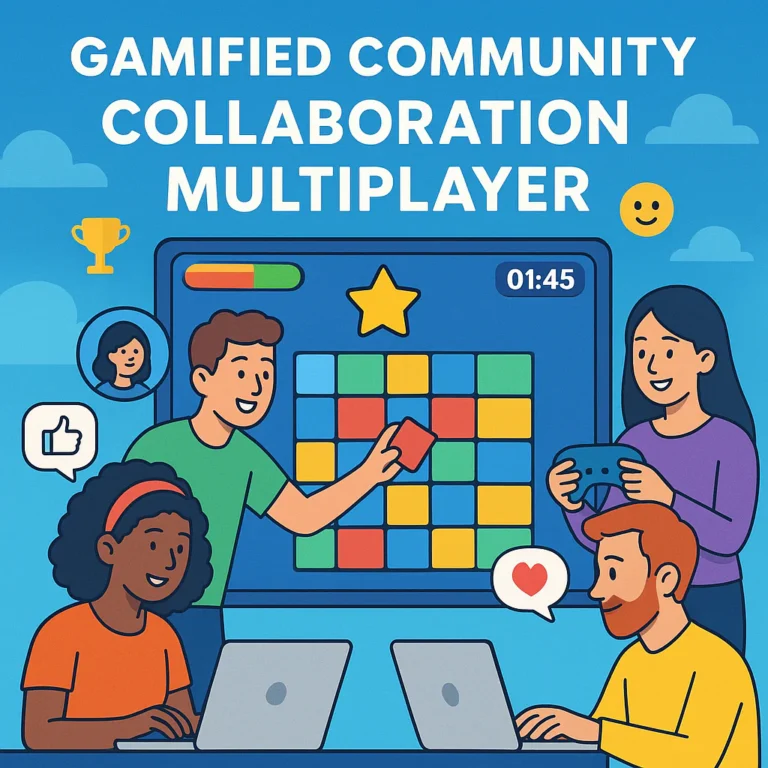
- Collaboration Over Competition: For social good, team-based mechanics and shared goals often outperform individual leaderboards in fostering community resilience.
- Avoid the “Overjustification Effect”: Be careful not to undermine intrinsic motivation by over-relying on extrinsic rewards that can make volunteering feel like a transaction.
- AI Enhances, But Doesn’t Replace: While tools like Serve Smart offer powerful matching capabilities, the human element of storytelling and empathy remains the ultimate driver of impact.
Table of Contents
- ⚡️ Quick Tips and Facts
- 🕰️ From Arcade to Activism: A Brief History of Gameful Design for Social Good
- 🧠 The Psychology of Play: Why Game Mechanics Drive Community Engagement
- 🛠️ Core Game Mechanics for Non-Profit Impact
- 1. Points, Badges, and Leaderboards: The Holy Trinity of Gamification
- 2. Narrative and Storytelling: Crafting a Mission That Matters
- 3. Progression Systems and Leveling Up: Visualizing Your Impact
- 4. Social Collaboration and Guilds: Building Teams for Change
- 5. Feedback Lops and Real-Time Data: Keeping the Momentum Alive
- 🌍 Real-World Case Studies: Brands and Platforms Winning at Civic Engagement
- 1. Foldit: How Gamers Solved a Protein Folding Mystery
- 2. Duolingo for Social Causes: Language Learning Mets Cultural Preservation
- 3. Zombies, Run!: Fitness Mets Community Storytelling
- 4. Charity Miles: Turning Steps into Donations
- 5. Ecosia: The Search Engine That Plants Trees Through Engagement
- 🚀 Designing for Intrinsic vs. Extrinsic Motivation in Community Projects
- 📊 Measuring Success: KPIs for Gameful Social Impact Campaigns
- ⚠️ Common Pitfalls: When Gamification Backfires in Social Good
- 🔮 Future Trends: AI, VR, and the Next Frontier of Civic Gamification
- 💡 Quick Tips and Facts for Implementation
- 🏁 Conclusion
- 🔗 Recommended Links
- ❓ FAQ
- 📚 Reference Links
⚡️ Quick Tips and Facts
Before we dive into the deep end of the gamification pool, let’s splash around with some high-impact truths that will save you hours of trial and error. At Gamification Hub™, we’ve seen countless well-intentioned social good projects crash and burn because they treated “fun” as an afterthought. Here is the reality check:
- Motivation is King: You cannot simply slap a leaderboard on a volunteer app and expect magic. If the underlying task feels like a chore, the gamification will feel like a manipulative trap. The goal is intrinsic motivation—making the act of helping feel rewarding in itself.
- The 75% Boost: According to research by Bowser et al., implementing badges, missions, and points can increase user participation by approximately 75% in experimental environments. However, this often drops off if the “game” lacks narrative depth.
- Failure is a Feature: In traditional volunteering, failing to meet a goal feels like a personal shortcoming. In gameful design, failure is reframed as a “learning moment” or a “retry,” which drastically reduces dropout rates.
- Community > Competition: While leaderboards work for sales teams, social good initiatives often thrive better on collaboration mechanics (guilds, shared goals) rather than cuthroat competition.
- The “Serve Smart” Insight: Recent AI-driven systems show that matching volunteers to tasks based on skills and trust (rather than just availability) can yield 98.5% classification accuracy in finding the right fit, proving that personalization is the new currency of engagement.
Pro Tip: If you are wondering how gameful design differs from standard gamification, check out our deep dive on Gameful design vs gamification examples to understand why one builds communities and the other just builds points.
🕰️ From Arcade to Activism: A Brief History of Gameful Design for Social Good

Remember the days when “playing games” was considered a waste of time? Those days are long gone. The evolution from arcade cabinets to civic engagement platforms is a story of human psychology meeting technological necessity.
The Early Days: Points and Prizes
In the early 20s, the concept of gamification was born, largely driven by marketing. Companies like Nike (with their early Run Club apps) and Foursquare experimented with badges and leaderboards. The idea was simple: extrinsic rewards (badges, status) would drive behavior.
However, when applied to social good, this “points-for-points” approach often fell flat. Why? Because volunteering isn’t about winning a trophy; it’s about altruism.
The Shift: Gameful Learning and Flow
The paradigm shifted when educators and psychologists realized that gameful design wasn’t about making things “fun” in a superficial way; it was about creating flow states. As noted by researchers at Ohio State University, the focus moved to autonomy, competence, and relatedness.
- Autonomy: Giving volunteers choices in how they contribute.
- Competence: Ensuring they feel capable of making a difference.
- Relatedness: Connecting them to a larger community.
This shift transformed the landscape. We moved from “Do this to get a badge” to “Join this mission to save the reef.”
The AI Revolution
Today, we are in the era of AI-based engagement. Systems like Serve Smart are using machine learning to match volunteers with precision, ensuring that the “game” of finding the right volunteer is as seamless as possible. This isn’t just about fun; it’s about efficiency and impact.
🧠 The Psychology of Play: Why Game Mechanics Drive Community Engagement
Why do we play? And more importantly, why do we play for a cause? To answer this, we must look under the hood of human motivation.
Intrinsic vs. Extrinsic Motivation
This is the holy grail of social good gamification.
- Extrinsic Motivation: “I will clean the park because I get a free t-shirt.” (Short-term, fragile).
- Intrinsic Motivation: “I will clean the park because I love my community and feel capable of making it better.” (Long-term, resilient).
Gameful design aims to bridge the gap. It uses extrinsic hooks (like a progress bar) to guide users until they experience the intrinsic joy of the activity.
The Self-Determination Theory (SDT)
Developed by Deci and Ryan, SDT posits that humans have three core psychological needs:
- Autonomy: The need to feel in control of one’s actions.
- Competence: The need to feel effective and skilled.
- Relatedness: The need to feel connected to others.
When a volunteer app satisfies these three needs, engagement skyrockets. For example, allowing a volunteer to choose their own mission (Autonomy), providing real-time feedback on their impact (Competence), and showing them a team of other volunteers working on the same issue (Relatedness) creates a powerful engagement loop.
The Power of Narrative
Humans are storytelling creatures. A dry list of tasks is boring. A narrative where the volunteer is the “hero” saving the “village” (the community) from the “dragon” (the problem) is compelling.
Curiosity Gap: But what happens when the narrative is too complex? Or when the “hero” feels overwhelmed? We’ll explore the pitfalls of over-gamification later, but for now, remember: Storytelling is the glue that holds the mechanics together.
🛠️ Core Game Mechanics for Non-Profit Impact
Now, let’s get our hands dirty. What are the actual tools in the gamification engineer’s toolbox? Here are the five pillars that drive community engagement.
1. Points, Badges, and Leaderboards: The Holy Trinity of Gamification
The classic trio, but with a twist for social good.
- Points: Instead of just counting tasks, use points to represent impact units (e.g., “10 points = 1 tree planted”).
- Badges: Use badges to recognize soft skills and values (e.g., “The Empathy Badge” for helping a new volunteer) rather than just quantity.
- Leaderboards: Caution! For social good, team leaderboards often work better than individual ones. They foster collaboration rather than competition.
2. Narrative and Storytelling: Crafting a Mission That Matters
A narrative transforms a task into a quest.
- The Hero’s Journey: Frame the volunteer as the protagonist.
- The Villain: Clearly define the problem (e.g., “Plastic Pollution”).
- The Reward: The reward isn’t just a badge; it’s the visible change in the world.
3. Progression Systems and Leveling Up: Visualizing Your Impact
Nothing kills motivation like feeling stuck. Leveling up provides a clear path forward.
- Visual Progress Bars: Show how close the community is to a goal (e.g., “We are 80% to our goal of feeding 1,0 families”).
- Unlockable Content: As volunteers level up, unlock advanced training or exclusive stories about the impact they’ve made.
4. Social Collaboration and Guilds: Building Teams for Change
Humans are social animals. Guilds (or teams) create a sense of belonging.
- Shared Goals: Teams work together to reach a milestone.
- Peer Support: Experienced volunteers mentor new ones, creating a support network.
5. Feedback Lops and Real-Time Data: Keeping the Momentum Alive
Feedback must be imediate and meaningful.
- Real-Time Notifications: “You just helped 5 people!”
- Impact Dashboards: Show the aggregate impact of the community.
🌍 Real-World Case Studies: Brands and Platforms Winning at Civic Engagement
Let’s look at who is doing it right. These aren’t just theories; they are proven strategies used by real organizations.
1. Foldit: How Gamers Solved a Protein Folding Mystery
Foldit is the gold standard of citizen science. It turned the complex problem of protein folding into a puzzle game.
- The Mechanic: Players manipulate protein structures to find the most stable configuration.
- The Impact: In 201, gamers solved the structure of an AIDS-related enzyme that had stumped scientists for 15 years.
- Why it Worked: It tapped into the intrinsic curiosity of gamers and gave them a tangible sense of competence.
2. Duolingo for Social Causes: Language Learning Mets Cultural Preservation
While Duolingo is famous for language learning, its mechanics are being adapted for cultural preservation.
- The Mechanic: Short, bite-sized lessons with immediate feedback and streaks.
- The Impact: Platforms like Memrise and Duolingo are used to teach endangered languages, keeping cultures alive.
- Why it Worked: The streak mechanic creates a habit loop, making learning a daily ritual.
3. Zombies, Run!: Fitness Mets Community Storytelling
Zombies, Run! turns a jog into an immersive audio adventure.
- The Mechanic: You are a runner in a zombie apocalypse, collecting supplies and avoiding zombies via audio cues.
- The Impact: It has helped thousands of people get fit while feeling part of a larger story.
- Why it Worked: It uses narrative immersion to mask the effort of exercise.
4. Charity Miles: Turning Steps into Donations
Charity Miles allows users to earn money for charity by walking, running, or biking.
- The Mechanic: Corporate sponsors donate money based on the distance covered.
- The Impact: Millions of dollars raised for various causes.
- Why it Worked: It links personal health goals with altruistic outcomes.
5. Ecosia: The Search Engine That Plants Trees Through Engagement
Ecosia turns every search into a tree planting.
- The Mechanic: Users see a counter of trees planted as they search.
- The Impact: Over 150 million trees planted to date.
- Why it Worked: It provides imediate visual feedback on the impact of a mundane action (searching).
👉 CHECK PRICE on:
- Zombies, Run!: Amazon | Official Website
- Charity Miles: Official Website
- Ecosia: Official Website
🚀 Designing for Intrinsic vs. Extrinsic Motivation in Community Projects
This is the make-or-break decision for any gameful design project.
The Extrinsic Trap
Relying too heavily on extrinsic rewards (points, badges, prizes) can lead to the overjustification effect. This is a psychological phenomenon where offering an external reward for an activity that is already intrinsically rewarding can decrease the internal motivation to do it.
Example: If you pay volunteers to clean a park, they might stop volunteering once the payment stops. If you give them a badge, they might stop once the badge is “boring.”
The Intrinsic Sweet Spot
The goal is to use extrinsic mechanics as a scaffold to build intrinsic motivation.
- Phase 1 (Onboarding): Use points and badges to guide new users.
- Phase 2 (Engagement): Shift focus to social recognition and impact visualization.
- Phase 3 (Mastery): Let the sense of purpose drive the behavior.
Balancing the Scale
| Feature | Extrinsic Focus | Intrinsic Focus |
|---|---|---|
| Motivation Source | External rewards | Internal satisfaction |
| Sustainability | Low (stops when rewards stop) | High (self-sustaining) |
| Risk | Overjustification effect | Harder to measure initially |
| Best For | Onboarding, short-term campaigns | Long-term community building |
📊 Measuring Success: KPIs for Gameful Social Impact Campaigns
How do you know if your gameful design is working? You need more than just “likes.”
Key Performance Indicators (KPIs)
- Retention Rate: Are users coming back? (Crucial for long-term impact).
- Task Completion Rate: Are users actually doing the tasks?
- Social Sharing: Are users inviting others? (Viral coefficient).
- Impact Metrics: Real-world outcomes (e.g., trees planted, meals served).
- Sentiment Analysis: Are users feeling empowered or manipulated?
The “Serve Smart” Metrics
The Serve Smart system highlights the importance of precision and recall in matching volunteers.
- Precision: Ensuring that when a volunteer is matched, they are a good fit (low false positives).
- Recall: Ensuring that all suitable volunteers are found (low false negatives).
- F1 Score: A balanced measure of both.
⚠️ Common Pitfalls: When Gamification Backfires in Social Good
Even the best-laid plans can go wrong. Here are the traps to avoid.
1. The “Pointsification” Trap
Simply adding points to a boring task doesn’t make it fun. It just makes it a boring task with points. This leads to engagement fatigue.
2. Ignoring the Audience
Not everyone is motivated by the same things. A leaderboard might motivate a competitive person but demotivate a collaborative one. Personalization is key.
3. Over-Complexity
If the “game” is too complicated, users will get confused and leave. Simplicity is the ultimate sophistication.
4. Ethical Concerns
Using gamification to manipulate vulnerable populations is unethical. Always ensure transparency and consent.
5. Lack of Long-Term Vision
Many campaigns focus on short-term spikes in engagement but fail to build long-term habits.
🔮 Future Trends: AI, VR, and the Next Frontier of Civic Gamification
The future of gameful design is bright and tech-heavy.
AI-Powered Personalization
As seen in Serve Smart, AI will be used to create hyper-personalized experiences. Imagine an app that knows exactly what kind of volunteer work you love and suggests it at the perfect time.
VR and Immersive Experiences
Virtual Reality can transport volunteers to the places they are helping. Imagine walking through a forest you helped plant, or seeing the impact of your donation in a 3D simulation.
Blockchain and Tokenization
Blockchain can be used to create transparent and verifiable impact records. Tokenization could allow volunteers to earn digital assets that represent their contributions, which can be used for rewards or recognition.
The “Ripple Effect”
As Gretchen Krampf mentioned in her presentation on community engagement, every action creates a ripple effect. The future of gameful design is about amplifying these ripples to create global waves of change.
Curiosity Gap: But how do we ensure these technologies don’t create a digital divide? We’ll touch on this in the FAQ section, but the answer lies in inclusive design.
💡 Quick Tips and Facts for Implementation
Ready to start? Here are some final pro tips from the Gamification Hub™ team:
- Start Small: Don’t try to build a massive game on day one. Start with a single mechanic (e.g., a progress bar) and iterate.
- Test with Users: Get feedback early and often. Your users know what works best.
- Focus on Story: A good story is more powerful than a good game.
- Measure Everything: Use data to drive your decisions.
- Be Ethical: Always prioritize user well-being over engagement metrics.
🏁 Conclusion

We’ve journeyed from the arcades of the past to the AI-driven future of civic engagement. The path to successful gameful design for social good is not about tricking people into doing good; it’s about unlocking the intrinsic motivation that already exists within them.
By leveraging psychological principles, narrative storytelling, and smart technology, we can create platforms that not only engage but empower communities. Whether it’s Foldit solving scientific mysteries or Ecosia planting trees, the potential is limitless.
The Big Question: As we move forward, how do we balance the efficiency of AI with the human touch of community? The answer lies in designing with empathy. Remember, as Gretchen Krampf said, “We know how to do this. It’s within us.”
Recommendation: If you are looking to implement gameful design in your organization, start by mapping out your users’ motivations and identifying the core narrative of your mission. Then, choose mechanics that support, not overshadow, that story.
Final Thought: The next great social movement might just be a game waiting to be played. Are you ready to be the invitation?
🔗 Recommended Links
Books & Resources
- Reality Is Broken: Why Games Make Us Better and How They Can Change the World by Jane McGonigal
- Shop on Amazon
- Gamification by Design by Gabe Zichermann and Christopher Cunningham
- Shop on Amazon
- The Art of Gameful Design (Online Course)
- edX: Leading Change: Go Beyond Gamification with Gameful Learning
Tools & Platforms
- Foldit – Official Website
- Zombies, Run! – Official Website
- Charity Miles – Official Website
- Ecosia – Official Website
- Serve Smart – Research Paper on AI-Based Volunteer Engagement
Internal Resources
- Educational Gamification
- Gamification Case Studies
- Game Mechanics
- Game-Based Learning
- Behavior Science
❓ FAQ

How can gameful design principles improve community engagement in non-profit organizations?
Gameful design improves engagement by addressing the core psychological needs of autonomy, competence, and relatedness. By providing clear goals, imediate feedback, and social connection, non-profits can transform passive supporters into active participants. Unlike traditional gamification, which often focuses on extrinsic rewards, gameful design fosters intrinsic motivation, leading to long-term commitment and deper community bonds.
What are the best gamification strategies for fostering social good initiatives?
The most effective strategies include:
- Narrative-Driven Quests: Framing tasks as part of a larger story or mission.
- Collaborative Guilds: Encouraging team-based goals rather than individual competition.
- Progress Visualization: Using progress bars and impact dashboards to show real-world results.
- Personalized Pathways: Allowing users to choose their own missions based on their skills and interests.
- Meaningful Recognition: Awarding badges that reflect values and impact, not just quantity.
Read more about “Can Gameful Design Drive Social Change? 7 Proven Strategies (2026) 🎮”
Can game mechanics effectively drive long-term social behavior change?
Yes, but with a caveat. Extrinsic mechanics (points, badges) are great for short-term spikes in engagement. However, for long-term behavior change, the focus must shift to intrinsic motivation. This is achieved by internalizing the values of the cause and creating a sense of identity around the behavior. As seen in Foldit and Ecosia, when users feel a personal connection to the outcome, the behavior becomes self-sustaining.
Read more about “🤖 AI’s Role in Personalized Gameful Experiences: 7 Secrets (2026)”
What examples exist of successful gameful design projects that strengthened local communities?
- Thrive Salish Sea: A local initiative in San Juan County that uses collaborative storytelling and shared visioning to build community resilience.
- Lopez Community Land Trust: Uses participatory decision-making and shared ownership models to address housing challenges.
- San Juan Islands Conservation District: Engages the community in climate resilience planning through interactive workshops and data visualization.
- Imagine: Dreamers of the Future: A music and arts festival that brought together young creatives to collaborate and celebrate their community.
How do we avoid the “overjustification effect” in social good gamification?
To avoid the overjustification effect, ensure that extrinsic rewards are used as scaffolding rather than the primary driver. Focus on intrinsic motivators like autonomy, competence, and relatedness. Gradually phase out external rewards as users develop a sense of purpose and identity around the cause. Always ask for feedback to ensure that users feel empowered rather than manipulated.
Read more about “🎮 Gamification in the Workplace: 5 Ways to Ignite Employee Motivation (2026)”
📚 Reference Links
- Bowser, A., et al. (2013). “Gamification in Civic Engagement.” Proceedings of the ACM Conference on Human Factors in Computing Systems. Link to Research
- Hassan, L., & Hamari, J. (2020). “Gamification and Civic Engagement.” Computers in Human Behavior. Link to Research
- Romano, D. M., et al. (2021). “Gamification for Social Good: A Systematic Review.” Computers in Human Behavior. Link to Research
- Niemiec, C. P., & Ryan, R. M. (209). “Autonomy, Competence, and Relatedness in the Classroom.” Theory and Research in Education. Link to Research
- Serve Smart: A Volunteer Engagement System with AI-Based Recommendations. International Journal of Engineering Research and Technology (IJERT). Link to Paper
- Ohio State University. “Increasing Motivation and Maximizing Student Engagement: Benefits of Gameful Learning.” Link to Article
- Pew Research Center. “Tens, Social Media, and Technology.” Link to Report
- Gretchen Krampf. “Bringing It Home: Lessons on Community Engagement.” Video Presentation