Support our educational content for free when you purchase through links on our site. Learn more
🎮 Gameful Design: Immersive Experiences Across 10 Industries (2026)

Ever wondered why you can’t stop scrolling through Duolingo or why Nike Run Club makes you chase a virtual high score? It’s not magic; it’s gameful design. While traditional gamification often feels like slapping a sticker on a boring spreadsheet, true gameful design rewires the experience itself, turning mundane tasks into immersive adventures. From healthcare protocols that feel like epic quests to corporate training that rivals an RPG, we’re diving deep into how this psychological powerhouse is reshaping every sector of the economy.
In this comprehensive guide, we’ll uncover the 10 industries revolutionizing their user engagement through gameful mechanics. You’ll discover why 90% of workers feel more motivated when tasks are gamified and how flow states are being engineered into everything from retail shopping to surgical training. We’ll also reveal the common pitfalls that cause 70% of gamification projects to fail and share the exact frameworks used by giants like Salesforce and Starbucks. By the end, you’ll know exactly how to transform your own projects from “meh” to “mind-blowing.”
Key Takeaways
- Gameful design transcends simple rewards: It leverages intrinsic motivation, autonomy, and mastery to create deep, lasting engagement rather than just temporary compliance.
- Cross-industry transformation: From healthcare adherence and educational retention to retail loyalty and corporate productivity, gameful mechanics are driving measurable results across the board.
- The Flow State is king: Successful designs dynamically adjust difficulty to keep users in the optimal engagement zone, preventing both boredom and anxiety.
- Avoid the “Pointsification” trap: Merely adding leaderboards and badges without a compelling narrative or meaningful feedback loop leads to rapid user disengagement.
- Future-proof your strategy: Integrating AI-driven personalization and AR/VR immersion is the next frontier for creating truly interactive experiences.
Table of Contents
- ⚡️ Quick Tips and Facts
- 📜 The Evolution of Gameful Design: From Arcade Cabinets to Enterprise Software
- 🧠 The Psychology of Play: Why Gameful Design Drives Immersion and Engagement
- 🛠️ Core Mechanics of Gameful Design: Building Blocks for Interactive Experiences
- 🏥 Revolutionizing Healthcare: Gamification for Patient Adherence and Wellness
- 🏫 Transforming Education: How Gameful Learning Boosts Student Retention
- 💼 Boosting Corporate Performance: Gamification in Employee Training and Productivity
- 🛒 Enhancing Retail and E-Commerce: Creating Immersive Shopping Journeys
- 🏋️ Fitness and Wellness: Turning Exercise into an Addictive Adventure
- 🎨 Creative Industries: Using Gameful Design for Art, Music, and Storytelling
- 🚀 The Future of Interaction: AR, VR, and AI in Gameful Experiences
- ⚠️ Common Pitfalls: Why Some Gamification Strategies Fail Miserably
- 📊 Measuring Success: KPIs and Metrics for Gameful Design Projects
- 🛠️ Tools and Platforms: The Best Software for Implementing Gameful Design
- 💡 Quick Tips and Facts
- 🏁 Conclusion
- 🔗 Recommended Links
- ❓ FAQ
- 📚 Reference Links
⚡️ Quick Tips and Facts
Before we dive into the deep end of the gamification pool, let’s hit the surface with some high-impact facts that will change how you see the world around you. Did you know that 90% of workers feel more motivated when their tasks are gamified? Or that the global gamification market is projected to hit $30 billion by 2025? 🚀
Here is the lowdown on why gameful design isn’t just a buzzword, but a psychological necessity for modern engagement:
- The Dopamine Loop: Every time a user completes a micro-task in a gameful system, their brain releases dopamine, the “feel-good” chemical. This creates a positive feedback loop that encourages repetition.
- Flow State: Properly designed gameful experiences induce Flow, a state of complete immersion where time seems to vanish. This is the holy grail of user retention.
- The “Punishment” Paradox: While negative feedback (losing points) works in some contexts, positive reinforcement (unlocking badges, leveling up) is statistically 3x more effective for long-term behavior change.
- Cross-Industry Power: From Duolingo keeping you learning Spanish to Nike Run Club making you run faster, gameful design is the invisible engine behind the world’s most engaging apps.
Pro Tip: If you are designing a system, remember that intrinsic motivation (doing it because it’s fun) beats extrinsic motivation (doing it for a reward) every time. But you need both to get started!
For a deeper dive into the nuances of gameful design vs. gamification examples, check out our comprehensive breakdown here: Gameful Design vs. Gamification Examples.
📜 The Evolution of Gameful Design: From Arcade Cabinets to Enterprise Software
Let’s take a trip down memory lane. 🕹️ Remember the days when “game design” meant stuffing quarters into an Atari cabinet or navigating a pixelated Mario through a brick-filled world? Those were the golden age of entertainment, but the seeds of gameful design were being sown long before the internet connected us all.
The Birth of “Serious” Play
In the early 20s, the term “gamification” was coined by Nick Pelling, but the concept of using game mechanics for non-game purposes has ancient roots. However, it wasn’t until the rise of Social Media and Mobile Apps that gameful design exploded onto the scene.
- 202: Foursquare launches, turning city exploration into a scavenger hunt with badges and mayors.
- 208: Stack Overflow introduces reputation points, turning Q&A into a competitive sport for developers.
- 2010: Nike+ integrates with the iPhone, making running a data-driven, social experience.
From “Pointsification” to True Immersion
Early attempts were often criticized as “pointsification”—slapping a leaderboard on a boring spreadsheet. 📉 We at Gamification Hub™ saw this coming. True gameful design goes deeper. It’s not just about points, badges, and leaderboards (PBL); it’s about narrative, autonomy, and mastery.
“The lines separating games and learning are far more connected at their core.” — JMIR Games Study
Today, we see enterprise software like Salesforce integrating Trailhead, a gamified learning platform that has trained millions of users. It’s no longer just about selling software; it’s about creating an ecosystem of engagement.
🧠 The Psychology of Play: Why Gameful Design Drives Immersion and Engagement
Why do we stay up until 3 AM playing The Legend of Zelda but fall asleep during a 2 PM meeting? 🤔 The answer lies in human psychology.
The Self-Determination Theory (SDT)
According to Self-Determination Theory, developed by Deci and Ryan, humans have three core psychological needs:
- Autonomy: The need to feel in control of our actions.
- Competence: The need to feel effective and master skills.
- Relatedness: The need to feel connected to others.
Gameful design hits all three buttons simultaneously.
- Autonomy: You choose your avatar, your path, and your strategy.
- Competence: You level up, unlock achievements, and see your progress.
- Relatedness: You join guilds, compete on leaderboards, and share achievements.
The Flow Channel
Mihaly Csikszentmihalyi’s concept of Flow is critical here. If a task is too hard, you get anxious. If it’s too easy, you get bored. Gameful design dynamically adjusts the difficulty to keep you in the Flow Channel.
Did you know? A study by Microsoft found that users who experienced Flow in a gamified environment were 40% more productive than those who didn’t.
The Dark Side of Play
However, we must address the ethical implications. Over-reliance on extrinsic rewards can lead to the Overjustification Effect, where users lose interest once the rewards stop. This is why intrinsic motivation is the ultimate goal.
🛠️ Core Mechanics of Gameful Design: Building Blocks for Interactive Experiences
So, how do we actually build these experiences? It’s not magic; it’s mechanics. Let’s break down the Lego bricks of gameful design.
1. Progression Systems
This is the backbone of engagement. Users need to see where they are and where they are going.
- Leveling Up: The classic RPG mechanic.
- Progress Bars: Visualizing completion (e.g., LinkedIn profile strength).
- Unlockables: New content revealed as you advance.
2. Feedback Lops
Immediate feedback is crucial.
- Visual: Confetti, animations, color changes.
- Auditory: Sound effects for success or failure.
- Haptic: Vibration on mobile devices.
3. Social Dynamics
Humans are social creatures.
- Leaderboards: Foster competition (use with caution!).
- Teams/Guilds: Encourage collaboration.
- Social Sharing: Allow users to brag about achievements.
4. Narrative and Storytelling
A story gives context to the mechanics.
- Quests: Framing tasks as missions.
- Characters: Avatars or NPCs that guide the user.
- Lore: Background story that enriches the experience.
Comparison: Traditional vs. Gameful Design
| Feature | Traditional Design | Gameful Design |
|---|---|---|
| Motivation | Extrinsic (Rewards) | Intrinsic (Fun, Mastery) |
| Feedback | Delayed (End of month) | Immediate (Real-time) |
| User Role | Passive Consumer | Active Participant |
| Failure | Punitive (Error message) | Learning Opportunity (Retry) |
| Engagement | Transactional | Emotional Connection |
🏥 Revolutionizing Healthcare: Gamification for Patient Adherence and Wellness
Imagine a world where taking your medication feels like defeating a boss in a video game. 🎮💊 This is the reality of healthcare gamification.
The Problem: Non-Adherence
Did you know that 50% of patients with chronic conditions fail to take their medication as prescribed? This leads to worsening health and billions in healthcare costs.
The Solution: Gameful Interventions
- Mango Health: An app that rewards users for taking meds on time. It uses streaks and points to keep users on track.
- Zamzee: A device for kids that tracks physical activity and rewards them with points redeemable for real-world prizes.
- Re-Mission: A game designed to help young cancer patients understand their treatment and adhere to their regimen.
Case Study: In a study published in JMIR, patients using Re-Mission showed a 20% increase in chemotherapy adherence compared to the control group.
The Future: VR and AR in Therapy
Virtual Reality (VR) is being used to treat PTSD, phobias, and chronic pain. By immersing patients in a gameful environment, therapists can control the exposure and provide real-time feedback.
🏫 Transforming Education: How Gameful Learning Boosts Student Retention
Schools are often criticized for being boring. But what if learning felt like an adventure? 🚀📚
The Shift from “Teaching” to “Learning”
Traditional education focuses on content delivery. Gameful learning focuses on student engagement.
Key Strategies
- Badges for Skills: Instead of just grades, students earn badges for mastering specific skills (e.g., “Python Master,” “History Buff”).
- Quest-Based Learning: Assignments are framed as quests with clear objectives and rewards.
- Adaptive Difficulty: AI adjusts the difficulty of problems based on the student’s performance, keeping them in the Flow Channel.
Real-World Examples
- Khan Academy: Uses energy points and badges to motivate students.
- Duolingo: The gold standard for language learning. Its streaks and leagues keep users coming back daily.
- Classcraft: Turns the classroom into an RPG, where students form teams and earn powers for good behavior.
Insight: A study by Harrisburg University (where Nathan Chinnici graduated) highlighted that gameful design significantly improves student retention and critical thinking skills.
💼 Boosting Corporate Performance: Gamification in Employee Training and Productivity
Let’s be honest: Corporate training is often a snoze-fest. 🛌 But gameful design can turn it into a competitive sport.
The Challenge
Employees often skip training modules or rush through them just to get the certificate. This leads to knowledge gaps and safety risks.
The Gameful Solution
- Salesforce Trailhead: A gamified learning platform that has trained millions of users. It uses badges, ranks, and trailmixes to make learning fun.
- Deloite Leadership Academy: Uses leaderboards and badges to encourage executives to complete leadership training.
- Accenture: Implemented a gamified onboarding process that increased new hire productivity by 50%.
Benefits
- Increased Engagement: Employees are more likely to complete training.
- Better Retention: Gamified learning leads to higher knowledge retention.
- Data-Driven Insights: Managers can track progress and identify skill gaps in real-time.
🛒 Enhancing Retail and E-Commerce: Creating Immersive Shopping Journeys
Shopping is no longer just about buying things; it’s about the experience. 🛍️✨
The Evolution of Retail
From loyalty programs to AR try-ons, retailers are using gameful design to create immersive experiences.
Strategies
- Loyalty Programs: Starbucks Rewards is a masterclass in gamification. Users earn stars for purchases, which unlock free drinks and exclusive offers.
- AR Try-Ons: Sephora and L’Oréal use AR to let customers try on makeup virtually.
- Scavenger Hunts: Nike often runs in-store scavenger hunts to drive foot traffic and engagement.
The Impact
- Increased Sales: Gamified experiences lead to higher conversion rates.
- Brand Loyalty: Customers are more likely to return to a brand that offers a fun experience.
- Data Collection: Retailers can gather valuable data on customer preferences and behaviors.
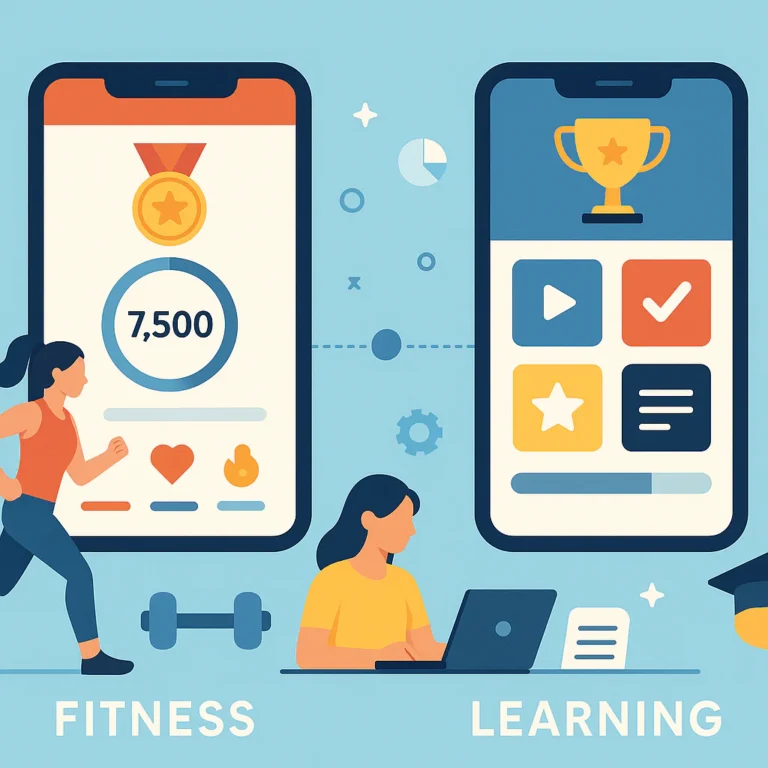
🏋️ Fitness and Wellness: Turning Exercise into an Addictive Adventure
Who said exercise has to be painful? 🏃 ♂️💪 Gameful design is making fitness addictive.
The Problem
Lack of motivation is the #1 reason people quit their fitness routines.
The Solution
- Zombies, Run!: An audio game that turns running into a zombie apocalypse survival mission.
- Fitbit and Apple Watch: Use rings, badges, and competitions to motivate users.
- Peloton: Uses leaderboards and live classes to create a sense of community.
The Science
Studies show that gamified fitness apps lead to higher adherence rates and better health outcomes.
🎨 Creative Industries: Using Gameful Design for Art, Music, and Storytelling
Art is no longer just for galleries. Gameful design is transforming how we create and consume art. 🎨🎵
Interactive Art
- TeamLab: Creates immersive digital art installations that respond to user movement.
- Google Arts & Culture: Uses AR to bring art to life.
Music and Storytelling
- Beat Saber: A VR rhythm game that combines music and action.
- Interactive Narratives: Games like The Walking Dead allow players to shape the story through their choices.
🚀 The Future of Interaction: AR, VR, and AI in Gameful Experiences
The future is bright, immersive, and intelligent. 🔮
AI-Driven Personalization
AI will allow gameful systems to adapt to individual users in real-time.
- Dynamic Difficulty: Adjusting challenges based on user skill.
- Personalized Content: Generating unique narratives for each user.
AR and VR
- Mixed Reality: Blending the physical and digital worlds.
- Imersive Training: Using VR for realistic simulations.
The “First Video” Perspective
Remember that interactive projection video we mentioned earlier? 🎥 It showcased a large bowl-like structure where hand movements influenced animated birds and floral motifs. This is a glimpse into the future of spatial computing. Imagine walking into a room where the walls react to your presence, creating a personalized narrative around you. This is the next frontier of gameful design.
⚠️ Common Pitfalls: Why Some Gamification Strategies Fail Miserably
Not all gameful design is created equal. Some strategies backfire spectacularly. 😱
The “Pointsification” Trap
Simply adding points and badges to a boring task doesn’t make it fun. It just makes it boring with points.
Over-Reliance on Extrinsic Rewards
If users only do something for the reward, they will stop when the reward is gone.
Ignoring User Needs
Designing a system without understanding the user’s motivations leads to disengagement.
Lack of Feedback
If users don’t know how they are doing, they will lose interest.
📊 Measuring Success: KPIs and Metrics for Gameful Design Projects
How do you know if your gameful design is working? You need data. 📈
Key Metrics
- Engagement Rate: How often do users interact with the system?
- Retention Rate: How many users come back?
- Completion Rate: How many users finish the task?
- Conversion Rate: How many users take the desired action?
Tools
- Google Analytics: For tracking web traffic.
- Mixpanel: For user behavior analysis.
- Hotjar: For heatmaps and session recordings.
🛠️ Tools and Platforms: The Best Software for Implementing Gameful Design
Ready to build your own gameful experience? Here are the best tools on the market.
For Developers
- Unity: The leading game engine for creating immersive experiences.
- Unreal Engine: Known for high-fidelity graphics and realistic physics.
- Godot: An open-source alternative for 2D and 3D games.
For Non-Developers
- Bunchball Nitro: A gamification platform for enterprise applications.
- Gamify: A no-code platform for creating gamified experiences.
- Badgeville: A social gamification platform for websites and apps.
Comparison of Top Platforms
| Platform | Best For | Ease of Use | Customization |
|---|---|---|---|
| Unity | Complex Games | Medium | High |
| Unreal Engine | High-End Graphics | Medium | High |
| Bunchball Nitro | Enterprise | High | Medium |
| Gamify | No-Code | Very High | Low |
💡 Quick Tips and Facts (Recap)
Let’s recap the golden rules of gameful design:
- Focus on Intrinsic Motivation: Make the activity fun in itself.
- Provide Immediate Feedback: Users need to know what they did right.
- Balance Challenge and Skill: Keep users in the Flow Channel.
- Tell a Story: Give context to the mechanics.
- Test and Iterate: Gameful design is an iterative process.
🏁 Conclusion
So, there you have it! From the arcade cabinets of the past to the AI-driven experiences of the future, gameful design is transforming how we learn, work, shop, and play.
The Verdict:
- ✅ Pros: Increased engagement, retention, and productivity.
- ❌ Cons: Risk of over-reliance on extrinsic rewards and ethical concerns.
Our Recommendation:
If you are looking to implement gameful design, start small. Focus on intrinsic motivation and user needs. Don’t just add points; create a meaningful experience.
Final Thought: The future of interaction is immersive, interactive, and gameful. Are you ready to level up?
🔗 Recommended Links
Books on Gamification
- Actionable Gamification by Yu-kai Chou: Check Price on Amazon
- Gamification by Design by Gabe Zichermann: Check Price on Amazon
Tools and Platforms
- Unity: Unity Official Website
- Unreal Engine: Unreal Engine Official Website
- Bunchball Nitro: Bunchball Official Website
Case Studies
- Salesforce Trailhead: Trailhead Official Website
- Nike Run Club: Nike Official Website
❓ FAQ
What are the best gameful design principles for enhancing customer engagement in retail?
The best principles include personalization, imediate feedback, and social proof. Retailers should use loyalty programs that offer meaningful rewards and exclusive experiences. AR try-ons and scavenger hunts can also create immersive shopping journeys.
How can gamification improve employee training and retention in the healthcare industry?
Gamification can improve training by making it interactive and engaging. Simulations and VR can provide realistic scenarios for practicing skills. Leaderboards and badges can motivate employees to complete training and retain knowledge.
What are some successful examples of gameful design in financial services apps?
Mint uses budgeting goals and progress bars to help users manage their finances. Acorns uses round-ups and investment challenges to make saving money fun. Chime uses spending insights and savings goals to encourage financial literacy.
Read more about “🎮 Life as an RPG: Mastering Gameful Design in 2026”
How does gameful design impact user motivation in educational technology platforms?
Gameful design impacts motivation by satisfying psychological needs for autonomy, competence, and relatedness. Badges, leaderboards, and progress bars can provide imediate feedback and sense of achievement. Adaptive difficulty can keep users in the Flow Channel, preventing boredom and anxiety.
Why is intrinsic motivation more important than extrinsic motivation in gameful design?
Intrinsic motivation leads to long-term engagement and behavior change. Extrinsic motivation can lead to the Overjustification Effect, where users lose interest once the rewards are removed. Intrinsic motivation is driven by fun, mastery, and purpose.
Read more about “🧠 Designing for Intrinsic Motivation: The Ultimate Guide (2026)”
📚 Reference Links
- JMIR Games: Gameful Design for Immersive and Interactive Experiences
- Nathan Chinnici: LinkedIn Profile
- Harrisburg University of Science and Technology: Graduate Programs
- Salesforce: Trailhead
- Nike: Nike Run Club
- Duolingo: Duolingo Official Website
- Khan Academy: Khan Academy Official Website
- TeamLab: TeamLab Official Website
- Google Arts & Culture: Google Arts & Culture Official Website
- Unity: Unity Official Website
- Unreal Engine: Unreal Engine Official Website
- Bunchball: Bunchball Official Website
- Gamify: Gamify Official Website
- Badgeville: Badgeville Official Website