Support our educational content for free when you purchase through links on our site. Learn more
🚫 7 Hidden Pitfalls of Gameful Design (2026)


Ever slapped a shiny badge on a spreadsheet and expected your team to suddenly love data entry? We’ve all been there. At Gamification Hub™, we’ve seen brilliant gameful design concepts crumble into digital dust because someone forgot that context is king and motivation is fragile. While the allure of turning every mundane task into an epic quest is strong, the reality is often a messy mix of user burnout, ethical quagmires, and the dreaded “pointsification” trap.
In this deep dive, we’re pulling back the curtain on the dark side of play. We’ll explore why a leaderboard that motivates a sales team can destroy morale in a mental health app, how extrinsic rewards can accidentally kill the very passion you’re trying to ignite, and the hidden costs that turn a fun project into an implementation nightmare. From the overjustification effect to the chilling reality of context collapse, we’ve got the real-world stories and data you need to avoid becoming the next cautionary tale.
Ready to find out if your next gamified feature is a game-changer or a game-ender? Keep reading, because the answer might surprise you.
Key Takeaways
- Context is Critical: Game mechanics that work in sales or fitness often fail catastrophically in sensitive environments like healthcare or education due to context collapse.
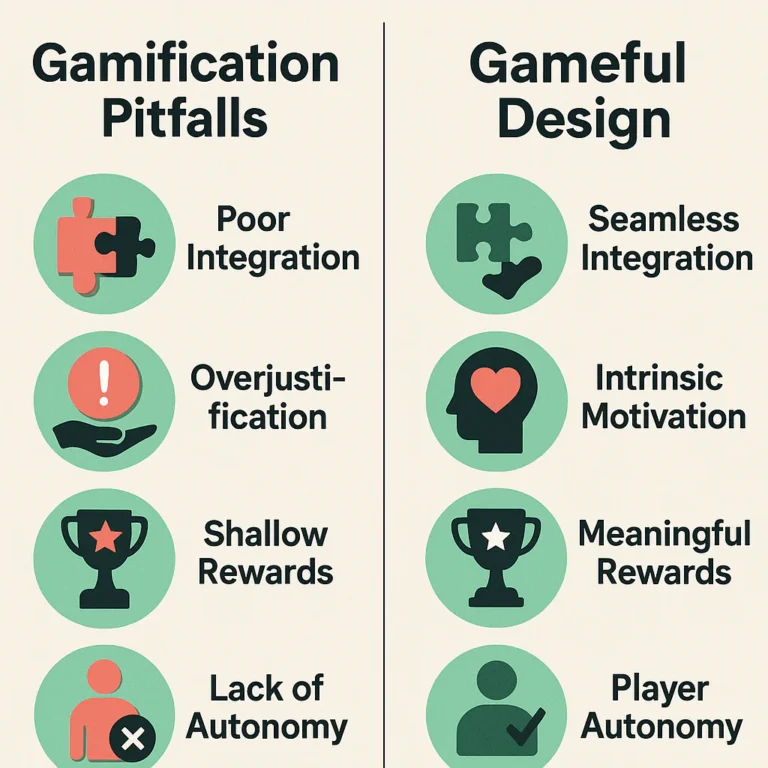
- The Motivation Trap: Over-reliance on extrinsic rewards (points, badges) can trigger the overjustification effect, undermining long-term intrinsic motivation.
- Ethical Minefields: Poorly designed systems can lead to manipulation, privacy violations, and harmful addictive behaviors, especially with vulnerable users.
- The Engagement Cliff: Without meaningful progression and variety, users quickly hit a wall, leading to burnout and abandonment of the system.
- Inclusivity Matters: Ignoring accessibility and diverse user needs can exclude large segments of your audience, turning a “fun” system into a barrier.
Table of Contents
- ⚡️ Quick Tips and Facts
- 🕰️ From Arcade to Algorithm: A Brief History of Gameful Design Pitfalls
- 🚫 The Dark Side of Play: Why Gamification Isn’t Always the Magic Bullet
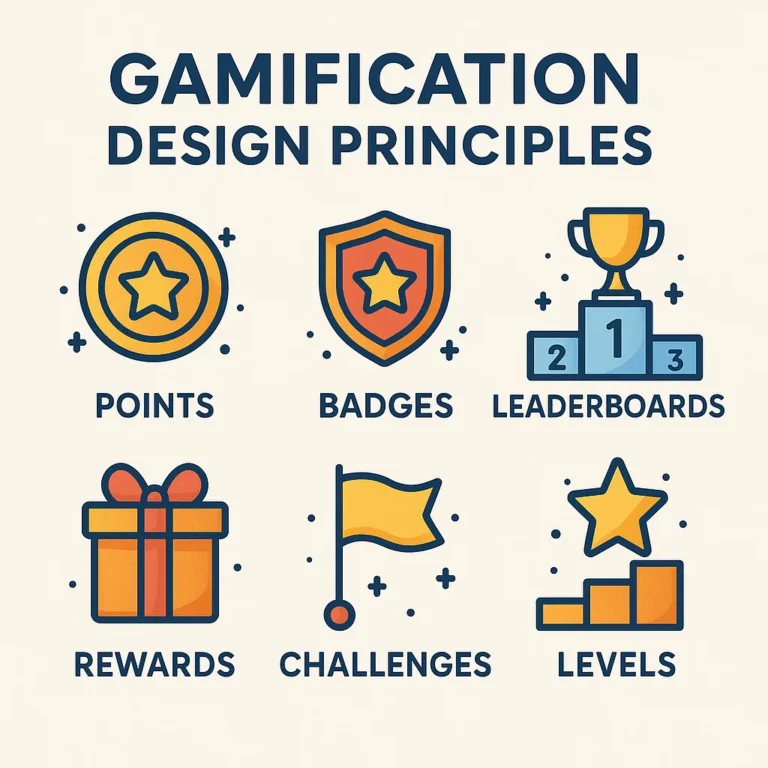
- 1️⃣ The “Pointsification” Trap: When Badges Become Noise
- 2️⃣ Extrinsic vs. Intrinsic Motivation: The Overjustification Effect Explained
- 3️⃣ Ethical Quagmires: Manipulation, Privacy, and the “Nudge” Gone Wrong
- 4️⃣ Context Collapse: Why What Works in Sales Fails in Healthcare
- 5️⃣ The Engagement Cliff: When Users Burn Out on Leaderboards
- 6️⃣ Accessibility and Exclusion: Designing for Everyone or Just the “Winers”?
- 7️⃣ Implementation Nightmares: Cost, Complexity, and Maintenance Overhead
- 🧪 Case Studies: Real-World Gamification Fails and Lessons Learned
- 🛠️ Mitigation Strategies: How to Design Gameful Experiences Without the Drawbacks
- 📊 Comparative Analysis: Traditional UX vs. Gameful Design Trade-offs
- 🔮 Future Trends: AI, Ethics, and the Next Evolution of Game Mechanics
- 💡 Conclusion: Is the Gamification Gamble Worth It?
- 🔗 Recommended Links
- ❓ FAQ: Your Burning Questions About Gamification Drawbacks Answered
- 📚 Reference Links
⚡️ Quick Tips and Facts
Welcome, fellow innovators and design enthusiasts! At Gamification Hub™, we’re obsessed with transforming mundane tasks into captivating experiences. But even we, with our boundless enthusiasm for
gameful design, know that it’s not a silver bullet. In fact, understanding its potential limitations and drawbacks is just as crucial as grasping its immense power. Think of it like a superhero’s kryptonite – knowing it
helps you avoid catastrophic failures!
Here are some rapid-fire insights to get your gears turning:
- Gamification ≠ Magic: Simply slapping points and badges onto an existing system rarely yields sustainable engagement. It’s about deep understanding of human
psychology and context. - Motivation Matters: Extrinsic rewards (points, badges) can sometimes undermine intrinsic motivation, especially for tasks users already find enjoyable or meaningful. This is
a phenomenon known as the overjustification effect. - Context is King: What works wonders in a fitness app might completely backfire in a sensitive environment like mental healthcare or education.
Ethical Minefield: Poorly designed gamification can be manipulative, exploit vulnerabilities, or even lead to harmful behaviors. Think dark patterns and privacy concerns.
- Not a “Black Box”: Effective gameful design requires a
theoretical foundation, linking mechanics to desired behavior change theories, rather than just throwing elements at the wall to see what sticks. - Accessibility is Key: If your gameful design isn’t inclusive, you
‘re not just alienating users; you’re failing to leverage the full potential of your system.
Ready to dive deeper into the fascinating, sometimes frustrating, world of gameful design limitations? Let’s uncover the pitfalls together!
🕰️ From Arcade to Algorithm: A Brief History of Gameful Design Pitfalls
Remember the early days of gamification? It felt like a wild west of badges, leaderboards, and progress bars popping up everywhere, from productivity apps to enterprise
software. The promise was intoxicating: turn any boring task into an addictive game! We, at Gamification Hub™, were right there, exploring the frontiers of this exciting new field. We saw the incredible potential, but also, quite quickly, the emerging
cracks in the façade.
The term “gamification” itself gained significant traction in the early 2010s, but the concept of using game-like elements in non-game contexts has roots stretching back decades, even centuries
, in forms like loyalty programs, military training, and educational techniques. Think about how scouting badges motivate young people, or how frequent flyer miles keep you loyal to an airline. These are early, often analog, forms of gameful design.
However, with the digital explosion, gamification became a buzzword, often applied without a deep understanding of game mechanics or behavior science. Many early attempts were, frankly, superficial – a mere “pointsification” of existing systems. This
led to a wave of disillusionment, as these shallow implementations often failed to deliver long-term engagement or meaningful behavior change. We saw companies invest heavily, only to find their users quickly burned out or, worse, felt manipulated.
One
of the earliest and most significant lessons learned was that fun does not necessarily translate to increased motivation to engage. Just because something has game elements doesn’t mean it will automatically be engaging or effective. This realization spurred
a more nuanced approach, distinguishing between mere gamification and thoughtful gameful design, which emphasizes a holistic, user-centered approach to integrating game principles. For a deeper dive into this distinction, check out our article on Gameful Design vs. Gamification Examples.
The journey from simple “points and badges” to sophisticated, ethically-sound gameful design has been fraught
with trials and errors. But it’s through understanding these historical missteps that we can truly appreciate the complexities and navigate the challenges ahead.
🚫 The Dark Side of Play: Why Gamification Isn’t Always the Magic Bullet
We
‘ve all been there: a new app promises to make you super productive, a fitness tracker vows to get you in shape, or an e-learning platform guarantees you’ll master a new skill – all through the power of gamification!
And sometimes, it works wonders! But sometimes, it falls flat, leaving users feeling frustrated, exploited, or simply bored. Why? Because gameful design, despite its immense potential, comes with a “dark side” – a set of inherent
limitations and drawbacks that, if ignored, can derail even the most well-intentioned projects.
It’s not about being cynical; it’s about being realistic and strategic. At Gamification Hub™, we believe in balancing the boundless
optimism of innovation with the grounded wisdom of experience. We’ve seen firsthand how a brilliant concept can be undermined by a poor understanding of context, user psychology, or ethical implications. The allure of “making everything a game” can blind designers to the very
real risks involved.
Consider the words of one research paper: “It should not be assumed that any intervention automatically incorporating gamification will have increased engagement… fun does not necessarily translate to increased motivation to engage.” This perfectly
encapsulates the core challenge. We’re not just adding sprinkles to a cake; we’re fundamentally altering the recipe, and sometimes, those alterations can spoil the whole dish.
So, before you embark on your next gameful design adventure,
let’s pull back the curtain and explore the specific pitfalls that can turn your playful paradise into a problematic purgatory. We’ll delve into everything from motivation mismatches to ethical dilemmas, ensuring you’re equipped to navigate the complexities and
build truly impactful experiences.
1️⃣ The “Pointsification” Trap: When Badges Become Noise
Ah, the humble point. The shiny badge. The ever-present leaderboard. These are often the first elements people think of when they
hear “gamification.” And while they can be effective motivators in the right context, they are also, ironically, the source of one of the most common and damaging pitfalls: “pointsification.”
What is pointsification?
It’s the superficial application of game elements – particularly points, badges, and leaderboards (PBLs) – without a deeper understanding of user motivation, game mechanics, or the desired behavior science. It’s like
painting racing stripes on a bicycle and expecting it to win the Tour de France. It might look faster, but it won’t perform better.
The Problem with Superficial Rewards
Our team at Gamification Hub™ has witnessed countless projects
fall into this trap. A company wants to increase employee engagement in their learning management system (LMS). Their solution? Add points for completing modules, badges for passing quizzes, and a leaderboard for top performers. Sounds good, right? Often
, it’s not.
- Meaningless Accumulation: When points don’t translate into tangible benefits, status, or meaningful progress, they quickly become digital clutter. Users accumulate them without understanding their value, leading to apathy
. - Badge Fatigue: Initially, a new badge might be exciting. But if every minor action earns a badge, or if the badges lack aesthetic appeal or genuine achievement, they lose their luster. We’ve seen systems where users have
hundreds of badges, none of which they can recall or care about. - Leaderboard Anxiety: While leaderboards can foster healthy competition, they can also be incredibly demotivating for those who consistently rank low. Imagine a sales
team where only the top 5% ever see their names on the board – the rest might feel like failures, leading to disengagement rather than motivation. This is especially true in sensitive contexts, as noted by research: “Common game elements like points
, badges, leaderboards, and social comparison may be inappropriate for users in distress or specific mental health conditions.”
A Personal Anecdote: The “Empty Points” System
I once consulted for a startup that
had built an elaborate “karma points” system into their community platform. Users earned karma for everything: posting, commenting, liking, even just logging in. The problem? Karma points did absolutely nothing. There were no unlockable features, no special roles
, no recognition beyond the number itself. After a few weeks, users completely ignored them. The system, designed to foster engagement, became a source of confusion and ultimately, ignored noise. It was a classic case of pointsification – all the effort
, none of the impact.
Moving Beyond the Basics
The key takeaway? Points, badges, and leaderboards are tools, not solutions. They must be integrated into a larger, well-thought-out game design that aligns with
user needs, organizational goals, and a deep understanding of Behavior Science. If you’re just adding them because “gamification” is trending, you’re setting yourself up for failure.
👉 Shop Gamification Design Books on:
-
Actionable Gamification: Amazon | Brand Official
2️⃣ Extrinsic vs. Intrinsic Motivation: The Overjustification Effect Explained
This is where the rubber meets the road in gameful design, and it’s a concept we at Gamification Hub™ constantly emphasize: the delicate
balance between extrinsic and intrinsic motivation. Get it wrong, and your brilliantly designed system could actually decrease engagement, rather than increase it. This phenomenon is famously known as the overjustification effect.
What’s the Difference
?
- Intrinsic Motivation: This is when you do something because you genuinely enjoy it, find it interesting, or believe it’s inherently worthwhile. Think of a hobby you pursue purely for pleasure, or learning a new skill because
you’re curious. - Extrinsic Motivation: This is when you do something to earn a reward or avoid punishment. Points, badges, money, praise, or avoiding negative consequences are all extrinsic motivators.
The Overjustification
Effect in Action
The overjustification effect occurs when an extrinsic reward is introduced for an activity that was previously intrinsically rewarding. The person’s intrinsic motivation for the activity can then decrease. Why? Because the external reward provides a new
, more salient reason for engaging in the activity, shifting the perception from “I do this because I enjoy it” to “I do this to get the reward.”
A classic study by Lepper, Greene, and Nisbett (1973) demonstrated this with children drawing pictures. Some children were offered a reward for drawing, others were not. Later, the children who had been rewarded showed less interest in drawing in their free time compared to those who hadn’t received a reward. The
reward had “overjustified” their activity, making it seem less intrinsically appealing.
As one summary noted, “Low-autonomy extrinsic motivators can have harmful effects on intrinsic motivation according to Organismic Integration Theory (OIT).” This is a critical point for designers. If your gameful design relies heavily on external rewards for tasks that users might already find engaging or meaningful, you risk eroding that natural drive.
When to Use Extrinsic Rewards (and When Not To!)
So, does this mean all extrinsic rewards are bad? Absolutely not! The trick is knowing when and how to use them.
✅ Use Extrinsic Rewards When:
- The
task is inherently unpleasant, tedious, or difficult (e.g., data entry, repetitive training, chores). Here, extrinsic motivators can provide the necessary push to get started and persevere. - You’re trying
to kickstart a new behavior where intrinsic motivation hasn’t yet developed. - The rewards are perceived as a bonus or recognition rather than the sole reason for engagement (e.g., a “thank you” bonus, a surprise gift).
- The rewards are unexpected or performance-contingent (given for high quality, not just participation).
❌ Avoid Extrinsic Rewards When:
- The task is already intrins
ically motivating and enjoyable for the user. - You want to foster long-term engagement and deep learning.
- The rewards are seen as controlling or manipulative.
- The goal is to cultivate **
creativity** or problem-solving skills, which can be stifled by a focus on external rewards.
We often see this challenge in educational gamification. If students are intrinsically curious about a subject, adding points for every correct
answer might shift their focus from learning to “winning” points, potentially diminishing their genuine love for the subject. For more insights into this delicate balance, explore our resources on Educational Gamification.
The key is to design systems that support autonomy, competence, and relatedness – the three basic psychological needs identified by Self-Determination Theory (SDT), which underpin intrinsic motivation. Ext
rinsic rewards, when used wisely, can complement these needs, but when overused, they can crush them.
3️⃣ Ethical Quagmires: Manipulation, Privacy, and the “Nudge” Gone Wrong
The power
of gameful design is undeniable. It can motivate, educate, and inspire. But with great power comes great responsibility, and nowhere is this more apparent than in the ethical considerations of applying game mechanics. At Gamification Hub™, we’ve seen
the line between helpful persuasion and harmful manipulation blur, leading to significant ethical quagmires.
The “Nudge” vs. The “Shove”
Behavioral economics introduced us to the concept of “nudges” – subtle interventions
that guide people towards better decisions without restricting their choices. Gameful design often employs nudges, like progress bars encouraging completion or streaks motivating consistency. When used for positive outcomes (e.g., encouraging healthy habits, saving money), nudges can
be incredibly beneficial.
However, the “nudge” can quickly become a “shove” or even outright manipulation when:
- Exploiting Cognitive Biases: Designers might leverage biases like loss aversion (fear of losing progress) or the sunk cost fallacy (continuing an activity because of past investment) to keep users engaged, even if it’s not in their best interest.
- Creating Addiction: Certain game mechanics, especially those involving **
randomness** (like loot boxes or variable reward schedules), can be highly addictive. While exciting in games, applying these in contexts like finance or mental health can be deeply problematic, potentially preying on vulnerabilities. As one summary highlights, “There is
a risk of causing unintentional harm, particularly when applying elements like randomness to conditions involving dopamine dysregulation (e.g., substance use disorders).” - Dark Patterns: These are user interface choices designed to trick users
into doing things they might not otherwise do, such as signing up for subscriptions, sharing data, or making unwanted purchases. Gameful design can inadvertently (or intentionally) incorporate dark patterns through misleading progress, forced sharing, or difficult-to-cancel reward
systems.
Privacy Concerns and Data Exploitation
Gameful systems often collect vast amounts of user data – how often you log in, what tasks you complete, your performance metrics, even your emotional responses (if using sentiment analysis). While
this data can be used to personalize experiences and improve the system, it also raises serious privacy concerns:
-
Data Security: Is the collected data adequately protected from breaches?
-
Transparency: Are users fully aware of what
data is being collected, how it’s being used, and who has access to it? -
Consent: Is consent truly informed and freely given, or is it buried in lengthy terms and conditions that no one reads?
-
Profiling and Discrimination: Could this data be used to profile users, potentially leading to discriminatory practices (e.g., higher insurance premiums based on activity data)?
Ethical Considerations in Sensitive Contexts
The ethical stakes are particularly high when
gameful design is applied in sensitive domains like healthcare, education, or financial services.
- Mental Health: Gamifying mental health interventions requires extreme caution. Competitive elements or overly simplistic reward systems could exacerbate anxiety, depression, or other
conditions. Imagine a leaderboard for “most therapy sessions attended” – it completely misses the point of genuine healing. - Education: While game-based learning can be transformative, ethical questions arise around
data privacy for students, the potential for “teaching to the game” rather than true understanding, and the pressure on educators to adopt systems that may not align with pedagogical best practices. - Workplace: Gamified performance management systems
can create intense pressure, foster unhealthy competition, and lead to surveillance concerns if not designed with employee well-being and autonomy at the forefront.
We at Gamification Hub™ advocate for a human-centered, ethical design approach. This means prioritizing
user well-being, ensuring transparency, respecting privacy, and rigorously evaluating the potential for unintended harm. It’s about designing for empowerment, not exploitation.
4️⃣ Context Collapse: Why What Works in Sales Fails in Healthcare
One
of the most critical lessons we’ve learned at Gamification Hub™ is that context is everything. What makes a sales team thrive on a leaderboard might cause severe distress in a mental health app. The failure to adapt gameful design principles to the
specific environment, audience, and goals is what we call context collapse.
The Universal Design Fallacy
There’s a common misconception that if a game mechanic is effective in one domain, it will be universally effective everywhere. This couldn
‘t be further from the truth. Game elements are not plug-and-play components; they are tools that must be carefully selected and tailored.
Let’s consider a few stark examples:
-
Sales vs. Healthcare:
-
Sales: A highly competitive environment often thrives on leaderboards, public recognition, and performance-based bonuses. Salespeople are typically driven by achievement and extrinsic rewards.
-
Healthcare (e.g., mental health apps): Here, competition can be detrimental. Individuals seeking mental health support are often vulnerable, and comparing their progress to others could induce shame, anxiety, or a sense of failure. The focus should be on personal
growth, self-compassion, and support, not competition. “Common game elements like points, badges, leaderboards, and social comparison may be inappropriate for users in distress or specific mental health conditions.”
Fitness Apps vs. Education:**
- Fitness Apps: Streaks, daily challenges, and virtual rewards for hitting step goals work well because the goal (physical activity) is often clear, measurable, and intrinsically rewarding after a certain
point. - Education: While some elements can translate, simply gamifying academic tasks with points for correct answers can reduce complex learning to rote memorization. The goal of education is often deep understanding, critical thinking, and creativity
, which might be undermined by a narrow focus on extrinsic rewards or competitive leaderboards. As the LAK21 summary indicated, “Game-Design (GD) environments… can be challenging to some students due to their highly open-ended nature.” This highlights that what works for simple, measurable tasks might not work for complex, exploratory learning. For more on this, check out our section on Educational Gamification.
The Importance of User Research and Domain Expertise
Avoiding context collapse requires rigorous user research and a deep understanding of the specific domain.
-
Who are your users? What are their motivations,
pain points, and vulnerabilities? What social dynamics are at play? -
What is the core purpose of the system? Is it to motivate a simple, repetitive action, or to foster complex learning and emotional well-being?
-
What are the existing norms and expectations? Introducing game mechanics that clash with established professional or social norms can lead to rejection.
One of our engineers, Sarah, once worked on a gamified system for a highly regulated financial
institution. They initially proposed a public leaderboard for compliance training completion. Sarah quickly pointed out that in such an environment, public displays of individual performance, especially regarding compliance, could create unnecessary pressure, fear of mistakes, and even privacy concerns. The context
demanded a more private, self-paced, and mastery-focused approach, perhaps with individual progress tracking and personalized feedback, rather than public competition.
The takeaway? Before you even think about game mechanics, immerse yourself in the **
context**. Understand the ecosystem, the users, and the underlying goals. A mechanic that’s a boon in one setting can be a bane in another.
5️⃣ The Engagement Cliff: When Users Burn Out on Leaderboards
We’ve all experienced it: the initial thrill of a new app, a new game, or a new gamified system. We’re earning points, climbing leaderboards, unlocking badges – it’s exciting! But then, for
many, that excitement wanes. The points feel less meaningful, the badges less shiny, and the leaderboard becomes a distant, unattainable peak. This is what we call the engagement cliff, and it’s a significant drawback of poorly designed gameful
experiences.
The Novelty Effect Wears Off
The initial boost in engagement often comes from the novelty effect. Anything new and shiny can capture our attention. However, novelty is fleeting. If the underlying design doesn’t provide sustained value
, meaning, or genuine challenge, users will inevitably disengage. As one research summary points out, “It remains unclear if improvements in engagement and behavior change persist long-term or are merely the result of novelty effects.” This is a crucial question for any gamified system.
Why Leaderboards Can Lead to Burnout
Leaderboards, while powerful motivators for some, are particularly susceptible to causing burnout and disengagement for the majority of users:
Only a Few Can Win: By definition, a leaderboard highlights a small percentage of top performers. For everyone else, it can be a constant reminder of their “failure” to reach the top. This can be incredibly demotivating.
-
Unattainable Goals: If the gap between a user’s current position and the top of the leaderboard is too vast, the goal becomes perceived as unattainable. Why bother trying if you know you can’t win?
-
Focus on External Validation: Over-reliance on leaderboard ranking can shift motivation from the intrinsic satisfaction of the task to the extrinsic desire for public recognition. When that recognition isn’t achieved, motivation plummets.
-
Un
healthy Competition: In some contexts, intense competition can lead to stress, anxiety, and even unethical behavior as users try to game the system to climb the ranks. -
The “Fredom of Expression” Backfire: In collaborative game-based
learning, the LAK21 summary noted that “freedom of expression” in chat can lead to “undesirable communicative behavior” and “frustration,” impeding learning. While not directly about leaderboards, it highlights how competitive
or unregulated social elements can backfire.
Beyond the Leaderboard: Sustaining Long-Term Engagement
So, how do we avoid the engagement cliff and foster long-term involvement?
- Focus on Mastery and Progress: Instead of just
comparing users to each other, emphasize individual progress and skill development. Show users how far they have come, not just how far behind they are. Think about personal bests in fitness apps. - Meaningful Challenges: Provide
challenges that are appropriately difficult – not too easy (boring) and not too hard (frustrating). The sweet spot is the “flow state” where challenge meets skill. - Social Connection (Cooperation over Competition): Foster
a sense of community and collaboration. As research suggests, “Social cooperation is significantly underutilized (only 10% of apps) compared to social competition (24%), despite cooperation being a more positive way to satisfy the need for relatedness
without the pressure of competition.” Think team-based challenges or collaborative problem-solving. - Autonomy and Choice: Give users agency. Let them choose their paths, set their own goals, or select
challenges that resonate with them. - Novelty Through Evolution: Continuously introduce new content, challenges, or features to keep the experience fresh, but always grounded in meaningful progression.
At Gamification Hub™, we often advise clients
to think beyond the immediate “win” and focus on creating a journey. A journey with meaningful milestones, personal growth, and a supportive community is far more likely to retain users than a simple race to the top of an ever-resetting leaderboard.
6️⃣ Accessibility and Exclusion: Designing for Everyone or Just the “Winers”?
When we talk about gameful design, it’s easy to get caught up in the excitement of competition and achievement. But what about those who don’t
fit the mold of the “typical gamer” or the highly competitive individual? A significant drawback of many gameful systems is their potential for inaccessibility and exclusion, inadvertently alienating a substantial portion of their target audience. Are we designing for everyone,
or just the “winners” (or “winers,” as our playful team sometimes calls them)?
Who Gets Left Behind?
-
Individuals with Disabilities:
-
Visual Impairments: Highly visual interfaces
, reliance on color cues, or complex graphical elements can be inaccessible. -
Auditory Impairments: Game mechanics relying solely on sound cues will exclude users.
-
Motor Impairments: Fast-paced interactions
, precise dragging/dropping, or complex gesture controls can be challenging. -
Cognitive Impairments: Overly complex rules, abstract metaphors, or high cognitive load can be overwhelming.
-
Neurodiverse Individuals: People
with conditions like ADHD or autism may react differently to certain game mechanics. For example, sudden notifications or competitive pressure might be distracting or anxiety-inducing. -
Culturally Diverse Audiences: Game metaphors, reward systems, or competitive
structures that resonate in one culture might be misunderstood or even offensive in another. -
Those Averse to Competition: Not everyone enjoys competition. Some prefer collaboration, personal growth, or simply completing tasks without the pressure of being ranked against others.
As we discussed, “Common game elements like points, badges, leaderboards, and social comparison may be inappropriate for users in distress or specific mental health conditions.” This extends to anyone who finds competition stressful rather than motivating. -
Beginners or Low Performers: As highlighted in our discussion on the engagement cliff, leaderboards can be demotivating for those who consistently rank low, leading to their exclusion from the “fun” part of the experience.
Equity
and Achievement Gaps
The LAK21 summary provided some fascinating insights into equity in gameful pedagogy courses: “initial data suggested men and minority students were ‘underachieving’ compared to women and majority students.” While this trend disappeared when controlling for prior academic performance, it underscores the importance of considering how gameful design interacts with existing social and academic structures. It’s not always the design itself, but how it amplifies or
interacts with pre-existing disparities.
Designing for Inclusivity: Our Approach
At Gamification Hub™, we believe that truly effective gameful design is inclusive design. Here’s how we tackle this challenge:
Empathy and User Research: Go beyond your typical user persona. Conduct research with diverse groups, including those with disabilities or different cultural backgrounds.
- Flexible Mechanics: Offer choices!
- Competition vs. Collaboration
: Allow users to opt into competitive modes or choose collaborative challenges. - Public vs. Private Progress: Give users control over whether their progress is public or private.
- Customizable Difficulty: Enable users to adjust the
challenge level to match their skills and preferences. - Clear and Simple Rules: Avoid jargon or overly complex game metaphors. Make the rules intuitive and easy to understand for everyone.
- Multiple Feedback Channels: Provide feedback through
visual, auditory, and textual cues to accommodate different sensory needs. - Focus on Personal Growth: Emphasize individual milestones and progress over comparative ranking. This shifts the focus from “beating others” to “improving oneself
.” - Universal Design Principles: Adhere to established accessibility guidelines (e.g., WCAG for web content) from the outset.
Designing for accessibility isn’t just about compliance; it’s about creating a richer
, more robust experience that truly engages everyone. It’s about ensuring that your gameful design is a welcoming playground, not an exclusive club.
7️⃣ Implementation Nightmares: Cost, Complexity, and Maintenance Overhead
So
, you’ve got a brilliant gameful design concept. You’ve thought about motivation, ethics, and inclusivity. Fantastic! But now comes the nitty-gritty: implementation. This is where many promising projects hit a wall, encountering
significant drawbacks related to cost, complexity, and ongoing maintenance overhead. At Gamification Hub™, we’ve seen ambitious visions crumble under the weight of practical realities.
The Hidden Costs of Gamification
It’s easy to underestimate the resources
required to build and maintain a truly engaging gameful system.
-
Development Costs:
-
Design & UX: Beyond basic UI/UX, gameful design requires specialized expertise in game mechanics, narrative design, and behavioral
psychology. This isn’t cheap. -
Technical Implementation: Integrating complex game logic (points systems, achievement tracking, leaderboards, virtual economies, AI-driven adaptive challenges) into existing platforms can be technically challenging and time
-consuming. -
Art & Assets: Badges, avatars, animations, and visual feedback require graphic designers and animators.
-
Content Creation: Gameful systems thrive on fresh content – new challenges, quests
, stories, and rewards. This requires ongoing effort. -
Testing & Iteration: Game design is highly iterative. You’ll need extensive A/B testing, user feedback loops, and continuous refinement to get it right.
-
Licensing & Integrations: If you’re using third-party gamification platforms or integrating with other APIs, there can be licensing fees and integration complexities.
Complexity Creep: The More, The Merrier…
Or Not?
The temptation to add “just one more” game mechanic is strong. A new type of badge! A daily quest! A social sharing bonus! However, each additional feature adds to the overall complexity of the system, both
for users and for developers.
- User Confusion: Too many rules, too many different types of points, or too many simultaneous objectives can overwhelm users, leading to frustration and disengagement.
- Technical Debt: Each
new feature adds code, which needs to be maintained, updated, and debugged. This can lead to a tangled mess of code that’s difficult to manage in the long run. - Scalability Challenges: A system that
works for 100 users might buckle under the weight of 10,000 or 100,000. Designing for scalability from the outset is crucial but adds complexity.
The Never-Ending Story
: Maintenance and Evolution
Unlike a traditional software feature that might be “done” after launch, a gameful system requires continuous care and feeding to remain engaging.
-
Content Refresh: As mentioned, new challenges and rewards are essential
to prevent stagnation. -
Balancing: Game economies and reward systems need constant monitoring and balancing to ensure they remain fair, challenging, and motivating. If points become too easy to earn, they lose value. If too hard, users give
up. -
Bug Fixing & Optimization: Just like any software, gameful systems will have bugs and require performance optimization.
-
User Support: Users will have questions about rules, rewards, and technical issues.
-
Feature Evolution: To stay relevant, the system will need new features and mechanics over time, requiring ongoing development.
One of our clients, a large enterprise, initially built an internal gamified training platform with a small team. They launched
it with great fanfare. However, they hadn’t budgeted for the ongoing content creation, balancing, and technical support required. Within a year, the system became stale, riddled with minor bugs, and eventually, usage plummeted. It became an
expensive, underutilized asset – a classic implementation nightmare.
The lesson here is clear: gameful design is an investment, not a one-off project. It requires a long-term commitment of resources, expertise, and a willingness to continuously evolve
the experience. Don’t let the initial excitement blind you to the practical demands of bringing your gameful vision to life.
🧪 Case Studies: Real-World Gamification Fails and Lessons Learned
At Gamification Hub™,
we learn as much from failures as we do from successes. While it’s tempting to only highlight the triumphs of gameful design, understanding where and why projects stumble offers invaluable insights. Here are a few real-world (or composite, based on common patterns) examples of gamification gone wrong, and the crucial lessons we can extract from them.
Case Study 1: The “Engagement” App That Burned Out Users
The Scenario: A popular productivity app introduced
a comprehensive gamification layer. It included daily streaks for logging in, points for completing tasks, badges for hitting milestones, and a public leaderboard showing user activity and task completion. The goal was to boost user engagement and task completion.
The Failure
:
- Initial Surge, Then Plunge: There was an initial spike in activity due to the novelty effect. Users loved seeing their streaks grow and earning badges.
- Streak Anxiety and Burnout: Many users reported
feeling immense pressure to maintain their streaks, even on days they were sick or overwhelmed. Missing a streak was demoralizing, leading some to abandon the app entirely rather than “break” their perfect record. This is a classic example of the overjust
ification effect combined with negative reinforcement. - Meaningless Leaderboard: The public leaderboard, intended to foster healthy competition, instead created anxiety for many. Users felt judged or inadequate if they weren’t at the top, and
for those who consistently ranked low, it became a demotivating reminder of their perceived lack of productivity. - Lack of Intrinsic Value: The game elements overshadowed the actual utility of the app. Users focused on earning points rather
than genuinely improving their productivity.
The Lesson: Gamification should support the core value proposition, not replace it. Over-reliance on extrinsic motivators like streaks and leaderboards, especially when they induce stress or shame, can lead to
burnout and long-term disengagement. Focus on intrinsic motivation and providing genuine value.
Case Study 2: The Corporate Training Platform That Was “Too Fun”
The Scenario: A large corporation decided to gamify its
mandatory compliance training modules. They introduced a narrative storyline, character customization, mini-games, and a complex points system where employees could “level up” their compliance officer avatar. The idea was to make boring training engaging.
The Failure:
- Distraction from Learning: The game elements were so elaborate and engaging that they often overshadowed the actual learning content. Employees focused more on the mini-games and customizing their avatars than on internalizing the compliance regulations. As the
LAK21 summary noted about game-based learning, “Open-Endedness as a Barrier: Game-Design (GD) environments… can be ‘challenging to some students due to their highly open-ended nature.'” Here, the “open-endedness” of the game elements distracted from the core learning objective. - Perceived as Trivial: Some employees, particularly senior staff, found the “childish” game elements to be condesc
ending and a waste of their time, undermining the seriousness of the compliance training. - High Development & Maintenance Costs: The elaborate game design required significant resources for development, content updates, and bug fixing, which ultimately outweighed the actual
learning benefits.
The Lesson: Context matters immensely. What’s appropriate for a casual mobile game is likely not suitable for mandatory corporate training, especially in serious domains. The game elements must be subservient to the learning
objectives, not dominate them. Simplicity and relevance often trump elaborate design in such contexts. For more on this, explore our resources on Game-Based Learning.
Case Study 3: The Mental Health App with Competitive “Healing”
The Scenario: A startup launched a mental health app designed to help users manage anxiety and depression. It incorporated gamified elements like “mood points
” for logging feelings, “challenge badges” for completing coping exercises, and a public “healing leaderboard” to show who was making the most progress.
The Failure:
- Harmful Competition: This was a catastrophic example
of context collapse and ethical failure. Users in distress found the public leaderboard incredibly anxiety-inducing and demotivating. Seeing others “ahead” of them in “healing” made them feel worse, not better. - Inauthentic
Engagement: Some users reported feeling pressured to log positive moods or complete challenges even when they weren’t genuinely feeling better, just to earn points and climb the leaderboard. This led to a lack of authentic self-reporting, undermining the therapeutic value
. - Privacy Concerns: The public display of “healing progress” raised significant privacy concerns among users, even if anonymous.
The Lesson: Ethical design is paramount, especially in sensitive domains. Never introduce competitive elements or public
comparisons in contexts where users are vulnerable or dealing with personal struggles. Prioritize privacy, empathy, and individual progress over external validation. This aligns perfectly with the research finding that “Common game elements like points, badges, leaderboards, and social comparison
may be inappropriate for users in distress or specific mental health conditions.”
These case studies, while painful for the organizations involved, offer invaluable lessons for anyone venturing into gameful design. The key is to approach it
with a critical eye, a deep understanding of human psychology, and an unwavering commitment to ethical, user-centered principles.
🛠️ Mitigation Strategies: How to Design Gameful Experiences Without the Drawbacks
Alright, we’ve explored the
dark alleys and treacherous traps of gameful design. But don’t despair! At Gamification Hub™, we’re not just about identifying problems; we’re about crafting solutions. The good news is that most drawbacks can be mitigated,
or even completely avoided, with thoughtful design and a strategic approach. Here’s how you can build engaging gameful experiences without falling victim to the common pitfalls.
1. Prioritize Intrinsic Motivation Over Extrinsic Rewards
This
is our golden rule. Instead of immediately thinking “points and badges,” ask yourself: “How can I make this activity inherently more enjoyable, meaningful, or challenging?”
- Focus on Autonomy, Competence, and Related
ness (Self-Determination Theory): - Autonomy: Give users choices. Let them select tasks, set their own pace, or customize their experience.
- Competence: Provide clear feedback, opportunities for skill
development, and challenges that are appropriately difficult (leading to a “flow state”). - Relatedness: Foster social connection, collaboration, and a sense of belonging.
- Meaningful Progress: Ensure that any progress tracking or
rewards genuinely reflect advancement towards a meaningful goal, not just arbitrary accumulation. - Unexpected Rewards: If you use extrinsic rewards, make them unexpected or performance-contingent (for quality, not just participation) to avoid the overjustification
effect.
2. Deep Dive into Context and User Research
Never assume what works in one context will work in another.
- Thorough User Research: Conduct interviews, surveys, and observational studies with your actual target audience. Understand
their motivations, pain points, cultural nuances, and existing behaviors. - Domain Expertise: Consult with experts in the specific domain (e.g., healthcare professionals for a health app, educators for a learning platform). Their insights are invaluable for
avoiding context collapse. - Empathy Mapping: Put yourself in your users’ shoes, especially those who might be vulnerable or averse to typical game mechanics.
3. Embrace Ethical Design Principles from the Outset
Integr
ate ethics into every stage of your design process.
- Transparency: Be upfront with users about data collection, how their data is used, and the purpose of the gameful elements.
- User Control: Give users control
over their data, privacy settings, and the level of gamification they experience (e.g., ability to turn off leaderboards). - Avoid Dark Patterns: Steer clear of any design choices that manipulate users or trick them into unwanted
actions. - Prioritize Well-being: Ensure that your design promotes positive mental and emotional states, rather than stress, anxiety, or addiction. If using elements like randomness, be extremely cautious, especially in sensitive areas
like mental health, where it could cause harm. - Consider Vulnerable Populations: Design with the needs of children, individuals with mental health conditions, or those with cognitive impairments in mind.
4.
Design for Inclusivity and Accessibility
Make your gameful experience welcoming to everyone.
- Offer Choices: Provide options for competitive vs. collaborative play, public vs. private progress, and different levels of challenge.
- Clear
& Simple: Ensure rules and interfaces are easy to understand, avoiding jargon or overly complex metaphors. - Multiple Modalities: Provide feedback and information through visual, auditory, and textual means to accommodate diverse needs.
Test with Diverse Users:** Actively involve users with different abilities, backgrounds, and preferences in your testing phases.
5. Plan for Long-Term Engagement and Maintenance
Gameful design is an ongoing commitment, not a one-time launch
.
- Sustainable Content Strategy: Plan for how you will continuously introduce new challenges, rewards, and content to keep the experience fresh.
- Resource Allocation: Budget for ongoing development, balancing, content creation, and user
support. - Iterative Development: Launch with a minimum viable product (MVP) and continuously iterate based on user feedback and performance data. Don’t try to build everything at once.
- Focus on Core Mechanics: Prioritize
a few well-designed, impactful game mechanics over a multitude of superficial ones. Less is often more.
6. Leverage Social Cooperation, Not Just Competition
While competition has its place, often social cooperation can be a
more powerful and less problematic motivator.
- Team-Based Challenges: Encourage users to work together towards a common goal.
- Peer Support Systems: Design features that allow users to help, mentor, or encourage each other. As
research suggests, “Social cooperation is significantly underutilized… despite cooperation being a more positive way to satisfy the need for relatedness without the pressure of competition.” - Community Building: Create spaces for users to connect
, share experiences, and celebrate collective achievements.
By adopting these mitigation strategies, you can harness the incredible power of gameful design while sidestepping the common pitfalls. It’s about being smart, empathetic, and strategic in your approach.
📊 Comparative Analysis: Traditional UX vs. Gameful Design Trade-offs
When we at Gamification Hub™ approach a new project, one of the fundamental questions we ask is: “Is gameful design truly the best approach here
, or would traditional user experience (UX) design suffice, or even be superior?” It’s not always an either/or situation; often, it’s about finding the right blend. However, understanding the inherent trade-offs between
a purely traditional UX approach and one enriched with gameful design is crucial for making informed decisions.
Let’s break down the key differences and considerations:
| Feature/Aspect | Traditional UX Design | Gameful Design
| Trade-offs & Considerations