Support our educational content for free when you purchase through links on our site. Learn more
🧠 Gamification & Behavioral Economics: The 2026 Playbook

Ever wonder why you’ll spend hours perfecting a virtual garden but struggle to spend 15 minutes on a tax return? It’s not a lack of willpower; it’s a mismatch in design. At Gamification Hub™, we’ve spent years dissecting the mechanics behind why we play, and the secret sauce isn’t just adding points and badges—it’s understanding the irrational, beautiful quirks of the human brain. This deep dive explores gamification and gameful design in the context of behavioral economics, revealing how top brands like Duolingo and Nike turn mundane tasks into addictive journeys by leveraging cognitive biases like loss aversion and the goal-gradient effect.
We’ve seen the “dark side” where gamification backfires, turning motivation into manipulation, but we’ve also uncovered the ethical frameworks that create sustainable, positive change. From the evolution of simple mechanics to the future of AI-driven neuro-gamification, this article is your ultimate guide to designing experiences that don’t just engage, but truly transform behavior. Ready to stop guessing and start engineering human motivation? Let’s unlock the psychology behind the play.
Key Takeaways
- Gameful Design > Gamification: True engagement comes from crafting an inherently game-like experience that fosters intrinsic motivation, rather than simply slapping extrinsic rewards like points onto existing tasks.
- Behavioral Economics is the Engine: Leveraging cognitive biases such as loss aversion, social proof, and bounded rationality allows designers to nudge users toward desired behaviors without removing their freedom of choice.
- Ethics Matter: The line between persuasion and manipulation is thin; successful gameful design prioritizes user well-being, transparency, and long-term habit formation over short-term engagement spikes.
- Frameworks Drive Success: Utilizing structured models like Octalysis, Self-Determination Theory, and the Fogg Behavior Model ensures that game mechanics are strategically aligned with human psychological needs.
Table of Contents
- ⚡️ Quick Tips and Facts
- 📜 The Evolution: From Simple Gamification to Gameful Design and Behavioral Economics
- 🧠 The Psychology of Play: How Behavioral Economics Drives Gameful Experiences
- 🎮 Core Mechanics vs. Dynamic Systems: The Building Blocks of Engagement
- 🚀 7 Proven Strategies to Apply Gameful Design for Habit Formation and Motivation
- 📊 The Dark Side: When Gamification Backfires and Creates Toxic Engagement
- 🛠️ The Designer’s Toolkit: Frameworks for Measuring Gameful Impact
- 💼 Real-World Case Studies: Brands That Mastered the Gameful Economy
- 🔮 Future Trends: AI, Neuro-Gamification, and the Next Frontier of Behavioral Nudges
- 💡 Quick Tips and Facts
- 🏁 Conclusion
- 🔗 Recommended Links
- ❓ FAQ
- 📚 Reference Links
⚡️ Quick Tips and
Facts
Welcome, fellow engagement architects! Here at Gamification Hub™, we’re obsessed with understanding what makes people tick, and how we can use that knowledge to craft truly compelling experiences. When we talk about gamification and gameful design in
the context of behavioral economics, we’re diving deep into the fascinating intersection of human psychology, decision-making, and playful systems. It’s not just about adding points and badges; it’s about subtly influencing behavior through well-understood
cognitive biases and motivational drivers. Ready to unlock some secrets? Let’s go!
- Gamification vs. Gameful Design: While often used interchangeably, there’s a crucial distinction. Gamification typically applies game *
elements* to non-game contexts (think loyalty programs with points). Gameful design, on the other hand, focuses on creating an experience that feels inherently game-like, leveraging intrinsic motivation and deeper psychological principles. It’s about designing for the feeling of play, not just the mechanics. You can learn more about the nuances and see examples of the differences between these two approaches in our deep dive on Gameful design vs gamification examples. - Behavioral Economics is the Secret Sauce: This field, pioneered by Nobel laureates like Daniel Kahneman and Richard Th
aler, reveals that humans are not always rational actors. We’re influenced by emotions, heuristics, and cognitive biases. Gameful design leverages these insights to create experiences that resonate with our often-irrational brains, making desired behaviors feel natural
and rewarding. - Motivation is Key: Understanding intrinsic motivation (doing something for the inherent satisfaction) and extrinsic motivation (doing something for external rewards) is paramount. While extrinsic rewards can kick
start engagement, true gameful design aims to foster intrinsic motivation for sustainable, long-term behavior change. - Nudges, Not Shoves: Think of gameful design as a gentle nudge rather than a forceful push. By
subtly altering choices and presenting information in specific ways, we can guide users towards desired actions without removing their freedom of choice. This is the essence of Nudge Theory, a cornerstone of behavioral economics.
The Power of Loss Aversion: People often feel the pain of a loss more intensely than the pleasure of an equivalent gain. This powerful bias can be strategically used in gameful design to encourage completion, prevent abandonment, or promote consistent engagement. Imagine
losing your progress or a special item if you don’t log in!
- Context Matters Immensely: A gameful solution that works wonders in one context (e.g., fitness tracking) might utterly fail in another (e.g., financial planning) if the underlying user needs, motivations, and behavioral patterns aren’t carefully considered. Always start with a deep understanding of your audience and their environment.
📜 The Evolution: From Simple Gamification
to Gameful Design and Behavioral Economics
Remember the early days of gamification? It felt like everyone was slapping points, badges, and leaderboards onto everything from coffee loyalty cards to corporate training modules. While some of these early attempts found success, many
fell flat, leaving users feeling manipulated or simply bored. Why? Because simply adding game elements doesn’t automatically create an engaging experience. This is where the crucial shift from basic gamification to gameful design, deeply informed by behavior
al economics, truly began.
Initially, gamification was often a superficial layer. We, as gamification engineers, quickly realized that a mere point system for completing tasks, without understanding the underlying human drivers, was like putting racing stripes on a bicycle
and expecting it to win the Tour de France. It looked the part, but lacked the fundamental engineering for high performance. The focus was often on extrinsic rewards, which, while effective for short-term bursts of activity, rarely fostered
sustainable engagement or genuine enjoyment.
The concept of gameful design emerged as a more sophisticated approach. Instead of just adding external motivators, gameful design aims to infuse the experience itself with qualities that make games inherently engaging:
challenge, mastery, social connection, narrative, and a sense of purpose. It’s about designing the entire user journey to feel like a game, rather than just decorating it with game components. This shift requires a deeper understanding of
human psychology – precisely what behavioral economics offers.
Behavioral economics, a fascinating subfield of economics, challenges the traditional economic assumption that humans are perfectly rational decision-makers. Instead, it highlights how psychological, social, and emotional factors profoundly influence our choices
. As the “first YouTube video” on this topic eloquently explains, people are often “impulsive, short-sighted, and can act irrationally,” contrary to classical economic theories. This realization was a game-changer
for us at Gamification Hub™.
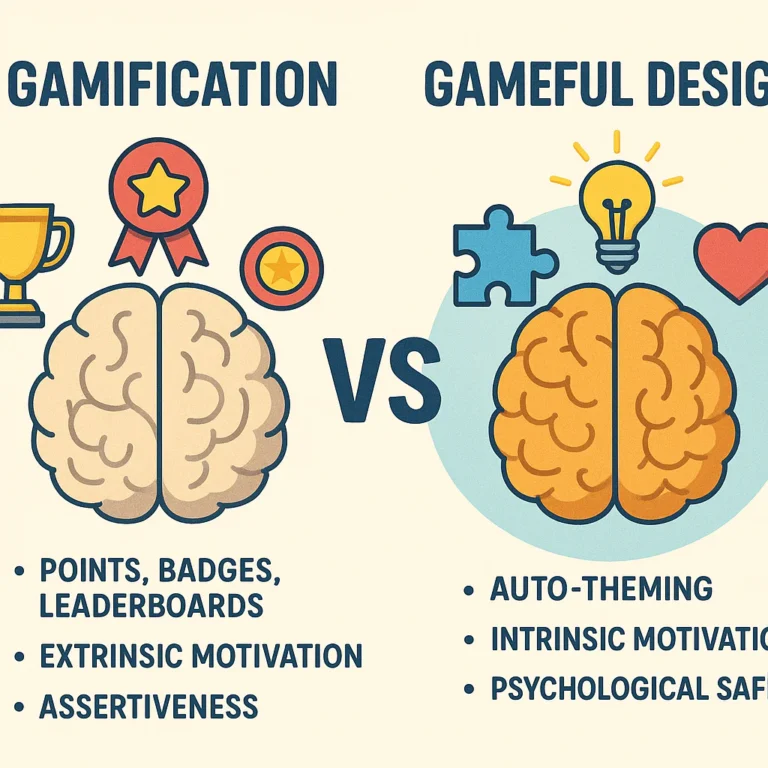
Table 1: Gamification vs. Gameful Design
| Feature | Traditional Gamification | Gameful Design (Behavioral Economics Informed) |
|---|---|---|
| :— | :— | :— |
| Primary Focus | Adding game elements (points, badges) | Crafting an inherently engaging, game-like experience |
| Motivation Type | Primarily extrinsic | |
| (rewards, status) | Primarily intrinsic (mastery, autonomy, purpose, social connection) | |
| Psychological Basis | Simple reward/punishment systems | Deep understanding of cognitive biases, heuristics, and human drives |
| Goal | Drive specific actions | Foster sustainable engagement, habit formation, and enjoyment |
| Longevity | Often short-lived once novelty wears off | Designed for long-term |
| , self-sustaining motivation | ||
| Example | Loyalty points for purchases | Duolingo’s language learning journey with progression and social features |
This evolution signifies a move from superficial tactics
to a more holistic, user-centric design philosophy. By integrating insights from behavioral economics, we can design systems that don’t just tell people what to do, but subtly guide them, making desired behaviors feel rewarding, natural, and even fun. It
’s about understanding the “why” behind human action and designing experiences that align with those fundamental psychological truths.
🧠 The Psychology of Play: How Behavioral Economics Drives Gameful Experiences
Have you ever wondered why you’ll spend
hours trying to beat a level in a video game, but struggle to spend 15 minutes on a task you know is good for you? The answer often lies in the brilliant application of psychological principles, many of which are illuminated
by behavioral economics. This field is the bedrock upon which truly effective gameful experiences are built.
At Gamification Hub™, we see behavioral economics as our secret weapon. It provides the lens through which we understand why people make the choices they do
, often revealing fascinating quirks in human decision-making that traditional economics overlooked. As the “first YouTube video” on behavioral economics highlights, concepts like bounded rationality, framing effects, and loss aversion are not just academic theories; they are
powerful tools for shaping behavior in real-world applications.
Let’s unpack some of these core concepts and see how they fuel gameful design:
Bounded Rationality: Designing for Imperfect Minds
Traditional
economics assumes we’re all perfectly rational beings, always making optimal choices. But let’s be honest, that’s rarely the case! We’re boundedly rational – our decisions are limited by imperfect information, time constraints
, and cognitive limitations. We don’t always seek the absolute best outcome; instead, we often rely on mental shortcuts or heuristics.
How Gameful Design Leverages It:
- Simplification:
Gameful systems break down complex tasks into smaller, manageable steps, reducing cognitive load. Think of fitness apps like MyFitnessPal that guide you through logging meals and exercise, rather than overwhelming you with a
blank slate. - Default Options: By setting smart defaults, gameful design can gently steer users. For example, a learning platform might default to a “daily challenge” mode, making it easier for users to engage without extensive
decision-making. - Feedback Loops: Immediate and clear feedback helps users understand the consequences of their actions quickly, compensating for limited information processing.
The Framing Effect: It’s All in the Presentation
The way information
is presented, or “framed,” can dramatically alter our perception and choices, even if the objective facts remain the same. The “first YouTube video” gives a classic example: people react differently to “75% fat-free” versus
“25% fat”.
How Gameful Design Leverages It:
- Positive Framing: Highlighting gains rather than losses. Instead of “Don’t lose your streak!”, a language
learning app like Duolingo might say “Keep your streak going and unlock new levels!”. - Progress Visualization: Framing progress as a journey with visible milestones (e.g., progress bars, level-ups) makes the effort feel more worthwhile and achievable.
- Choice Architecture: Presenting choices in a way that highlights the desired option without removing others. For instance, a subscription service might frame its annual plan as “Save
20% annually!” rather than “Pay more monthly.”
Loss Aversion: The Pain of Losing
This is a big one! People generally feel the pain of a loss twice as intensely as the pleasure of an equivalent gain.
The “first YouTube video” perfectly illustrates this with the plastic bag tax example: a 5-cent tax was far more effective than a 5-cent bonus. The thought of losing 5 cents was a
stronger motivator than gaining 5 cents.
How Gameful Design Leverages It:
- Streaks and Daily Rewards: Apps like Snapchat with its “Snapstreaks”
or Nike Training Club with its workout streaks leverage loss aversion. Missing a day means losing your hard-earned streak, which can be a powerful motivator to maintain engagement. - Virtual Goods and Progress: Users
are less likely to abandon a platform if they’ve invested time and effort into earning virtual currency, unlocking items, or building a profile. The fear of losing this investment keeps them coming back. - Limited-Time Offers:
Creating a sense of urgency by implying a potential loss if action isn’t taken immediately (e.g., “Offer expires in 24 hours!”).
Nudge Theory: Gentle Guidance for Better Choices
Coined by Richard Th
aler and Cass Sunstein, “Nudge Theory” is about subtly guiding people towards beneficial behaviors without restricting their freedom of choice. It’s about designing the environment to make the desired action the easiest or most appealing one.
How Gameful Design Leverages It:
- Smart Defaults: As mentioned, setting defaults that align with desired behaviors.
- Salience: Making important information or desired actions more prominent. Health apps might put
your daily step count front and center. - Social Proof: Showing what others are doing (e.g., “90% of users complete this module!”) can nudge individuals to conform to positive group behavior. This is a
powerful motivator in platforms like Strava, where seeing friends’ activities encourages your own.
By understanding and intentionally applying these principles, we move beyond superficial gamification. We start to craft experiences that genuinely resonate with human
psychology, making desired behaviors feel not just achievable, but truly engaging and rewarding. It’s about designing for the human, with all their beautiful, irrational quirks!
🎮 Core Mechanics vs. Dynamic Systems: The Building Blocks of Engagement
When we talk about gameful design, it’s easy to get lost in the jargon. But at its heart, we’re discussing two fundamental layers that work together to create compelling experiences: core mechanics and dynamic systems. Think
of it like building a house: the core mechanics are your bricks, mortar, and timber – the essential components. The dynamic systems are how those components are arranged, how they interact, and how the house feels to live in –
the architecture, the flow, the ambiance.
Understanding this distinction is crucial for any aspiring gamification engineer. Simply piling on mechanics without a coherent dynamic system is like having a pile of bricks without a blueprint – you’ve got the pieces
, but no structure, no purpose, no home.
Core Mechanics: The Atomic Elements of Play
These are the individual, tangible game elements that you can implement. They are the “verbs” and “nouns” of your gameful experience
. We often discuss these in detail in our Game Mechanics section.
Common Core Mechanics:
- Points (XP): Numerical
values awarded for actions. - ✅ Benefit: Provide immediate feedback, track progress, create a sense of accumulation.
- ❌ Drawback: Can become meaningless if not tied to clear goals or rewards.
Badges/Achievements:** Visual representations of accomplishments.
-
✅ Benefit: Offer recognition, status, and a sense of mastery. Can act as social currency.
-
❌ Drawback: Can be perceived as trivial
or “fluff” if not genuinely earned or valued. -
Leaderboards: Rankings of users based on points, achievements, or other metrics.
-
✅ Benefit: Foster competition, social comparison, and a desire for
status. -
❌ Drawback: Can demotivate lower-ranked users, lead to cheating, or create negative social dynamics.
-
Levels: Stages of progression, often tied to accumulating points or completing tasks.
-
✅ Benefit: Provide clear goals, a sense of advancement, and unlock new content.
-
❌ Drawback: Can feel arbitrary if progression isn’t meaningful.
-
Virtual Currency: In-game money
used to purchase virtual goods, upgrades, or access. -
✅ Benefit: Creates an internal economy, allows for user choice, and can drive engagement with specific features.
-
❌ Drawback: Can feel
extractive if not balanced, or if real-world money is heavily involved. -
Progress Bars: Visual indicators of completion towards a goal.
-
✅ Benefit: Reduce cognitive load, provide immediate feedback, leverage the “goal
-gradient effect” (we accelerate as we get closer to a goal). -
❌ Drawback: Can be frustrating if progress is too slow or unclear.
-
Quests/Challenges: Specific tasks or missions
with defined objectives and rewards. -
✅ Benefit: Provide structure, purpose, and a sense of accomplishment.
-
❌ Drawback: Can feel like chores if not intrinsically motivating or well-designed.
Dynamic Systems: The Orchestration of Engagement
This is where the magic truly happens. Dynamic systems are the overarching structures and interactions that emerge from the interplay of core mechanics, user behavior, and the environment. They are about creating a cohesive
, evolving experience that leverages deeper psychological drivers. This is where behavioral economics truly shines, informing how these systems are designed to influence long-term engagement and habit formation.
Key Dynamic Systems:
- Progression Systems: How
users advance through the experience. This isn’t just about levels; it’s about unlocking new content, skills, responsibilities, or privileges.
- Behavioral Economics Link: Leverages the endowment effect (valuing what we own more highly) as users invest time, and the goal-gradient effect as they approach milestones.
- Example: LinkedIn‘s profile completion bar and “All-Star” status encourage users to fully flesh out their profiles, making them more valuable and leveraging the endowment effect.
- Narrative & Storytelling: Creating a compelling story or journey that users are a part of.
Behavioral Economics Link:** Taps into our innate desire for meaning and connection. Stories make information more memorable and persuasive, influencing our perceptions (related to the framing effect).
- Example: Zombies,
Run! transforms a simple run into an immersive escape from zombies, providing a powerful narrative hook for exercise.
- Social Interaction & Community: How users interact with each other, fostering collaboration
, competition, or peer support.
-
Behavioral Economics Link: Leverages social proof (we’re influenced by what others do), reciprocity, and the desire for belonging.
-
Example: Strava thrives on social sharing of workouts, kudos, and comments, creating a strong community that encourages consistent activity through social comparison and support.
- Feedback Loops
(Adaptive & Responsive): Not just immediate feedback, but systems that adapt to user performance, offering personalized challenges and rewards.
- Behavioral Economics Link: Addresses bounded rationality by providing relevant, digestible information. Leverages
variable rewards (unpredictable rewards are highly engaging, as seen in slot machines) to maintain interest. - Example: Duolingo adapts its lessons based on your performance
, offering more practice in areas where you struggle, ensuring the challenge remains optimal for engagement.
- Autonomy, Mastery, Purpose (AMP): Drawing from Self-Determination Theory, these systems empower users with choice, help
them feel competent, and connect them to a larger meaning.
- Behavioral Economics Link: Aligns with intrinsic motivation drivers, which behavioral economics recognizes as more sustainable than purely extrinsic ones.
- Example: Open
-world games like Minecraft offer immense autonomy, allowing players to create their own purpose and achieve mastery through building and exploration.
The true art of gameful design lies in skillfully combining these core mechanics within
intelligent dynamic systems, always with an eye on the psychological levers provided by behavioral economics. It’s about creating an ecosystem where engagement flourishes naturally, rather than being forced.
🚀 7 Proven Strategies to Apply Gameful Design for Habit Formation
and Motivation
At Gamification Hub™, we’ve seen countless attempts at gamification – some brilliant, some… well, let’s just say they needed a bit more behavioral economics! The real power of gameful design isn’t just in
making things “fun”; it’s in leveraging deep psychological insights to help people build positive habits and sustain motivation. Here are seven strategies we swear by, each rooted in behavioral economics, to help you craft truly impactful gameful experiences.
1. Leverage the Power of Loss Aversion with Streaks and Progress
Remember how much more painful a loss feels than an equivalent gain? This isn’t just academic theory; it’s a potent tool for habit formation. We’ve
seen it work wonders!
How it works: Design systems where users “lose” something valuable (a streak, progress, a virtual item) if they fail to engage. The fear of losing what they’ve already invested becomes a powerful motivator
.
Step-by-Step Implementation:
- Identify a Desired Habit: E.g., daily exercise, consistent learning, regular saving.
- Establish a “Streak” Mechanic: Track consecutive days/
sessions of the desired behavior. - Visualize the Streak: Make it prominent and visually appealing (e.g., a flame icon, a growing chain).
- Implement a “Break” Consequence: Clearly communicate
that missing a day will reset the streak. - Add “Streak Savers” (Optional but Powerful): Offer a limited number of “freeze” options or “streak repair” items (e.g., in-app purchases or earned through other activities) to reduce frustration and allow for occasional slips without complete demotivation.
Real-World Example: Duolingo is a master of this. Its prominent
“streak” counter is a huge motivator for daily language practice. The thought of losing a 300-day streak is often enough to get users to open the app for a quick lesson, even on busy days. This taps directly
into loss aversion – the pain of losing that streak outweighs the effort of a short lesson.
2. Harness the Goal-Gradient Effect with Clear Progression Paths
Ever noticed how you speed up when you’re almost at the finish line
of a race? That’s the goal-gradient effect in action – our motivation increases as we get closer to a goal. Gameful design can strategically use this.
How it works: Break down large goals into smaller,
visible milestones, and make progress towards these milestones clear and rewarding.
Step-by-Step Implementation:
- Define a Long-Term Goal: E.g., complete a course, reach a fitness level, save a certain
amount. - Segment into Smaller Milestones: Break the goal into achievable steps or levels.
- Visualize Progress: Use progress bars, level meters, or visual maps to show users how far they’ve come and how
much is left. - Reward Milestones: Offer small, immediate rewards (badges, virtual currency, new content) upon reaching each milestone.
- Increase Challenge Gradually: As users progress, subtly increase the difficulty to
maintain engagement and a sense of mastery.
Real-World Example: Starbucks Rewards uses a tiered system (Green, Gold) where customers earn “stars” for purchases. As they accumulate
stars, they move closer to the next tier, unlocking new benefits. The visible progress bar and the promise of “free drinks” at the next level leverage the goal-gradient effect, encouraging more frequent purchases.
3. Employ
the Endowment Effect with Virtual Ownership
We tend to value things more highly once we feel we own them. This cognitive bias, the endowment effect, is a goldmine for fostering engagement.
How it works: Encourage users to invest time
, effort, or even virtual currency into building, customizing, or earning virtual assets within your system. Once they “own” these assets, they’re more likely to return and protect their investment.
Step-by-Step Implementation:
- Provide Customization Options: Allow users to personalize avatars, profiles, or virtual spaces.
- Offer Earnable Assets: Introduce virtual items, badges, or unique content that users can acquire through engagement.
Showcase Investment: Clearly display what users have earned or built.
4. Integrate with Progression: Make these assets part of a larger progression system, so they feel like a tangible reward for effort.
Real-
World Example: In Reddit, users earn “karma” and can customize their avatars with unique outfits and accessories, some of which are tied to achievements or community involvement. This investment in their virtual identity makes them more likely to
continue contributing to the platform. Similarly, many mobile games offer extensive character customization and gear collection, making players feel a strong sense of ownership over their virtual possessions.
4. Utilize Social Proof and Competition with Leaderboards and Community Features
Humans are social creatures. We’re influenced by what others do (social proof) and often motivated by a healthy dose of competition.
How it works: Create opportunities for users to see each other’s progress, compare achievements
, and engage in friendly competition or collaboration.
Step-by-Step Implementation:
- Enable Social Sharing: Allow users to share their achievements and progress on social media or within the platform.
- Implement Leader
boards (Carefully!): If using leaderboards, consider different types (friends-only, local, global) to mitigate demotivation for lower-ranked users. Focus on progress and effort, not just raw scores.
Foster Community Interaction: Provide forums, comment sections, or group challenges to encourage peer support and interaction.
4. Highlight “Top Performers”: Publicly recognize users who achieve significant milestones, providing positive reinforcement and inspiration
.
Real-World Example: Strava, the fitness tracking app, is a prime example. Users share their runs and rides, give “kudos” to friends, and compete on “segments” (sections of a route). Seeing friends’ activities and achievements provides powerful social proof and a gentle competitive nudge to get out and train. This is a fantastic example of a Gamification Case Study.
5. Design for Autonomy, Mastery, and Purpose (AMP)
Drawing from Self-Determination Theory, people are most intrinsically motivated when they feel a sense of autonomy (choice), mastery (competence), and purpose (meaning).
How it works: Empower users with meaningful choices, provide opportunities for skill development, and connect their actions to a larger, meaningful goal.
**
Step-by-Step Implementation:**
- Offer Meaningful Choices: Allow users to choose their learning path, tasks, or rewards within a structured framework.
- Provide Skill-Building Challenges: Design tasks that are
challenging but achievable, allowing users to feel a sense of growing competence. - Connect to a Larger Purpose: Clearly articulate how the user’s actions contribute to a bigger goal, whether personal growth, community benefit, or a charitable
cause. - Give Control: Allow users to skip certain tasks, customize their experience, or provide feedback that genuinely influences the system.
Real-World Example: Khan Academy excels
at this in Educational Gamification. Learners choose what to study, progress at their own pace, and master concepts through practice. The platform emphasizes learning for
its own sake and connecting to academic goals, fostering a strong sense of purpose and mastery.
6. Implement Variable Rewards for Sustained Engagement
Our brains are wired to seek out novelty and unpredictability. Variable rewards –
where the reward is uncertain or infrequent – are incredibly powerful for maintaining engagement, as seen in the addictive nature of slot machines.
How it works: Introduce elements of surprise and unpredictability in your reward system to keep users coming back,
eager to see what they might get.
Step-by-Step Implementation:
- Integrate Random Drops/Bonuses: Occasionally reward users with unexpected virtual items, extra points, or special access for completing tasks.
Mystery Boxes/Loot Crates: Offer “mystery boxes” that contain a random assortment of rewards, purchasable with virtual currency or earned through significant effort.
3. Daily Login Bonuses with Escalation: While
not purely variable, a daily login bonus that increases in value over consecutive days (with a chance for a “super bonus”) can leverage this.
4. Unpredictable Feedback: Sometimes, the feedback itself can be variable –
a surprising animation, a rare sound effect, or a personalized message.
Real-World Example: Many mobile games, like Candy Crush Saga, use variable rewards constantly. Players don’t know exactly
what power-ups or bonuses they’ll get from a specific move or level completion, keeping them hooked and chasing that unpredictable “win.”
7. Utilize the Scarcity and Urgency Principles
The less available something is, or
the shorter the time to acquire it, the more valuable it seems. These principles, scarcity and urgency, are powerful behavioral nudges.
How it works: Create a perception of limited availability or a time-sensitive opportunity to encourage immediate action
.
Step-by-Step Implementation:
- Limited-Time Offers: Introduce challenges or rewards that are only available for a short period.
- Exclusive Content: Offer special badges, avatars, or features
that are only accessible to a select group or for a specific achievement. - “Last Chance” Notifications: Remind users when an opportunity is about to expire.
- Limited Stock/Capacity: If applicable,
indicate when a virtual item or event has limited spots.
Real-World Example: Many e-commerce sites use scarcity and urgency (e.g., “Only 3 left in stock!” or “Flash sale ends in 2 hours!”).
In a gameful context, a fitness app might offer a “Limited-Time Challenge: Complete 7 workouts in 7 days to earn an exclusive badge!” This encourages immediate participation out of fear of missing out.
By thoughtfully applying these strategies,
you’re not just adding game elements; you’re designing experiences that tap into the very core of human motivation and decision-making, leading to more engaging, effective, and ultimately, more successful outcomes.
📊 The Dark Side
: When Gamification Backfires and Creates Toxic Engagement
Ah, the allure of engagement! As gamification engineers, we’re always striving to create positive, motivating experiences. But let’s be frank: not all gamification is good
gamification. Just as behavioral economics can be used to nudge people towards beneficial outcomes, it can also be twisted to create toxic engagement, manipulation, or even outright exploitation. It’s a tightrope walk, and we at Gamification
Hub™ are acutely aware of the pitfalls.
The line between persuasion and manipulation can be incredibly thin. When gamification prioritizes the designer’s goals (e.g., increased ad revenue, data collection) over the user’s well
-being and genuine intrinsic motivation, that’s when we start venturing into the “dark side.”
❌ The Pitfalls of Poorly Implemented Gamification:
- Demotivation and Burnout:
- Problem: Over-reliance on extrinsic rewards (points, badges) can crowd out intrinsic motivation. If users are only doing something for the reward, the moment the reward is removed or loses its novelty, engagement pl
ummets. Leaderboards, if poorly designed, can also demotivate lower-ranked users who feel they can never “win.” - Behavioral Economics Link: The overjustification effect suggests that offering extrinsic
rewards for intrinsically enjoyable activities can actually decrease intrinsic motivation. - Anecdote: We once consulted for a company that implemented a leaderboard for email response times. Initially, employees were competitive
. But soon, it led to rushed, low-quality responses and immense stress, as people felt constantly judged and unable to “win” against faster colleagues. The intrinsic motivation to help customers was replaced by the extrinsic goal of being #1 on the board
.
- Manipulation and Addiction:
- Problem: Leveraging behavioral biases like loss aversion or variable rewards too aggressively can lead to addictive loops, dark patterns, and a feeling of being coerced. Think
of endless notification pings, “streaks” that induce anxiety, or loot boxes that exploit gambling tendencies. - Behavioral Economics Link: The power of intermittent reinforcement (variable rewards) is well-documented in
creating strong, often addictive, habits. When combined with fear of missing out (FOMO), it can be highly manipulative. - Real-World Example: Many social media platforms are
criticized for using variable rewards (unpredictable likes, comments, new content) and loss aversion (fear of missing out on social updates) to keep users endlessly scrolling, sometimes to the detriment of their mental health.
- Meaning
less Engagement & Grind:
- Problem: When game elements are tacked on without a clear purpose or connection to meaningful progress, the experience feels like a “grind.” Users perform actions solely to earn points or badges, without
genuine interest or benefit. - Behavioral Economics Link: If the perceived value of the reward or the activity is low, users will quickly disengage. The effort justification bias (we value things we work hard for) can backfire if the effort feels pointless.
- Example: Some early corporate gamification initiatives involved earning badges for attending mandatory meetings. While a badge was “earned,” it added no real value, meaning
, or skill development, leading to eye-rolls rather than engagement.
- Ethical Concerns and Data Exploitation:
- Problem: Gamified systems often collect vast amounts of user data. If this data is used to
create highly personalized, manipulative experiences that exploit vulnerabilities, it raises serious ethical questions. - Behavioral Economics Link: Understanding individual biases and preferences allows for highly targeted nudges, which can become intrusive or exploitative if not
used responsibly. - Question to Ponder: Where do we draw the line between helping someone form a positive habit and subtly manipulating them into spending more time or money than they intended?
✅ Balancing Perspectives with Confident Recommendations:
So, how do we avoid the dark side? It comes down to ethical design and a deep commitment to the user’s well-being.
- Prioritize Intrinsic Motivation: Always ask: “How can we
make this activity inherently rewarding and enjoyable?” Extrinsic rewards should support intrinsic motivation, not replace it. - Transparency and User Control: Be upfront about the mechanics. Give users control over notifications, data sharing, and the
ability to opt-out or customize their experience. - Focus on Meaningful Progress: Ensure that points, badges, and levels represent genuine achievement, skill development, or progress towards a user-centric goal.
- Design
for Well-being, Not Addiction: Avoid mechanics that create anxiety, FOMO, or endless loops of engagement without a clear benefit to the user. Promote breaks and balance. - Test and Iterate Ethically: Continuously evaluate
the impact of your gameful design. Are users genuinely enjoying it, or are they feeling pressured? Are there unintended negative consequences?
The power of behavioral economics in gameful design is immense. With great power comes great responsibility. Our role at Gamification
Hub™ isn’t just to create engaging systems, but to create responsible, ethical, and genuinely helpful ones. We believe in designing experiences that empower users, not exploit them.
🛠️ The Designer’s Toolkit
: Frameworks for Measuring Gameful Impact
Alright, you’ve got the behavioral economics insights, you understand the difference between mechanics and systems, and you’re committed to ethical design. But how do you actually build these game
ful experiences, and more importantly, how do you know if they’re working? That’s where a robust designer’s toolkit comes in handy. At Gamification Hub™, we rely on several tried-and-true frameworks that help us conceptualize
, design, and measure the impact of gameful interventions. This is where the rubber meets the road, transforming theory into tangible, measurable results. We often discuss these frameworks in the context of Gamification and UX Design.
1. The Octalysis Framework by Yu-kai Chou
This is one of the most comprehensive frameworks for understanding and designing human-focused
design. Yu-kai Chou breaks down motivation into 8 Core Drives, forming an “Octalysis” (like an octagon).
The 8 Core Drives:
- Epic Meaning & Calling: The drive to believe
you are doing something greater than yourself. (e.g., Wikipedia contributors). - Development & Accomplishment: The drive for progress, mastery, and overcoming challenges. (e.g., LinkedIn profile completion).
- Empowerment of Creativity & Feedback: The drive to be creative, experiment, and see the results of your actions. (e.g., Minecraft building).
- Ownership & Possession: The drive to own things and feel a sense of control. (e.g., collecting virtual items).
- Social Influence & Relatedness: The drive for social connection,
acceptance, and competition. (e.g., Strava leaderboards). - Scarcity & Impatience: The drive to want something because it’s rare or hard to get. (e.g., limited-time offers).
- Unpredictability & Curiosity: The drive for novelty, surprise, and the unknown. (e.g., loot boxes, random rewards).
- Loss &
Avoidance: The drive to avoid negative outcomes, such as losing progress or opportunities. (e.g., Duolingo streaks).
How it Integrates Behavioral Economics:
The Octalysis Framework is inherently behavioral-economic
. Each core drive directly maps to various cognitive biases and motivational theories. For instance, “Loss & Avoidance” is a direct application of loss aversion. “Scarcity & Impatience” leverages the scarcity principle. “Unpredict
ability & Curiosity” taps into the power of variable rewards. By analyzing which drives are engaged, designers can systematically identify behavioral levers.
Application: We use Octalysis to audit existing systems, brainstorm new features, and ensure a balanced
approach to motivation. A system relying too heavily on “Black Hat” drives (Scarcity, Unpredictability, Loss) without balancing with “White Hat” drives (Meaning, Development, Empowerment) risks becoming manipulative.
2.
Self-Determination Theory (SDT)
Developed by Edward Deci and Richard Ryan, SDT posits that humans have three innate psychological needs that, when satisfied, foster intrinsic motivation and well-being:
- Autonomy: The need to
feel in control of one’s choices and actions. - Competence: The need to feel effective and capable in one’s interactions with the environment.
- Relatedness: The need to feel connected to others, to
care for and be cared for.
How it Integrates Behavioral Economics:
While SDT focuses on intrinsic motivation, behavioral economics provides the tools to design for these needs. For example, offering meaningful choices (autonomy) can be framed
using the framing effect to make the “right” choice more appealing. Providing clear progress and feedback (competence) leverages the goal-gradient effect and feedback loops. Fostering social connection (relatedness)
taps into social proof and the desire for belonging.
Application: We use SDT to ensure our gameful designs aren’t just driving actions, but also contributing to users’ psychological well-being. If a system feels
coercive (low autonomy), frustrating (low competence), or isolating (low relatedness), it’s likely to fail long-term, regardless of how many points it awards.
3. The Fogg Behavior Model (FBM)
by B.J. Fogg
This simple yet powerful model states that for a behavior to occur, three elements must converge at the same moment:
Behavior = Motivation x Ability x Prompt
- Motivation: The desire to perform the
behavior. - Ability: The capacity to perform the behavior (is it easy or hard?).
- Prompt: A trigger or cue that reminds you to perform the behavior.
If any one of these is missing, the behavior won
‘t happen.
How it Integrates Behavioral Economics:
FBM is a direct application of behavioral economics to habit formation.
- Motivation: Can be influenced by various biases (e.g., loss aversion to increase motivation to avoid losing a streak).
- Ability: Gameful design makes behaviors easier by breaking them down (reducing cognitive load, addressing bounded rationality).
- Prompt: Notifications, reminders, or visual cues are classic
nudges to trigger action.
Application: When designing a gameful experience, we use FBM to diagnose why a desired behavior might not be happening. Is motivation too low? Is the task too difficult? Is there no clear
prompt? For instance, if users aren’t completing a learning module, we might ask: “Is the module too long (low ability)? Is there no clear benefit (low motivation)? Are they forgetting to start (no prompt)?” This
model helps us pinpoint the weakest link and design targeted interventions.
Table 2: Frameworks in Action
| Framework | Primary Focus | Key Behavioral Economics Links | Design Question |
|---|---|---|---|
| :— | :— | :— | :— |
| Octalysis | 8 Core Drives of Motivation | Loss Aversion, Scarcity, Variable Rewards, Social Proof | Which human |
| desires are we tapping into? | |||
| Self-Determination Theory | Intrinsic Needs (Autonomy, Competence, Relatedness) | Framing Effect, Goal-Gradient Effect, Social Proof | Is this experience genuinely fulfilling |
| and empowering? | |||
| Fogg Behavior Model | Behavior Change (Motivation, Ability, Prompt) | Nudge Theory, Cognitive Load, Loss Aversion (for motivation) | What’s stopping users from doing what |
| we want them to do? |
By employing these frameworks, we move beyond guesswork. We can systematically analyze user behavior, identify motivational gaps, and design gameful solutions that are not only engaging but also strategically aligned with the principles of behavioral economics to
drive real, measurable impact. This structured approach is fundamental to our work at Gamification Hub™.
💼 Real-World Case Studies: Brands That Mastered the Gameful Economy
Enough theory! Let’s talk about the brands
that have truly nailed gameful design in the context of behavioral economics. These aren’t just companies adding a few points; they’ve woven gameful principles into the very fabric of their user experience, creating powerful, habit-forming platforms
that resonate deeply with human psychology. These are the Gamification Case Studies that inspire us at Gamification Hub™.
1. Duolingo
: Mastering Language Through Play
The Challenge: Learning a new language is notoriously difficult, requiring consistent effort, overcoming frustration, and maintaining motivation over long periods.
The Gameful Solution: Duolingo transforms
language learning into a delightful, addictive game.
- Behavioral Economics in Action:
- Loss Aversion & Streaks: The most iconic feature is the “streak” – consecutive days of practice.
Missing a day means losing your streak, a powerful motivator rooted in loss aversion. Users often report feeling anxious about breaking their streak, driving daily engagement. - Goal-Gradient Effect & Levels: The learning path is broken into
small, digestible “skills” and “levels.” Users see their progress visually, and the anticipation of completing a level or unit fuels continued effort. - Endowment Effect & Lingots/Gems: Users earn virtual currency (“Lingots” or “Gems”) which they can spend on virtual items, streak freezes, or outfits for their owl mascot, Duo. This investment creates a sense of ownership and value.
- Nudge Theory & Notifications
: Duo, the friendly (and sometimes passive-aggressive) owl, sends timely notifications to remind users to practice, acting as a gentle prompt. - Social Proof & Leaderboards: Users can compete with friends and global learners
on leaderboards, leveraging social comparison and the desire for status.
Why it Works: Duolingo doesn’t just teach; it motivates. It makes a challenging task feel achievable, rewarding, and socially engaging, leveraging a
suite of behavioral economic principles to create a truly sticky habit.
2. Nike Training Club (NTC): Fitness as a Journey
The Challenge: Sticking to a workout routine is tough. Motivation wanes, and it’s easy
to fall off track.
The Gameful Solution: Nike Training Club (NTC) turns exercise into a personalized journey of achievement.
- Behavioral Economics in Action:
Development & Accomplishment (Octalysis):** NTC offers structured “programs” (e.g., “4-Week Full Body Burn”) with clear start and end points. Completing workouts and programs provides a strong sense of accomplishment and mastery.
- Loss Aversion & Streaks: Similar to Duolingo, NTC often incorporates workout streaks, encouraging consistent engagement to avoid losing progress.
- Empowerment of Creativity & Feedback: Users can choose
from a vast library of workouts, customize their training, and receive real-time feedback from trainers, fostering a sense of autonomy and competence. - Social Influence & Relatedness: Users can share their workout achievements on social media,
leveraging social proof and gaining encouragement from their network. - Scarcity & Impatience: Occasionally, NTC might offer exclusive workouts or challenges for a limited time, creating a sense of urgency.
Why it Works: NTC
understands that fitness isn’t just about physical exertion; it’s about mental fortitude and a sense of progress. By gamifying the journey, it makes fitness more accessible, motivating, and rewarding, helping users overcome inertia and build lasting habits.
- LinkedIn: Professional Networking as a Quest
The Challenge: Building a professional network and maintaining an updated profile can feel like a chore.
The Gameful Solution: LinkedIn uses gameful elements to encourage
profile completion and active engagement.
- Behavioral Economics in Action:
- Goal-Gradient Effect & Profile Strength Meter: The “Profile Strength” meter is a classic example. It shows users how complete their profile is and
nudges them to add more information to reach “All-Star” status. The closer they get, the more motivated they are to complete it. - Endowment Effect: Users invest time and effort into building their professional identity
on the platform. Once their profile is robust, they feel a sense of ownership and are more likely to protect that investment by staying active. - Social Influence & Relatedness: Recommendations, endorsements, and connection requests all tap
into social proof and the desire for professional validation and connection. - Development & Accomplishment: Earning skills, receiving endorsements, and getting job offers all contribute to a sense of professional accomplishment.
Why it Works: LinkedIn successfully
transforms potentially tedious tasks into a series of achievable goals with clear benefits. It leverages our desire for professional recognition and connection, making the platform feel like a career-building game rather than just a static resume site.
4. O
ura Ring: Health Tracking with Personalized Feedback
The Challenge: Understanding and acting on personal health data can be overwhelming and inconsistent.
The Gameful Solution: The Oura Ring and its accompanying app
gamify health tracking by providing clear, actionable insights and personalized goals.
- Behavioral Economics in Action:
- Feedback Loops & Nudge Theory: The app provides daily “Readiness” and “Sleep” scores,
along with personalized recommendations (nudges) for improving these scores. This immediate, digestible feedback helps users understand the impact of their behaviors. - Development & Accomplishment: Users can track trends over time, seeing their sleep quality
improve or their activity levels increase, fostering a sense of mastery over their health. - Loss Aversion: While subtle, the idea of a “poor readiness score” can act as a gentle nudge to prioritize rest or reduce
stress, playing on the aversion to negative health outcomes. - Autonomy: Users are given insights but ultimately have the autonomy to choose how they act on them, fostering intrinsic motivation rather than feeling dictated to.
Why
it Works: Oura takes complex biometric data and translates it into an engaging, actionable experience. By providing clear scores, personalized goals, and positive feedback, it empowers users to take control of their health in a gameful, non-intrusive
way.
These brands demonstrate that when behavioral economics is thoughtfully integrated into gameful design, the result isn’t just fleeting fun, but sustained engagement, habit formation, and genuine value for the user. It’s about designing for the human
at the center of the experience.
🔮 Future Trends: AI, Neuro-Gamification, and the Next Frontier of Behavioral Nudges
The world of gamification and gameful design is anything but static. As technology advances and our understanding of
the human brain deepens, we’re on the cusp of some truly revolutionary developments. At Gamification Hub™, we’re constantly peering into the future, excited by how Artificial Intelligence (AI), neuroscience, and even
more sophisticated applications of behavioral economics will converge to create hyper-personalized, ultra-effective gameful experiences. Get ready, because the next frontier of behavioral nudges is going to be mind-blowing!
1. Hyper
-Personalized Gameful Experiences with AI
Imagine a gameful system that knows exactly what motivates you, what challenges you, and what kind of rewards truly resonate. AI is making this a reality.
- Adaptive Challenges: AI algorithms
can analyze your performance, learning style, and engagement patterns to dynamically adjust the difficulty, pacing, and content of gameful tasks. This ensures the challenge is always “just right” – not too easy to be boring, not too hard to be frustrating
. Think of an Educational Gamification platform that customizes lessons based on your real-time comprehension. - Personalized Nudges: Instead
of generic notifications, AI can learn the optimal time, tone, and content of prompts to maximize their effectiveness for you. It might know you respond better to a supportive message in the morning than a competitive one in the evening. This takes
Nudge Theory to an entirely new level of precision. - Dynamic Reward Systems: AI can move beyond static reward schedules to offer variable rewards that are tailored to individual preferences and current motivational states, keeping engagement fresh and unpredictable in
the most effective ways.
The Unresolved Question: While AI offers incredible potential for personalization, how do we ensure these systems remain transparent and avoid becoming “black boxes” that manipulate users without their full awareness? This is a critical ethical challenge
we’re actively exploring.
2. Neuro-Gamification: Tapping into the Brain’s Own Rewards
This is where things get truly exciting – and a little sci-fi! Neuro-gamification involves using insights
from neuroscience, and potentially even direct brain interface technologies, to design gameful experiences that directly stimulate the brain’s reward pathways.
-
Biometric Feedback Loops: Imagine a fitness app that not only tracks your heart rate but also integrates
data from wearables that measure stress levels, focus, or even brainwave activity. The gameful system could then adapt in real-time to optimize your mental state for a task. -
Targeted Dopamine Release: Understanding how specific game mechanics
trigger dopamine (the “feel-good” neurotransmitter associated with reward and motivation) allows for the design of experiences that are inherently more satisfying. This isn’t about direct brain stimulation (yet!), but about crafting digital interactions that are neurologically optimized. -
Cognitive Training Games: Games designed with neuroscientific principles can target specific cognitive functions like attention, memory, and problem-solving, offering measurable improvements. Brands like Lumosity are
already in this space, and future iterations will be far more sophisticated.
The Anecdote: We recently experimented with a prototype where subtle haptic feedback (vibrations) on a wearable device was linked to achieving micro-goals in a
productivity app. Users reported a surprisingly potent sense of satisfaction, almost like a physical “pat on the back,” reinforcing the desired behavior. This is just a tiny glimpse into the potential of neuro-gamification.
3. Ethical
AI and the Future of Responsible Nudging
As gameful design becomes more powerful, the ethical considerations become paramount. The future isn’t just about what can be done, but what should be done.
- Transparency and
Explainable AI: Users will demand to understand why a system is nudging them in a certain direction. Explainable AI (XAI) will be crucial for building trust and ensuring ethical design. - User Agency and Control:
Future gameful systems must prioritize user agency. This means giving users greater control over how they are nudged, allowing them to set their own goals, and providing clear off-ramps from engagement if desired. - Designing for Well-being
: The focus will shift even more strongly towards designing for genuine well-being, not just engagement metrics. This means gamified systems that actively promote mental health, discourage addiction, and foster positive, sustainable habits.
The convergence of AI, neuroscience, and
behavioral economics promises a future where gameful design is incredibly precise, adaptive, and deeply integrated into our lives. Our challenge at Gamification Hub™ is to ensure this power is wielded responsibly, creating experiences that empower and enrich, rather than manipulate
or exploit. The game is evolving, and we’re excited to play a part in shaping its ethical future.